

- Trainer
- Everyone
Long-Term Investing: Index Funds, Risk and Your Own Behavior
Learn how long-term investing really works and judge any fund, app or plan with numbers. Count real returns after inflation and devaluation, see how far and how long a portfolio can fall, find out why broad, cheap index funds are hard to beat, add up every cost, build a simple stock and bond mix, keep your own behavior from costing you, and check what matters when you invest from Ukraine. Educational, not financial advice.
Free32 lessons~13 h 50 min of learning

Module 1: What can an investing app honestly promise?
Saving, investing and speculating, the real return after inflation and devaluation, compounding with a monthly amount, and expected returns as a range instead of one number.
- 1.1Saving, investing, speculating and the real returnHow saving, investing and speculating differ, and how to turn a nominal return into a real one after inflation and devaluation.~24 min
- 1.2Compounding with a monthly amount: time beats the rateHow a fixed monthly amount grows with compounding, why starting ten years earlier beats a higher rate, and what a three-year pause costs.~22 min
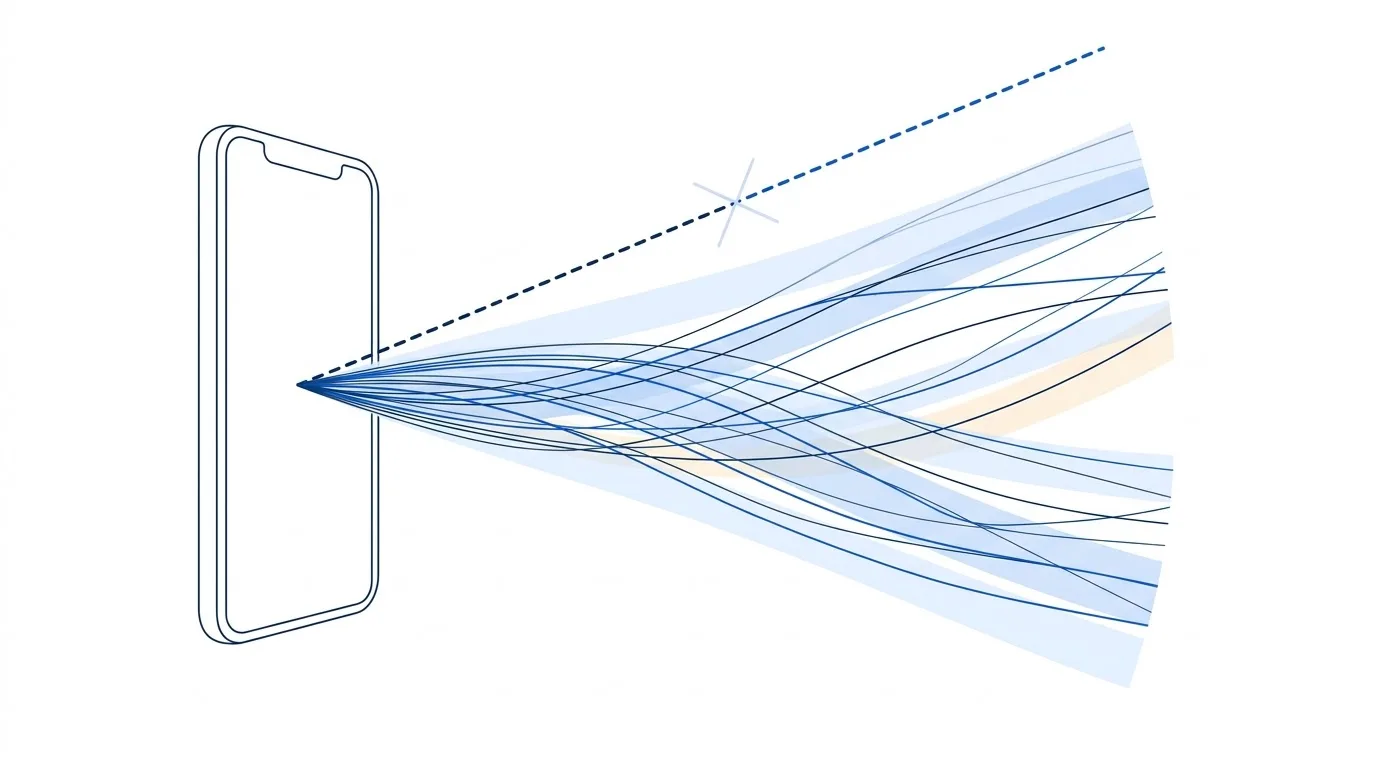
- 1.3A range, not a number: twenty-five years of possible pathsWhere long-run returns come from, and how to read twenty-five years of simulated paths as a range with a median, a 10th and a 90th percentile.~23 min
- 1.4Case: rewrite the "12% a year" landing pageTurn a bold return promise into an honest range with a horizon, a risk line and a clear disclaimer.~32 min
Module examComplete 4 more lessons to unlockModule 2: How much can you lose, and for how long?
Volatility and a typical bad year, drawdown, recovery and time under water, and how the holding period changes the chance of a loss.
- 2.1Volatility and a typical bad yearStandard deviation of yearly returns, what a typical bad year and the worst year look like for stocks and short bonds.~23 min
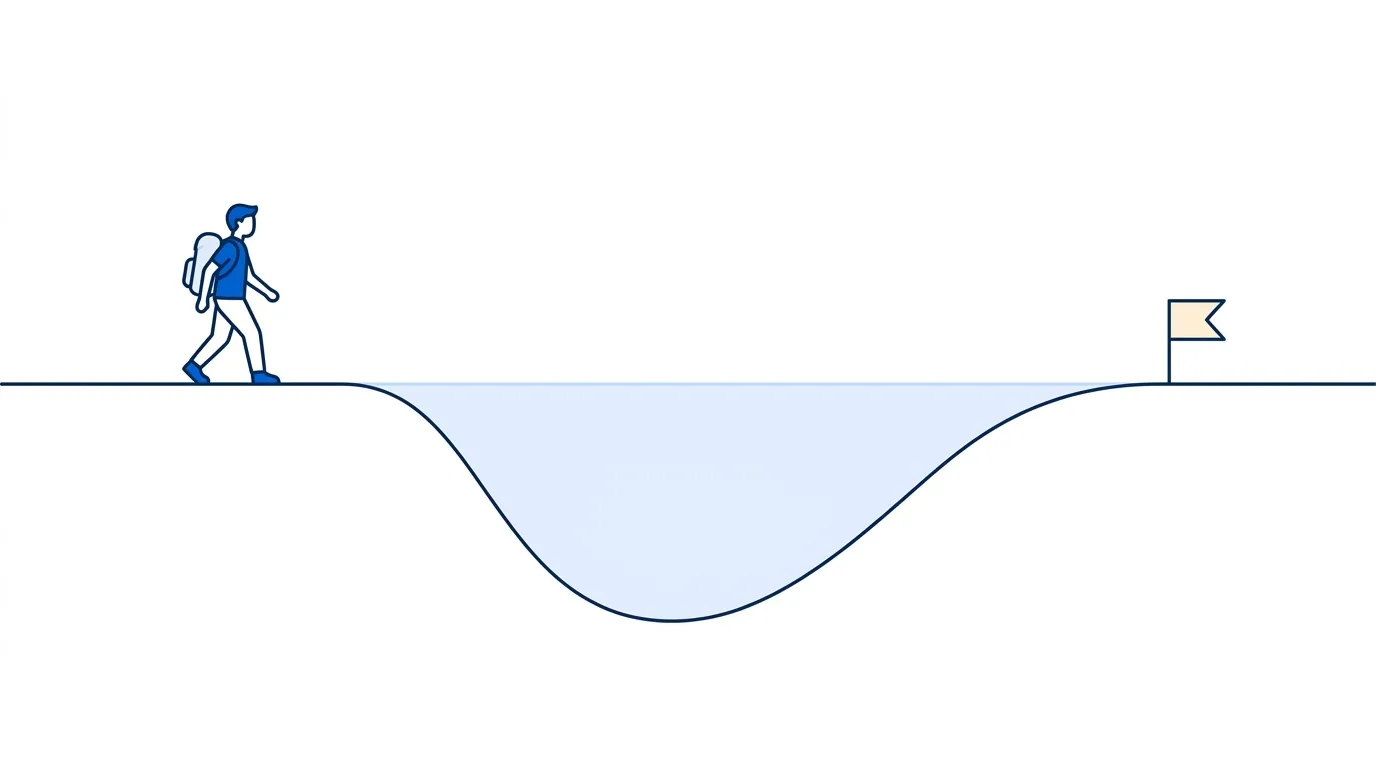
- 2.2Drawdown, recovery and time under waterMaximum drawdown, the gain needed to get back to the peak and how many months a portfolio can stay below it.~23 min
- 2.3Holding period and the chance of a lossHow often 1-, 5-, 10- and 20-year periods ended with a real loss, including a market that went nowhere for 13 years.~22 min
- 2.4Case: the "market is down 30%" messageWrite the in-app message for a deep fall and decide when it should appear.~33 min
Module examComplete 4 more lessons to unlockModule 3: Why should one fund hold thousands of companies?
Company risk vs market risk, why a few big winners drive the returns, and one home country vs the whole world.

- 3.1Company risk vs market risk: how many holdings are enoughTesting a "Top 10 picks" tab in a model of 200 companies, how fast adding holdings removes company-specific risk, and why market risk never goes away.~21 min
- 3.2A few big winners: why owning everything catches themOver 20 years most companies do far worse than the index, almost half lose money and a handful make half the gains. Owning the whole market is the only sure way to own those few.~20 min
- 3.3One country or the world: home markets, currency and stagnationWhy one small home market is a concentrated bet, how it can go nowhere for 13 years while the world grows, and how much of a hryvnia investor's gain can come from the currency.~21 min
- 3.4Case: a user with everything in two betsA beta user holds 70% in the home index and 30% in a tech theme fund. Check the bet against the synthetic history and design what Zapas shows him, without telling him what to buy.~34 min
Module examComplete 4 more lessons to unlockModule 4: Can anyone beat the market?
The arithmetic of the average investor before and after costs, winners that don't repeat, survivorship, and what market timing costs.
- 4.1Before and after costs: the arithmetic of the average investorWhy the average active dollar earns the market before costs and lags it by its costs after them.~22 min
- 4.2Winners that don't repeat: luck, skill and closed fundsWhere yesterday's top funds rank later, how dropping closed funds flatters the average and how long it takes to tell skill from luck.~24 min
- 4.3Timing the market and the best months you missWhat staying invested earns vs missing the few best months, and why the best months sit next to the worst.~23 min
- 4.4Case: "star manager picks" and a "hot theme" tabDecide with fund and index data whether the app should add a star-manager tab and a hot-theme tab.~33 min
Module examComplete 4 more lessons to unlockModule 5: What does a fund really cost?
Every layer of cost from the ongoing fee to FX and tax drag, what a small fee difference does over decades, and how to read a fund factsheet.
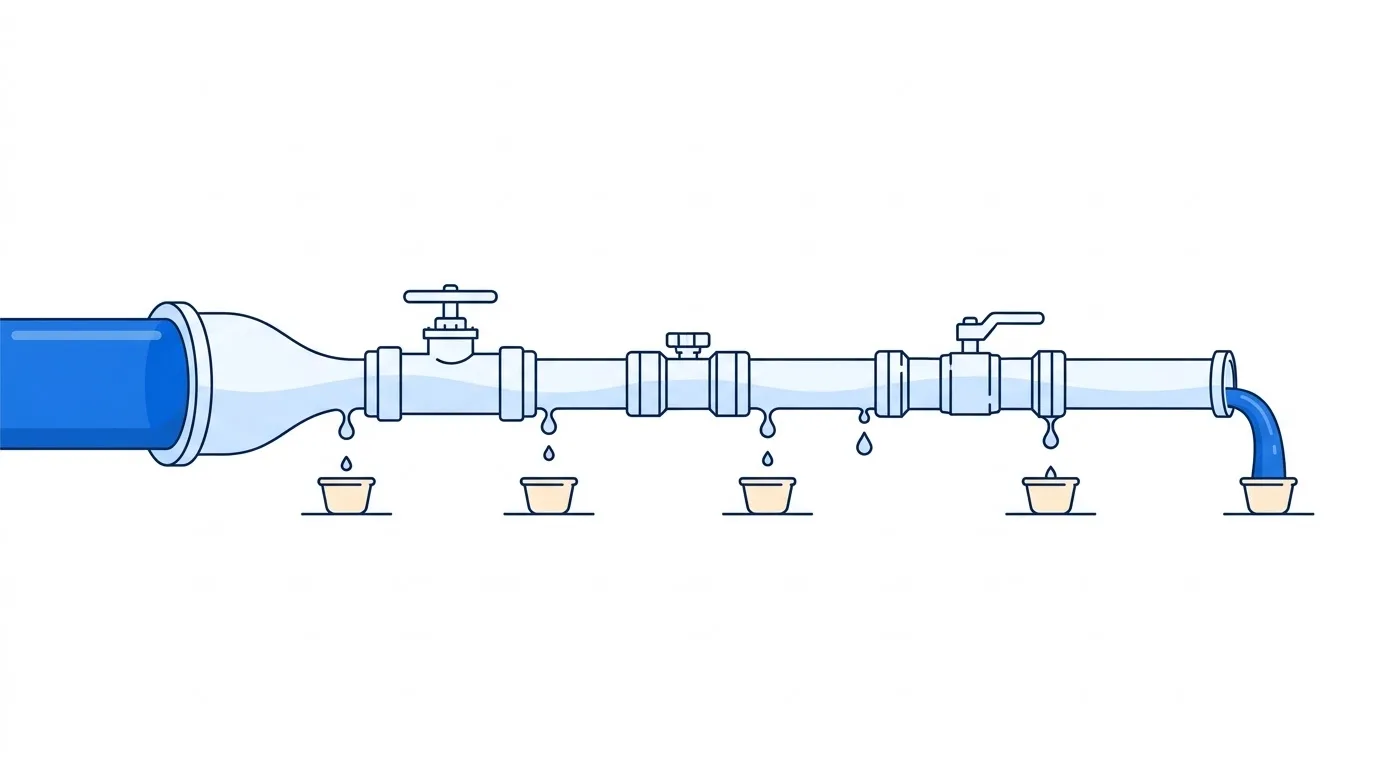
- 5.1Every layer of cost: fee, spread, FX, platform, tax dragFollow 1,000 dollars through every cost of owning a fund and add them up all-in.~22 min
- 5.2What 0.2% vs 1.5% does over 10 to 40 yearsHow much of the final balance different all-in costs take over decades of monthly contributions.~22 min
- 5.3Reading a factsheet: index fund, ETF, accumulating, tracking difference, domicileWhat the lines on a fund factsheet mean and which of them change what you actually pay and get.~25 min
- 5.4Case: pick the fund line-up from six factsheetsChoose three funds for the app from six factsheets, comparing them all-in rather than by headline fee.~34 min
Module examComplete 4 more lessons to unlockModule 6: Building the model portfolios
Bonds, yield and rate risk, the stock and bond mix, risk capacity and tolerance, regular amounts vs a lump sum and rebalancing rules.
- 6.1Bonds: yield, rate risk and the year both fellWhat a bond is, why its price moves with interest rates, short vs long bonds, and a year when stocks and bonds fell together.~22 min
- 6.2Stocks vs bonds: risk capacity, tolerance and the job you haveHow different stock and bond mixes behaved, and how horizon, income and nerves decide the mix.~20 min
- 6.3Regular amounts, a lump sum and rebalancing rulesInvesting at once vs in monthly parts, and rebalancing yearly, by a band or never: drift and drawdown.~25 min
- 6.4Case: three model portfolios and the onboarding questionsDesign three model portfolios and the three questions that place a new user in one of them.~32 min
Module examComplete 4 more lessons to unlockModule 7: The users are the risk (and so are we)
The behavior gap between fund and investor returns, loss aversion, checking, herding and bubbles, and a one-page investment policy written in calm weather.
- 7.1The behavior gap: fund return vs user returnWhy the average user earns less than the fund they hold, and who sold at the bottom.~27 min
- 7.2Losses hurt twice: checking, herding, chasing and bubblesHow loss aversion, checking too often and following the crowd lead to selling low and buying high.~25 min
- 7.3Rules made in calm weather: a one-page investment policyGoal, horizon, mix, monthly amount, rebalancing rule, what to do in a fall and a small capped play bucket.~22 min
- 7.4Case: a beta cohort panic-soldJudge an A/B test of a "pause before selling" screen with a small sample and decide what to ship and measure next.~39 min
Module examComplete 4 more lessons to unlockModule 8: Launching for Ukraine, and the long run
The currency of your goals, buying a global fund from Ukraine, taxes, declaring income and wartime risks, and a one-page plan for the long run.
- 8.1The currency of your goals and the safe part at homeA hryvnia goal vs a dollar world fund under devaluation scenarios, and keeping the safe part in the currency you will spend.~26 min
- 8.2Buying a global fund from Ukraine: domicile, broker, protection, FXWhat to check before you invest from Ukraine: a regulated broker, investor protection, fund domicile, withholding tax and conversion costs.~25 min
- 8.3Taxes, declaring income and wartime risksTax on investment income, declaring foreign income, currency rules under martial law, and documents and access for your family.~25 min
- 8.4Capstone: the launch memo and your own one-page planWrite the launch memo for the app and your own one-page investment plan, including how to draw money down later.~39 min
Module examComplete 4 more lessons to unlock