

- Trainer
- Product managers
- Marketers
- Founders
From Idea to Profitable Product: Building Without Investors
Build a software product that pays for itself. Follow two founders from the first problem worth solving to paying customers, pricing, churn, systems and an offer to buy the company, and learn to make each decision with your own numbers.
Free30 lessons~14 h 18 min of learning
Module 1: Before you start
Your own money or investors, a side project or full time, how much runway you need, and the money milestones that tell you where the business stands.
- 1.1Your own money or investors?The advantages and disadvantages of venture capital against bootstrapping: what an investor really buys, why venture money expects huge growth, what self-funding costs and three questions for choosing how to fund a startup.~26 min
- 1.2Side project or full time?Keeping the job while you start versus quitting, how co-founders with different finances agree on it, and how to protect time and energy either way.~25 min
- 1.3How much money do you need to quit your job?How much money you need to quit your job: your personal runway in months without income from the product, why you keep a reserve, and how many customers stop the countdown.~26 min
- 1.4Money milestones for a startupStartup milestones measured in money, a ladder of sums you can check in the bank: which bill each milestone covers, what it changes in the founders’ week and which work can wait.~30 min
Module examComplete 4 more lessons to unlockModule 2: One repair shop, one problem
Finding a problem shops already pay for, who in a shop decides and who pays, checking the problem in a week and choosing one to solve.

- 2.1Customer pain points they already pay forWhich customer pain points are worth building for: money, hours and homemade systems already spent on a workaround tell a critical problem from a loud complaint.~25 min
- 2.2Who decides and who paysIn a small business the user who feels the problem, the decision maker and the economic buyer who pays are often different people. Talk to each in their own terms.~25 min
- 2.3Customer discovery in a weekA week of customer discovery: a short, planned round of visits and calls, with the rule for dropping a problem written down before the first one, confirms or kills a problem before any code.~27 min
- 2.4Choosing one problemComparing the candidate problems on the same criteria, committing to one, and parking the rest with a date to look again.~34 min
Module examComplete 4 more lessons to unlockModule 3: Sell before you build
Pricing from the cost of how shops cope today, prepayments as the strongest test, a yearly plan from day one and the first prepaying customers.
- 3.1Value-based pricing: start from the cost of todayA value-based pricing example: anchor the first price to what the current workaround costs the customer and what the result is worth, not to your own costs or your fears.~27 min
- 3.2Validate a SaaS idea with prepaymentHow to validate a SaaS idea before you build it: why money up front beats compliments, how to check the solution fits the customer’s week, and how to ask honestly for payment before the product exists.~25 min
- 3.3A yearly plan from day oneMonthly and yearly plans side by side: the discount, the cash up front, how a yearly customer counts in monthly revenue, and what it does to the runway.~27 min
- 3.4The first five prepaymentsA module case: read the pre-sale answers against a rule set in advance, treat prepaid money as a promise, and decide whether to start building.~33 min
Module examComplete 4 more lessons to unlockModule 4: The smallest thing that works
From a solution to a first version: what the MVP must include, what to take ready-made instead of building, and how to release without fear.

- 4.1Problem-solution fit: a solution is not a productProblem-solution fit in practice: a solution has to fit the customer's working day, not just fix the problem on paper. Three questions to check it before writing code.~25 min
- 4.2How to build an MVP: sign up, get value, payHow to build an MVP for a subscription product: the three things a first version needs, how much can stay manual behind the scenes, and when a manual step has to be automated.~26 min
- 4.3Build vs buy: ready-made instead of your ownBuild vs buy software for a two-person team: which parts to rent instead of building, how to pick a service that lasts, and how to keep a way out of vendor lock-in.~25 min
- 4.4Releases without fear: rollback and feature togglesA module case: a late-night release goes wrong, and the habits that limit the damage: small releases, a quick rollback, a feature toggle for anything new and a calm apology.~34 min
Module examComplete 4 more lessons to unlockModule 5: Is the market big enough?
With the first customers paying: narrow or widen the niche, find where the audience gathers, size the market bottom up and choose where to grow next.
- 5.1Ideal customer profile: narrow or widen the nicheBuild an ideal customer profile from the customers who actually get the result, say who is out, and find where the niche's members already talk to each other.~24 min
- 5.2The market, bottom up: a market size exampleA market size example, bottom up: count the businesses that can buy, multiply by the price and check whether your revenue goal fits inside, with GarageDesk in Vinnytsia.~28 min
- 5.3Market expansion: another city or another kind of shop?A module case on market expansion: compare a new city with the same product and a new kind of customer at home on the same numbers, place both in the Ansoff matrix, and choose one.~36 min
Module examComplete 3 more lessons to unlockModule 6: Numbers every month
MRR and churn, why customers leave, raising a price without losing existing customers, and the risk of one customer that is too big.

- 6.1MRR calculation and monthly churnMRR calculation when some customers pay for a year, plus new and lost MRR, monthly churn rate and revenue churn, on one real month of GarageDesk.~30 min
- 6.2Why customers churn and how to reduce itHow to reduce churn by its cause: failed payments, customers who never got value, owners who close, and customers who were never a fit, with a different fix for each.~27 min
- 6.3Raising prices without losing customersWhen the evidence says the price is too low: a new price for new customers, a fair, time-limited path for existing ones with a sample price increase notification, and two tempting offers that quietly cost money: a lifetime deal and a free plan.~27 min
- 6.4Revenue concentration: one customer too bigA franchise of 40 shops wants a special price, custom work and its own branding. Compute the revenue concentration it would create, and answer in a way that keeps the product yours. Ends with the module case.~36 min
Module examComplete 4 more lessons to unlockModule 7: Growth without an ad budget
Referrals and community, support that doesn't eat the founders' week, and a clear answer to "why you and not the alternatives".

- 7.1Referrals and communityCustomers who bring customers: what a referral reward really costs, how many shops it truly adds, and a community the founders serve before they sell to it.~29 min
- 7.2Customer support that doesn't eat the weekSaaS customer support for a small team: answers written once and used many times, questions that disappear when the product changes, and the moment support becomes someone's job.~26 min
- 7.3Why you and not a notebook? A positioning statementWhat customers really compare you with, what only you do, what it's worth in their money, and how to say it in one line in their words: a positioning statement. Ends with the module case.~35 min
Module examComplete 3 more lessons to unlockModule 8: Without heroics, and for sale
A business that runs without the founders' overtime, then an offer to buy it: sell, keep or raise, what it is worth and how the deal works.
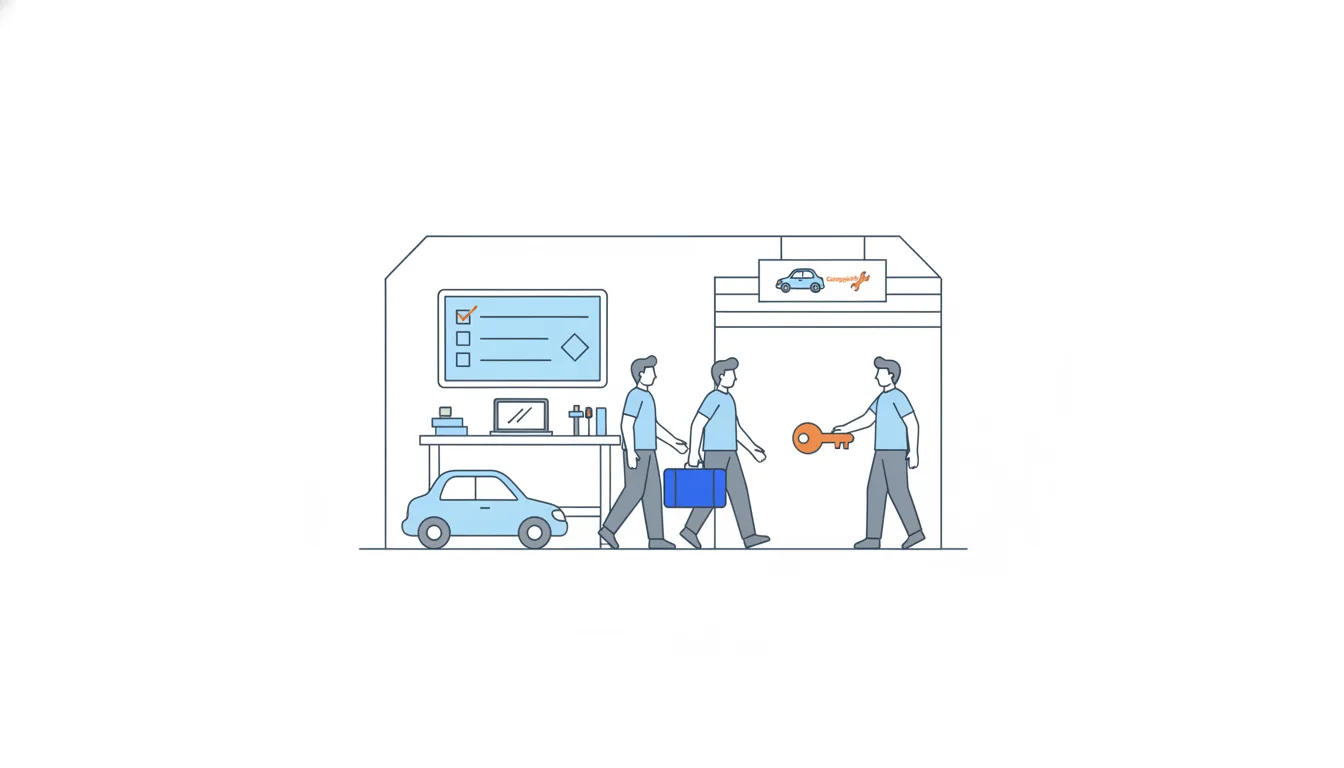
- 8.1Burnout and documented business processesWhen the founders become the bottleneck: how to document business processes, which work to write down first, what a step-by-step procedure needs, what to automate, and how others take over the work.~26 min
- 8.2Sell, keep or raise: an exit strategyTwo offers in one week: a company wants to buy GarageDesk, an investor wants a stake. A business exit strategy with three possible answers, who is really buying, and the questions that decide between them.~28 min
- 8.3How much is the business worth?How much is my business worth? ARR, yearly owner earnings and a multiple: how to turn a small subscription business's numbers into a price range, what moves the multiple, and how an offer compares.~28 min
- 8.4How to sell a business: the dealHow to sell a business, step by step: the letter of intent, checking the buyer, six weeks of due diligence and an earn-out, on GarageDesk's sale. Ends with the final case of the course.~38 min
Module examComplete 4 more lessons to unlock