

Theory
Customer pain points they already pay for
Which customer pain points are worth building for: money, hours and homemade systems already spent on a workaround tell a critical problem from a loud complaint.
~10 min read · 9 exercises · 250 points
Before you start
A loud complaint or a real cost?
A new module and a new month at GarageDesk. It's December, Nina is full time, and the question is where the work starts. Not with the code, Alex says, but with shops. Oscar visits three a day on his sales route anyway, and this week he's brought back two stories: one owner who shouted about his phone for ten minutes, and one who quietly pays someone to do a job by hand.
In this lesson you'll learn which customer problems are worth building for, and how to tell them from loud complaints.
A problem with a price tag
Not every pain point is worth building for. The one to start with is a critical problem: a problem customers already spend on, today, without your product.
Compare two shop owners. Paul shouts for ten minutes about a phone that never stops ringing, but he lets it ring and calls people back in the evening; it costs him nothing. Dennis is calm, but he pays his niece 4,000 UAH every month to call regulars when their oil change is due.
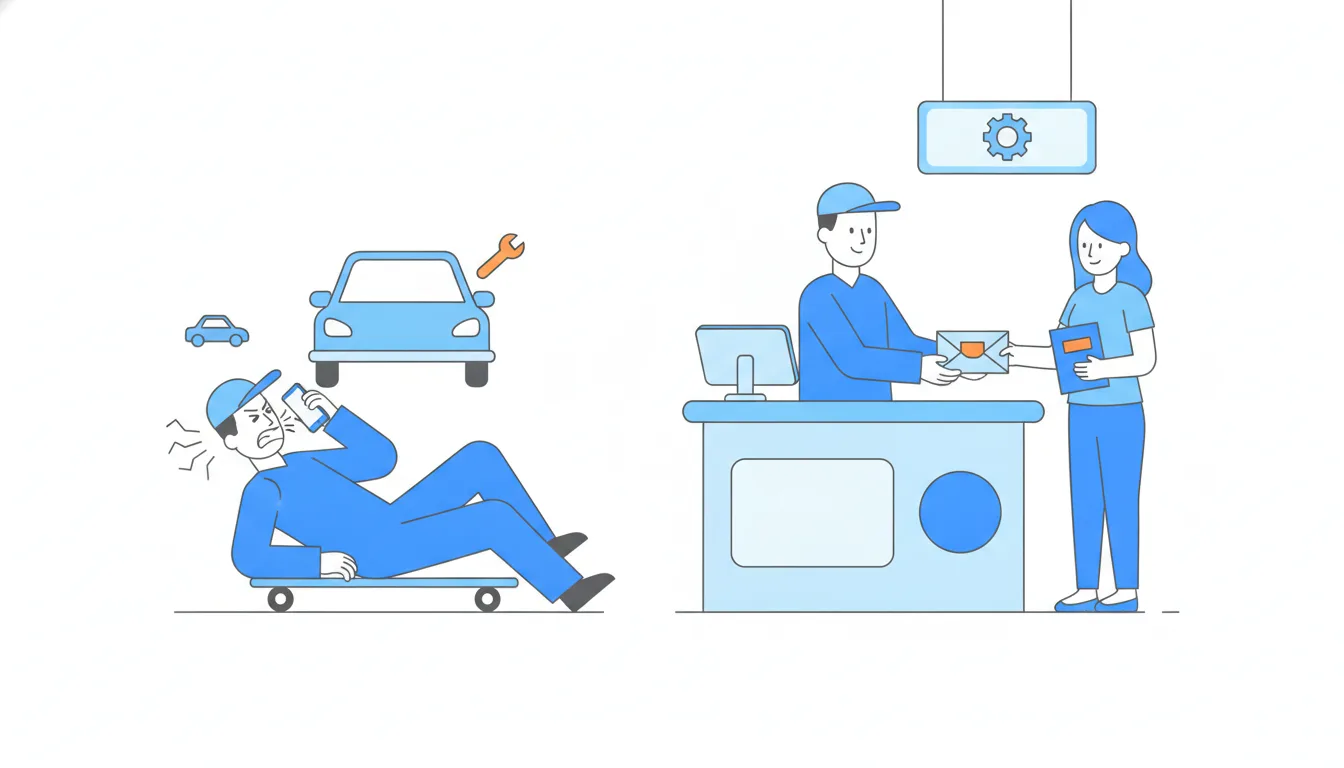
Paul's problem is louder. Dennis's problem has a price tag: a sum he already pays, every month, for a job he could skip. That's a much stronger signal, for two reasons:
- he has already decided the problem is worth money, so you're not asking him to start spending, only to spend differently;
- you know the size of the budget: a solution cheaper or better than 4,000 UAH a month has an obvious case.
Enthusiasm, promises to try and plans for "one day" cost the customer nothing today, so they can't tell you who will pay.
- Do“I pay my niece 4,000 UAH a month to call regulars when service is due.”
- Don't“An app for that would be cool, I'd definitely try it.”
Three places to find the price tag
A problem can be paid for in three currencies. Look for any of them:
- Money: a person or a tool paid to handle it. A niece paid 4,000 UAH a month, an administrator's 1,500 UAH bonus for calling customers back, a booking service the shop pays for and still uses.
- Hours: time someone gives the problem regularly, every week or every month. An owner who types reminders in Viber every Saturday morning is paying with his own time, even though no money changes hands.
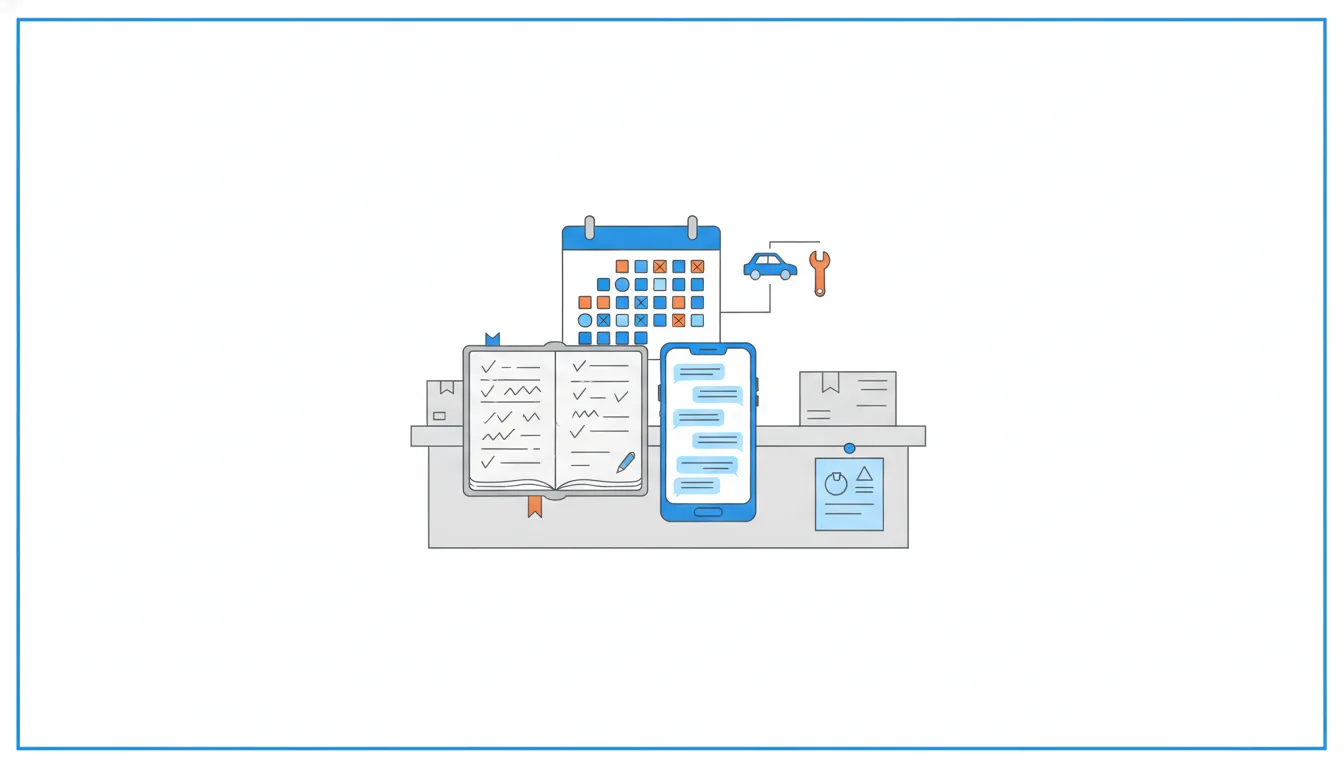
- A homemade system: something people build and keep alive by hand. A notebook of oil-change dates, a spreadsheet, a wall calendar checked every Monday, a group chat with regulars. Nobody maintains those for fun.
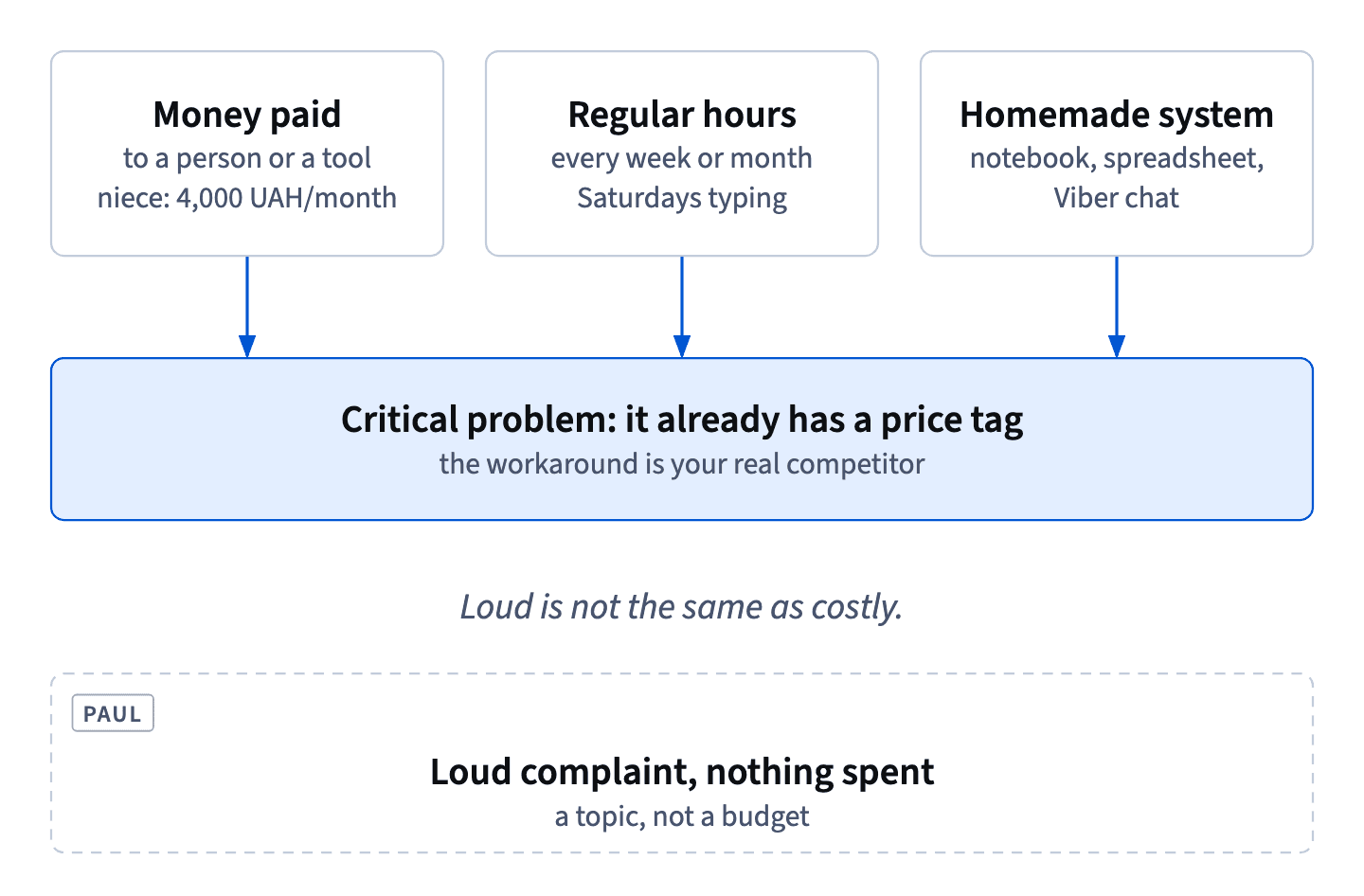
What doesn't count: feelings ("it's terrible") and promises ("I would pay for something like that"). They describe how someone talks about the problem, not what they do about it.
When you write notes after a visit, tag each problem with the currency it's paid in, or with "none". That one tag sorts the page faster than any amount of enthusiasm.
- Do“Owner types Viber reminders every Saturday morning” → hours.
- Don't“I would pay for something like that” → money.
A promise about the future, not spending.
Putting a number on hours
Hours spent on a problem are a real budget, but they're easier to compare once you turn them into a monthly sum:
monthly cost of hours = hours per occurrence × occurrences per month × value of an hour
For the value of an hour, use what that time is worth to the shop: the wage of the person doing it, or, for an owner, what the shop earns from an hour of his work. Ask; don't guess.
Example: an owner spends 3 hours every Saturday morning typing reminders and says an hour of his time is worth 250 UAH. With 4 Saturdays a month: 3 × 4 × 250 = 3,000 UAH a month. That puts his workaround next to Dennis's 4,000 UAH niece, and both are budgets a product could replace.
Two slips are common: counting one occurrence instead of the whole month (3 × 250 = 750) and forgetting that the person's time has a value at all ("he does it himself, so it's free"). An owner's hours are often the most expensive time in the shop.
- Do3 hours × 4 Saturdays × 250 UAH = 3,000 UAH a month.
- Don't3 hours × 250 UAH = 750 UAH a month.
Counts one Saturday instead of four.
A loud pain is not a costly one
Strong emotion is easy to mistake for demand. An owner who complains loudly and at length about a problem shows that the topic matters to him. It doesn't show that there's a budget for it.
The test is behavior, not volume: what did he do about it last time? Paul, asked directly, did nothing. He lets the phone ring and calls people back in the evening, and says it costs him nothing. A shop that has lived with a problem for years without spending a hryvnia on it is unlikely to start with a new product.
There are a few reasons why loud complaints mislead:
- complaining is cheap and even pleasant; paying isn't;
- people talk most about what irritates them today, not about what costs them most;
- a friendly listener invites a good story.
None of this means Paul's problem is worthless. It may become a budget later, for example if missed calls start losing jobs. For now, though, it's a complaint. Write it down, and look for the problems that people already spend money or hours on.
- Do“What did you do about the calls last week?” — “Nothing.” → complaint, no budget yet.
- Don't“He shouted for ten minutes, so that's our best lead.”
The workaround is the real competitor
Whatever a shop does today about a problem, it's your competitive alternative: the thing your product would replace. For most small businesses that isn't another app. It's a niece with a notebook, an owner's Saturday morning, a spreadsheet or a Viber chat.
Reading a note as a competitive alternative tells you two useful things:
- what it costs: 4,000 UAH a month, three hours a week, a spreadsheet someone keeps alive. Your offer has to beat that cost or that effort;
- what it already does well: a niece who knows every regular by name sets a high bar for an automated reminder.
Each kind of note maps to one meaning:
- money paid to a person or a tool → money is already spent on the problem;
- regular hours → time is spent on it;
- a notebook, calendar or chat kept up by hand → a homemade system;
- an angry story with nothing done → a complaint, not a budget yet.
A complaint without a workaround may matter later, but today there's nothing to replace, so there's nothing for a customer to switch away from.
- Do“We keep a notebook of next service dates” → a homemade system we'd replace.
- Don't“Nobody here uses an app for reminders, so we have no competition.”
A cost that comes back beats a big one-off
When you compare price tags, look at how often the cost comes back, not only at its size.
A problem that costs a shop 1,000 UAH or two hours every week is felt every week. The owner remembers it, notices when it gets worse and would notice at once if it disappeared. That makes it easy to talk about, easy to measure and a natural fit for a monthly subscription: the product earns its price every month, in plain sight.
A big cost that comes once a year, such as an annual inspection or a yearly report, is easy to forget in between. The owner shrugs it off for eleven months, and a monthly fee for something used once a year feels like money for nothing.
A quick way to compare: bring everything to the same period. 2 hours a week is about 8 to 9 hours a month, over 100 hours a year. A one-off 3,000 UAH bill is 250 UAH a month.
So in Oscar's notes, write down how often next to how much. Frequency often decides which problem is worth the first visit.
- Do“Two hours every Friday calling regulars”: about 8–9 hours a month, every month.
- Don't“The yearly inspection paperwork costs 3,000 UAH, so it's our biggest opportunity.”
Ask about the last time
To find a price tag, you need facts, and facts live in the past. Questions about the future ("would you pay for this?", "would you use an app that…?") invite a polite yes that costs nothing to give.
Questions about the last time the problem happened get you the real picture:
- "When did it last happen?"
- "What did you do about it?"
- "Who did it, and how long did it take?"
- "What did that cost you last month?"
The answers come back as a number, a name or an honest "nothing", and all three are useful. A number is a price tag. A name (the niece, the administrator) points to a paid person. "Nothing" tells you the problem is a complaint for now.
Keep the product out of the conversation while you ask. As soon as you describe your solution, the talk turns into a pitch and the answers turn into politeness.
The full technique of these conversations has its own course; here the point is narrower: every question should aim at money, hours or a homemade system someone keeps alive.
- Do“When did a call last go unanswered, and what did you do about it?”
- Don't“Would you pay 600 UAH a month for an app that answers your calls?”
Sorting a page of notes
After a long conversation, the notes are full of problems, and the longest story isn't necessarily the one that matters. Sort them with the same three questions for each:
- Is anything spent on it? Money, regular hours or a homemade system.
- How much, in the same unit? Bring hours and sums to a month.
- How often? Weekly beats yearly.
Try it on three notes from one owner:
- Invoices: about ten a month, a minute each. That's roughly 10 minutes a month: real, but tiny.
- Parts prices: loud outrage, nothing done about it. A complaint, no budget.
- Lost regulars: an administrator spends about two hours every Friday calling customers from a spreadsheet. That's about 8 hours of paid staff time a month plus a homemade system. Clearly the one worth a second visit.
Notice that "he complained about all three equally" isn't a reason to drop them all. Complaints are the noise; spending is the signal. Even an owner who grumbles about everything usually pays for one or two problems, and those are where to look.
- DoLost regulars: 2 hours × about 4 Fridays ≈ 8 hours of paid time a month, plus a spreadsheet.
- Don't“Parts prices: he was most upset about it, so that's the one.”
Ready to practise?
Answer the lesson's exercises and earn 250 points the first time you finish it.
Start the exercises