

Theory
Raising prices without losing customers
When the evidence says the price is too low: a new price for new customers, a fair, time-limited path for existing ones with a sample price increase notification, and two tempting offers that quietly cost money: a lifetime deal and a free plan.
~10 min read · 9 exercises · 250 points
Before you start
The cheapest employee he's ever had
A quieter day at GarageDesk. Oscar has been out visiting shops, and one owner told him the reminders bring back about five regulars a month and called GarageDesk the cheapest employee he's ever had. Meanwhile the SMS bill grows with every reminder sent.
In this lesson you'll decide whether the evidence says the price is too low, set a new price for new customers, plan a fair path for existing ones, and see why two tempting offers quietly cost money.
When to raise the price: evidence, not wishes
"He'd pay more" from one happy owner is a feeling. A price rise should rest on several signals that point the same way, from many customers:
- value several times the price: Dennis says reminders bring back about five regulars a month; one returned oil change leaves about 700 UAH of margin, so 5 × 700 = 3,500 UAH a month for a 600 UAH subscription;
- few price objections: when Oscar sells, almost nobody argues about 600;
- nobody leaves over price: none of the eleven departed shops named the price as the reason.
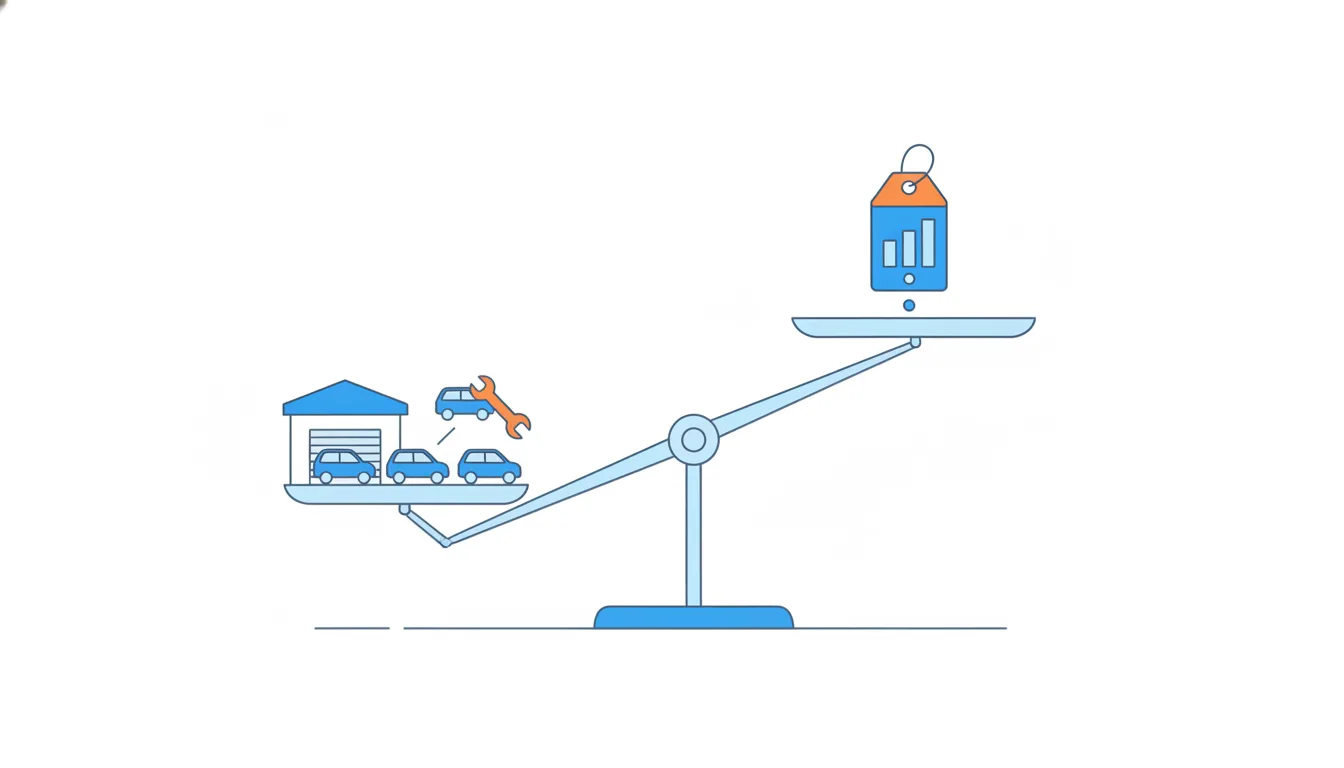
Rising costs add a reason, though not a justification on their own: the more reminders shops send, the bigger the SMS bill.
What isn't evidence? The founders wanting to earn more says nothing about what shops will pay. A cheaper general CRM is a different product for a different need. And one enthusiastic owner is one data point.
When value, objections and churn reasons all agree, the price is probably too low, and keeping it there quietly underfunds the product the customers rely on.
- Do"Value ≈ 3,500 a month vs a 600 price, almost no price objections, no one left over price."
- Don't"Dennis said we're cheap, so let's raise the price."
One owner's comment is a feeling, not evidence.
Testing the new price: watch the close rate
Raising the price for new customers is also an experiment, and it needs one number to read: of the shops Oscar talks to, how many end up paying? That's the close rate.
Compare it for the first months at 750 with the months at 600:
- if it barely moves, shops weren't choosing GarageDesk because it was cheap. The old price was too low, and every new shop now brings 25% more revenue;
- if it drops sharply, the price crossed a line for some shops. You learned it cheaply, on new shops only, and you can adjust before existing shops ever move.
Two cautions. First, with a few new shops a month, a difference of one or two sales is noise; read the trend over several months, not one week. Second, don't change other things at the same time (a new city, a new pitch, a new guarantee) without noting it, or you won't know what moved the number.
The common misreading is the opposite: seeing the close rate hold steady and thinking "the price must be too high, nobody is excited". A stable close rate at a higher price means the value was there all along.
- Do"Close rate at 600: about the same as at 750 after three months. The old price was too low."
- Don't"Two fewer sales this week at 750: back to 600."
One week of a few sales is noise, not a signal.
A new price for new customers first
The safest place to try a higher price is with customers who have never seen the old one. From 1 January new GarageDesk shops pay 750 UAH a month or 7,500 UAH a year. In Khmelnytskyi nobody has heard of 600 anyway, so nobody feels anything was taken away.
The yearly plan keeps the same logic as before: ten months' price for twelve months (10 × 750 = 7,500).
In MRR a yearly plan counts as price ÷ 12:
- one new yearly shop adds 7,500 ÷ 12 = 625 UAH to MRR;
- twelve monthly payments would be 12 × 750 = 9,000 UAH, so the yearly plan saves the shop 1,500 UAH, two months' price, a discount of 1,500 ÷ 9,000 ≈ 16.7%.
Count a yearly shop at 625, not 750. Using the monthly price would overstate MRR by 125 UAH for every yearly shop, the same slip as counting the old yearly plan at 600 instead of 500.
- Do7,500 ÷ 12 = 625 UAH of MRR per new yearly shop.
- Don'tA new yearly shop adds 750 UAH to MRR.
The yearly plan is cheaper per month; that's its point.
The price notice: numbers it doesn't hide
Existing shops hear about the new price now, in November, before anyone sees 750 on the website. A good notice fits on one phone screen and answers every question before it's asked:
- what changes and from when: 750 a month (7,500 a year) for new shops from 1 January;
- what stays the same for this customer, and until when: 600 a month through next year, yearly renewals at 6,000;
- when and how they move: to 750 from 1 January the year after, with a reminder a month before;
- why: an honest reason, such as more reminders and SMS costs and the features shops ask for;
- who to call: a named person.
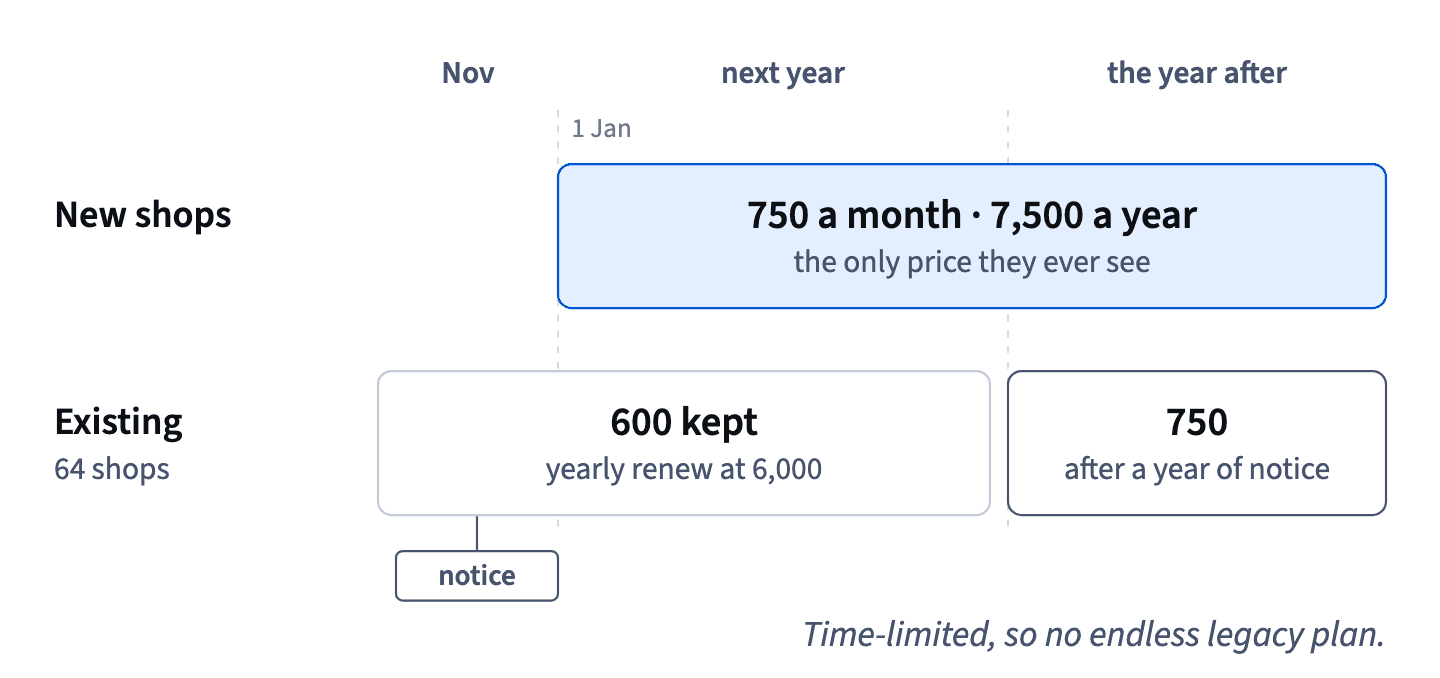
It doesn't hide the size of the change. The increase is 750 − 600 = 150 UAH a month, 150 ÷ 600 = 25%. Over a year a monthly shop pays 150 × 12 = 1,800 UAH more, about half of what Dennis's five returning cars bring him in a single month (3,500).
No apologies, no fine print, no vague "prices may change". Stating the numbers plainly is what makes the notice trustworthy.
- Do(750 − 600) × 12 = 150 × 12 = 1,800 UAH more a year.
- Don't750 × 12 = 9,000 UAH more a year.
That's the whole new yearly bill, not the increase.
Existing customers: a fair, time-limited path
Existing customers are the hard part of a price rise. GarageDesk's 64 shops took a risk on it early; five prepaid before a line of code existed. There are three ways to handle them:
- Raise everyone's price on 1 January. Fast extra revenue, but early customers feel ambushed and some leave. It spends trust you can't buy back.
- Keep 600 forever. Feels generous, but the old price becomes a legacy plan that never ends: part of the base underpriced for years while the product keeps improving for them.
- A fair, time-limited path. New shops pay 750 from 1 January; existing shops keep 600 through all of next year (yearly shops renew at 6,000 then too) and move to 750 the year after, with notice now.
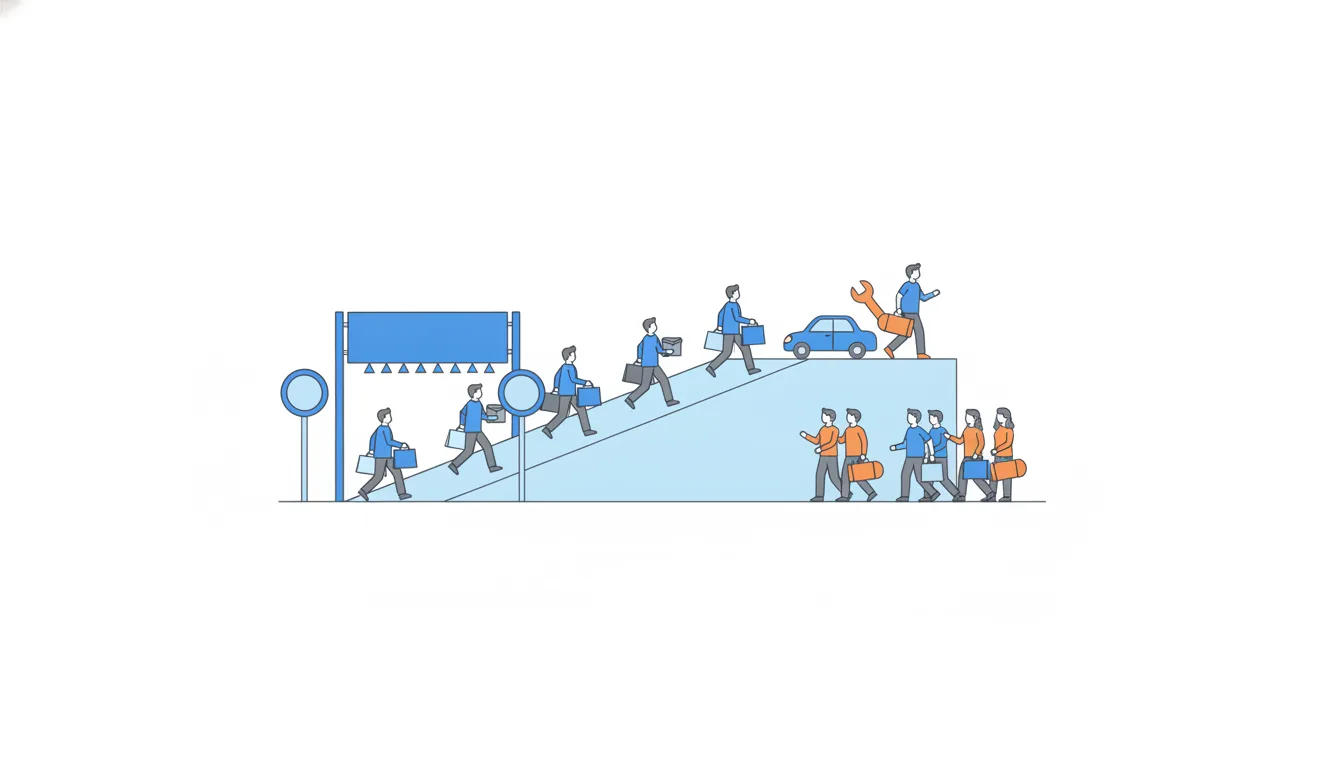
The third way keeps both things that matter: trust, because nobody is surprised and early customers get plenty of time to prepare; and revenue, because the whole base reaches the new price on a known date. The key is that the end date exists and is written down. Without it, "for now" quietly becomes "forever".
- Do"Existing shops: 600 through next year, 750 from 1 January the year after. Notice goes out in November."
- Don't"Existing shops keep 600 for now; we'll see later."
No end date: a legacy plan that never ends.
A lifetime deal: count it per customer
A lifetime deal sounds like money: a deals website offers to sell GarageDesk for 9,000 UAH once, forever, to a hundred shops. That's 900,000 UAH at once.
Count it per shop instead. An average shop pays 750 UAH a month, and with monthly churn around 5% it stays about 1 ÷ 0.05 = 20 months. So:
- lifetime revenue of an average shop ≈ monthly price ÷ churn = 750 ÷ 0.05 = 15,000 UAH;
- a lifetime-deal shop pays 9,000 once (twelve months at 750);
- revenue given up per shop: 15,000 − 9,000 = 6,000 UAH.
And the costs never stop: every reminder a lifetime shop sends is an SMS GarageDesk pays for, forever, with no revenue to cover it.
The estimate is rough, but the gap is large enough that the conclusion holds. Add who buys on a deals website (bargain hunters, mostly outside the niche) and the deal makes sense only as emergency cash with clear terms. GarageDesk isn't in an emergency.
- Do750 ÷ 0.05 = 15,000; 15,000 − 9,000 = 6,000 UAH given up per shop, plus SMS costs forever.
- Don't"100 × 9,000 = 900,000 UAH: take it."
Counts the cash now and ignores the revenue and costs later.
Lower the risk, not the price
When a new customer hesitates, the question behind it is usually "what if this doesn't work for us?" There are two ways to answer it.
Give the product away with a free plan. For GarageDesk that means paying for SMS reminders to shops that may never pay, attracting shops that like free things, and setting limits that don't bite when value arrives.
Take the risk off the customer while keeping the price: money back in the first month if no regular comes back. This works because it's tied to the result the shop is buying:
- a shop that gets the result pays the full price and has no reason to complain;
- a shop that doesn't get it loses nothing, and GarageDesk learns exactly where onboarding failed;
- the cost is limited to one month for the shops that didn't succeed.
A guarantee like this also signals confidence. It says, in plain terms, "we expect regulars to come back". A free plan says something else: "try it, maybe it's worth something". Keep the guarantee simple and honest: one condition, one month, no fine print.
- Do"If no regular comes back in your first month, we return the 750."
Tied to the result, limited to one month.
- Don't"Free plan with 50 reminders a month, no time limit."
Costs real SMS money and never forces a decision.
Freemium: is the free plan free for you?
A free plan works when two things are true:
- a free user costs almost nothing to serve;
- the limits bite exactly when a customer starts getting value, so the people who benefit move to paid.
For GarageDesk neither holds. Its value is delivered through reminders, and every SMS or Viber message costs money. A free shop that uses the product well costs more, not less, and it takes support time too. "Software costs nothing to copy" is true of code, not of the messages the code sends.
And the limits wouldn't bite at the right moment: a free shop gets its first returning regular, the aha moment, and has every reason to stay free.
If the real worry is risk for a new shop ("what if it doesn't work for us?"), lower the risk without giving the product away: money back in the first month if no regular comes back. The shop risks nothing; GarageDesk pays only for shops that didn't get the result, and those are exactly the cases worth learning from.
- Do"Pay 750; if no regular comes back in the first month, we refund it."
- Don't"Free forever for small shops; upgrade when you're ready."
Every free reminder is a paid SMS, and the limit never bites.
Ready to practise?
Answer the lesson's exercises and earn 250 points the first time you finish it.
Start the exercises