

Theory
Why customers churn and how to reduce it
How to reduce churn by its cause: failed payments, customers who never got value, owners who close, and customers who were never a fit, with a different fix for each.
~10 min read · 9 exercises · 250 points
Before you start
Three calls, three stories
Back at GarageDesk, the founders ask you and Alex about a less happy number: some shops have cancelled. Oscar called the three that left in October and heard three different stories, and Nina has gone through everyone who has left since the March launch.
In this lesson you'll sort churn by its causes, from failed payments to customers who never got value, and match each cause with its own fix.
Sort churn by reason before fixing it
A churn rate is one number made of very different stories. You can't reduce "5.2%"; you can only reduce the reasons inside it, one at a time, each with its own fix. So first write down who left and why, then sort.
Nina went through all eleven shops that left GarageDesk since the March launch:
- 4 failed payments: a card expired, retries failed, nobody noticed. The shop never decided to leave. Fix: payment rescue.
- 4 never loaded their clients: no reminder ever went out, so they never saw the value. Fix: faster onboarding.
- 1 owner sold his shop: the customer's business changed. Fix: nothing in the product; call the new owner.
- 2 went to a general CRM: they mostly needed parts accounting and invoicing, outside the niche. Fix: sell to the right shops.
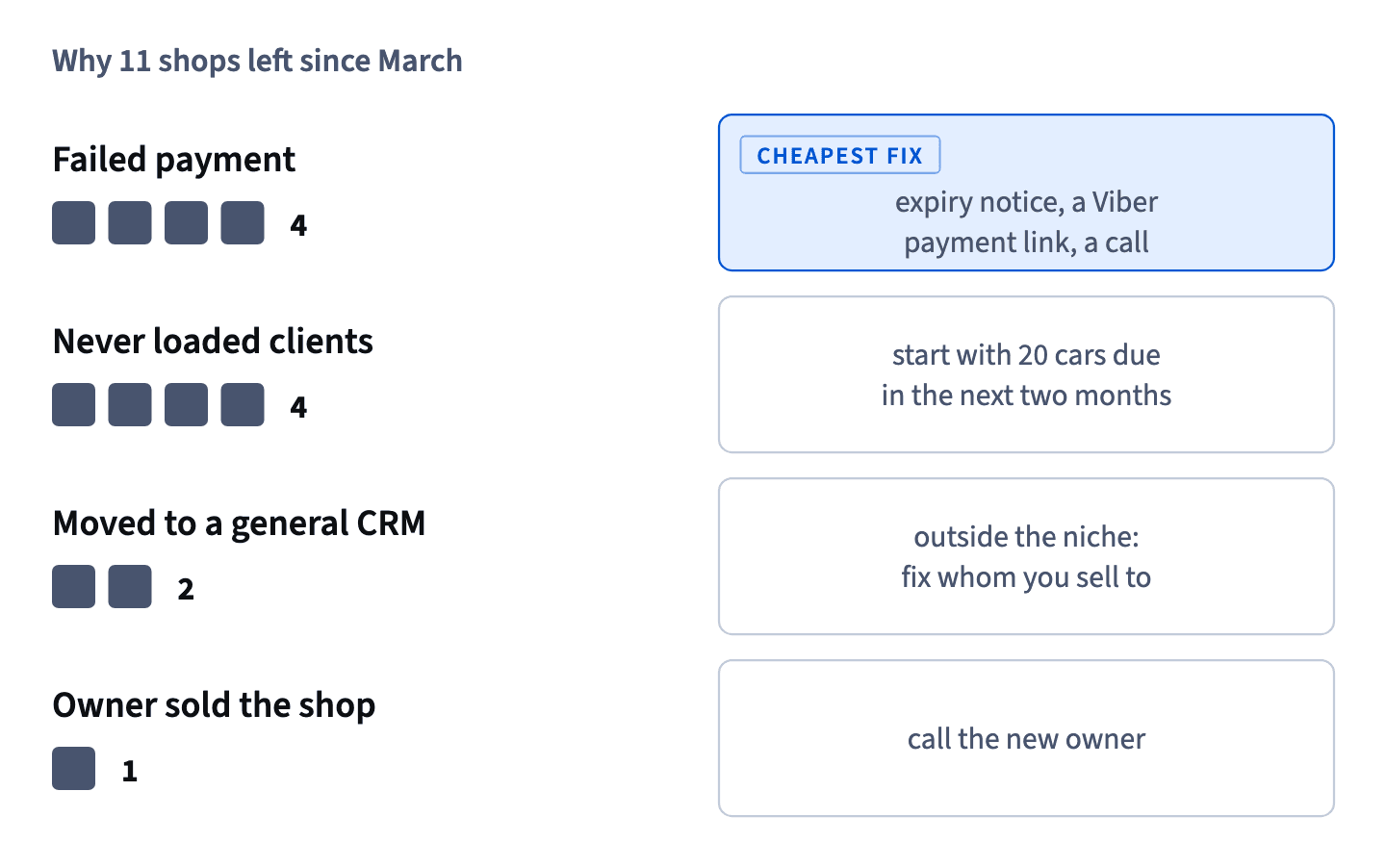
Sorted this way, eight of eleven departures (failed payments plus empty client lists) have fixes that don't require a single new feature. That's the usual surprise: most churn is a process problem before it's a product problem.
- Do"11 left: 4 failed payments, 4 empty client lists, 1 sold, 2 poor fit. Fix payments first."
- Don't"Churn is 5%; let's build more features so shops stay."
Treats eleven different stories as one problem with one fix.
Reach the owner where the owner reads
A payment-rescue message only works if the right person sees it in time. For GarageDesk that's the shop owner, who is under a car most of the day and reads Viber between jobs.
The default many products use is an automatic email, "Payment failed", sent to whatever address was used at sign-up. In a small repair shop that's often a general inbox nobody opens. The October shop's owner never knew his card had expired; he would have paid.
A message that rescues the payment has three properties:
- the right channel: Viber to the owner, not email to an inbox;
- one easy action: a payment link that takes a minute, not "log in and update your billing details";
- a human follow-up: if nothing happens, Oscar calls.
The same principle runs through the whole lesson: churn is reduced by meeting customers where they actually are. The provider's automatic retries handle the technical part. The human part, the right message to the right person, is what turns a failed card back into a paying shop.
- DoViber to the owner: "Your card didn't go through for GarageDesk. Here's a link to pay in a minute. Reminders keep running meanwhile."
- Don'tAutomatic email to the sign-up address: "Payment failed. Log in to update your billing details."
Wrong inbox, extra steps, nobody follows up.
Involuntary churn: rescue the failed payment
A shop whose card fails didn't decide to leave. That's involuntary churn, and it's the cheapest churn to fix, because the customer still wants the product. At GarageDesk it was 4 of 11 departures. The payment provider retries twice and then gives up; the October shop's owner simply didn't know.
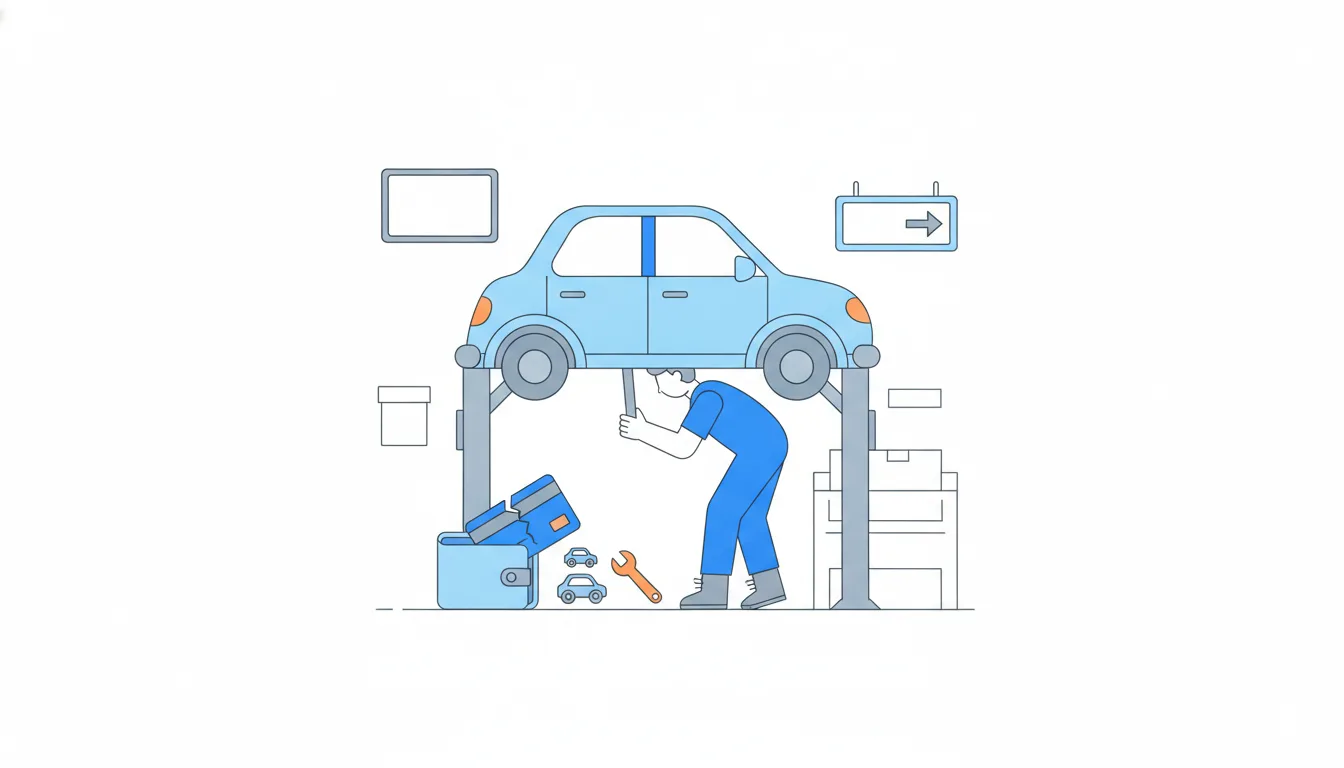
The rescue is a short sequence, from prevention to a person:
- a week before the card expires, send the owner a notice with a link to update it;
- the payment fails: the provider retries automatically over the next days;
- after the failed retries, a Viber message to the owner with a payment link;
- if there's still no payment, Oscar calls;
- pause instead of delete: keep the shop's data so it can come back with one payment.
The order goes from cheap and automatic to personal. And the last step matters: deleting a shop's client list on the day a payment fails turns a forgotten card into a lost customer for good.
- DoExpiry notice → automatic retries → Viber with a payment link → a call → pause, keep the data.
- Don'tPayment failed → account deleted the same day.
A forgotten card becomes a customer lost for good.
The aha moment and the road to it
The aha moment is the point where a customer first sees the product keep its promise. For GarageDesk it's when a regular the owner had forgotten about drives in and says, "I got your reminder."
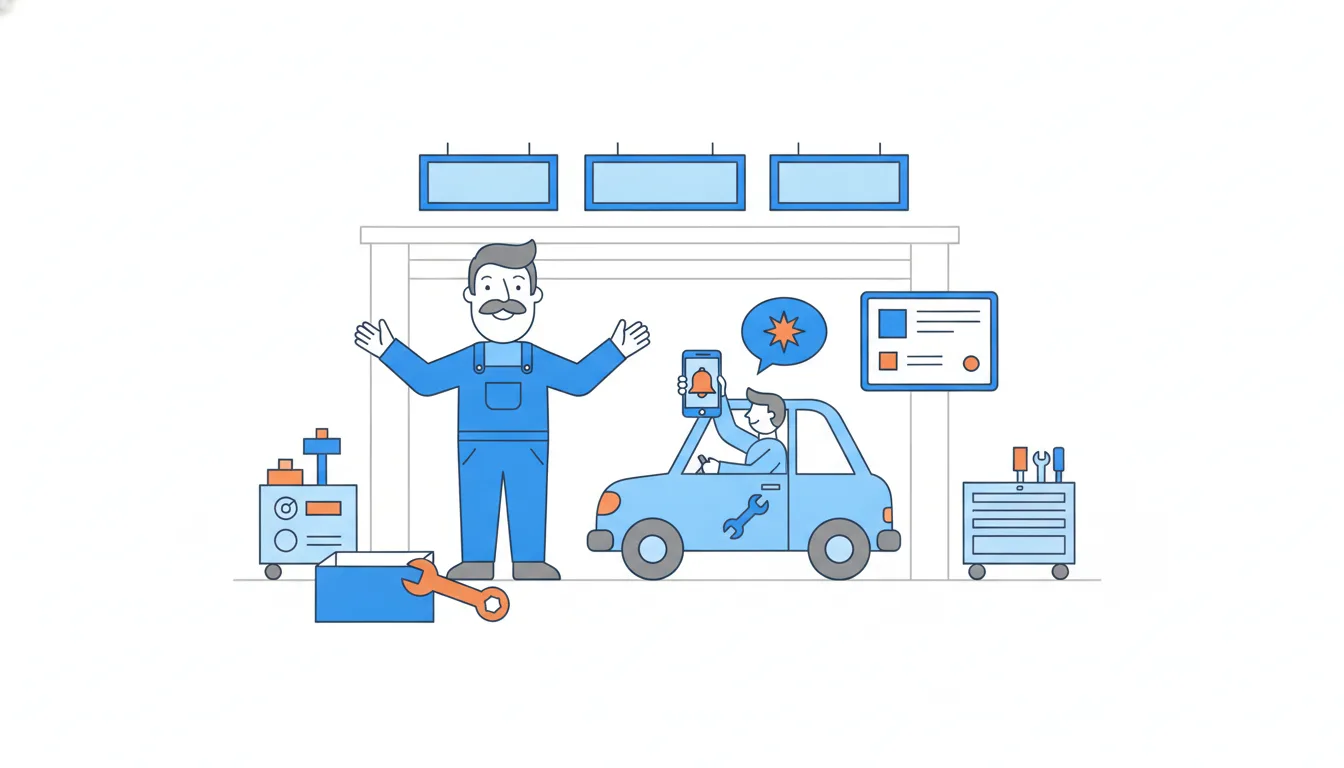
Everything before that moment is a cost for the shop: creating an account, typing in clients, entering mileage. A shop that doesn't reach the aha moment within a month or two leaves, and four of GarageDesk's eleven departures were exactly that.
So pick the aha moment carefully. Logging in, paying the first invoice or entering the hundredth car are steps toward the value, not the value itself. Then shorten the road to the real one:
- start small: on the first call, enter only the cars due for service in the next two months, about twenty, so the first reminders go out that week;
- don't ask anyone to type in five years of a notebook;
- flag any shop with no reminder sent after two weeks, and call it.
A shop that has seen one car come back has a reason to stay. A shop that has only done chores has a reason to cancel.
- DoFirst call: enter the ~20 cars due in the next two months; first reminders go out this week.
- Don't"Please import your whole client history before we start."
Puts the biggest chore in front of the first result.
A sold shop is a warm lead
Some departures have nothing to do with the product. One of GarageDesk's eleven departed shops left because the owner sold his shop. No feature would have kept him: the customer's business changed.
But the shop didn't disappear. It's still a repair shop, with the same bays, the same regulars and, very likely, the same administrator who used GarageDesk at the counter. The new owner is taking over a business that already knew the product.
That makes the new owner the warmest lead you'll get this month:
- the staff may already know how reminders work;
- the client list and history are still in GarageDesk, paused rather than deleted;
- the new owner needs to keep the regulars coming back during the handover, exactly the problem GarageDesk solves.
So the right move is a call to the new owner, not a shrug and not an emergency product change. And it's one more reason never to delete a shop's data on the day it leaves: keeping it is what makes this call easy.
- Do"Congratulations on the shop. Your team already used GarageDesk; want to keep the reminders running?"
- Don't"Owner sold the shop: lost customer, close the file."
Walks away from a business that already knows the product.
Poor fit: fix whom you sell to
Not every departure is a failure to fix in the product. Two of GarageDesk's eleven departed shops moved to a general CRM because they mainly needed a warehouse for parts and invoicing.
The tempting response is to build what they wanted: "add a warehouse and invoicing module, and win shops like them back." Ask first whether they're your niche. GarageDesk chose shops that live on repeat service. A shop that mostly needs parts accounting was a poor fit from day one. Chasing it turns GarageDesk into a worse copy of the general CRM and takes time from the shops it serves well.
The better fix is upstream, in sales: qualify new shops earlier, so Oscar doesn't sign shops whose main need is something GarageDesk doesn't do. A couple of questions on the first call ("Do your regulars come back for service? What do you mostly need software for?") prevent the churn before it's sold.
Poor-fit churn is still useful. It shows where the niche's edge is, and it's a lesson about whom you sell to, not a feature request.
- DoOscar asks on the first call: "Do your regulars come back for service? What do you mostly need software for?"
- Don't"Two shops left for a CRM with a warehouse, so we'll build a warehouse."
Rebuilds the product around customers outside the niche.
What avoidable churn costs
Sorting churn by reason lets you ask a useful question: what would churn have been without the avoidable losses?
GarageDesk's October: 58 shops at the start, 3 left.
- an expired card nobody noticed: avoidable with payment rescue;
- a shop that never loaded its clients: avoidable with faster onboarding;
- a shop that moved to a general CRM: a poor fit, not avoidable by the product.
If the two avoidable losses had been saved, only 1 shop would have left: 1 ÷ 58 ≈ 0.017 → about 1.7%, instead of 3 ÷ 58 ≈ 5.2%.
Keep the same base, the 58 shops at the start. Saving two shops doesn't change who was there on 1 October. A common slip is to subtract the percentages loosely ("5.2% minus two shops") or to divide by the end-of-month count.
The number makes the priority obvious. Two cheap process fixes, a payment-rescue sequence and a first call that enters twenty cars, would cut October's churn by about two thirds, before anyone writes a new feature.
- Do1 ÷ 58 = 0.017 → about 1.7% churn if the two avoidable losses were saved.
- Don't1 ÷ 64 ≈ 1.6%.
Churn is always divided by the customers at the start of the month.
Churn warning signs: watch the silence
Most customers go quiet long before they press "cancel". If you see the silence, there's still time for a call. The signals come straight from the data:
- no reminders sent for 30 days: the shop has stopped feeding the system;
- nobody logged in for three weeks: nobody is looking;
- a card expiring next month: an involuntary churn waiting to happen;
- a new shop with an empty client list after two weeks: it's stuck before the aha moment.
Nina turns these into a list; every Monday Oscar calls the shops on it. A call before they decide is worth ten after.
Some signals point the other way. A shop switching from the monthly to the yearly plan is committing for twelve months, a sign of health, not risk.
The payoff can be large. In October, two of the three losses were avoidable: the expired card and the empty client list. Had both been saved, churn would have been 1 ÷ 58 ≈ 1.7%, under 2%, instead of 5.2%.
- DoMonday list: no reminders in 30 days, no logins in three weeks, cards expiring, empty new accounts. Oscar calls each.
- Don'tWait for the cancellation, then ask why.
By then the decision is made.
Ready to practise?
Answer the lesson's exercises and earn 250 points the first time you finish it.
Start the exercises