

Theory
Referrals and community
Customers who bring customers: what a referral reward really costs, how many shops it truly adds, and a community the founders serve before they sell to it.
~10 min read · 9 exercises · 250 points
Before you start
Ten thousand for two shops
Winter at GarageDesk, and a new module about growth. Oscar has a confession: in January he spent 10,000 UAH on social media ads, and two shops signed up. Meanwhile, when he asks other customers how they found GarageDesk, the answer is almost always another owner or a mechanics' chat group.
In this lesson you'll work out what a new customer really costs, what a referral reward costs and adds, and how to serve a community before selling to it.
CAC: what one new customer costs
CAC (customer acquisition cost) is what you spend on winning customers in a period, divided by the new customers that spending brought in:
CAC = sales and marketing spend / new customers
Oscar's January test: 10,000 UAH of ads in social networks, 2 shops signed up. CAC = 10,000 / 2 = 5,000 UAH per shop.
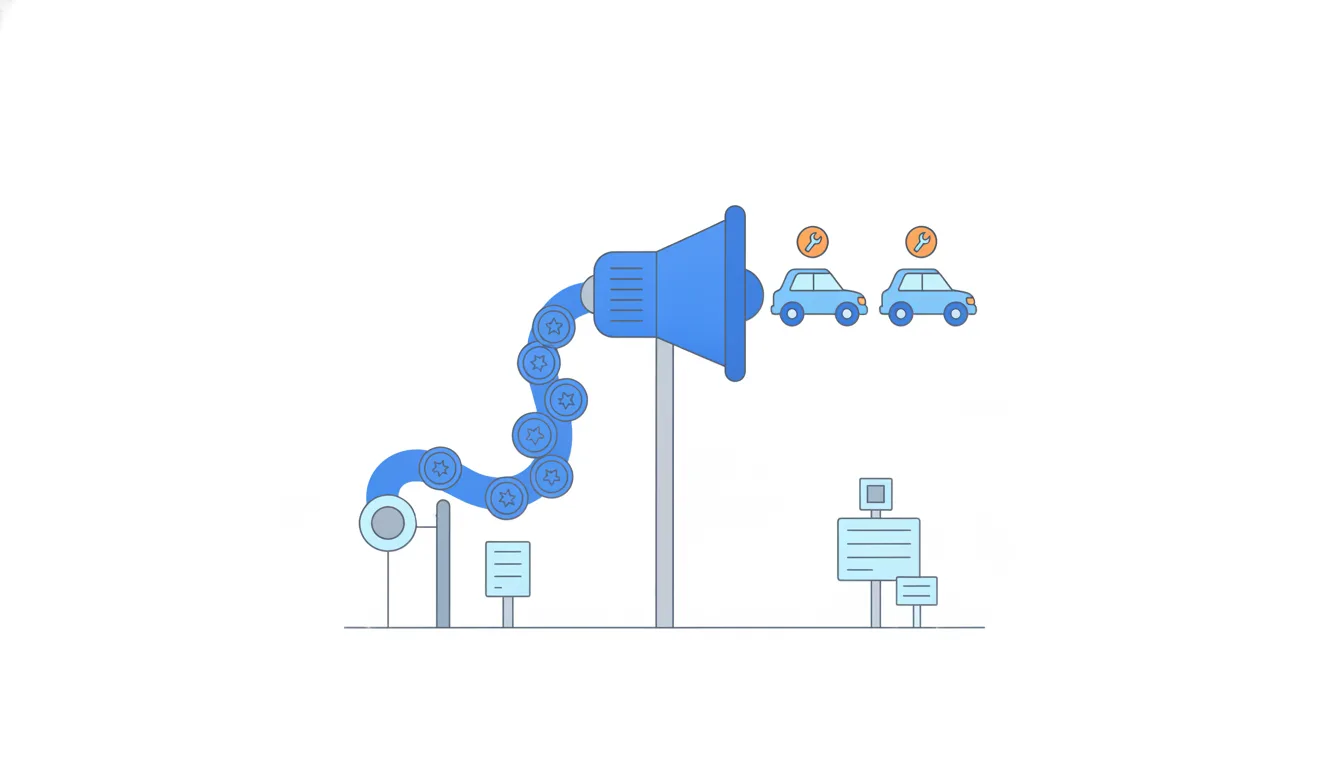
The number means little until you compare it with what a customer pays. A new shop pays 750 UAH a month, so the ad money comes back only after more than six months of subscription, and only if the shop stays that long. For two founders with no investor, that is cash locked up for half a year per shop.
Measure CAC per channel, not only for the whole business. A blended figure hides an expensive channel behind a free one: shops that came on another owner's advice cost almost nothing and would make the ads look cheap. Divide a channel's full spending, discounts and free months included, by the customers that channel actually brought.
- DoAds in January: 10,000 UAH / 2 shops = 5,000 UAH per shop.
- Don't10,000 UAH / 120 shops we have = about 83 UAH per shop.
Divides one channel's spend by every customer, including the ones who came for free.
Who recommends to whom
Word of mouth is customers telling other potential customers about a product on their own. In a close-knit niche it is often the cheapest and most trusted channel, and it usually works long before anyone builds a program for it. Ask new customers how they found you: at GarageDesk the answer is almost always “another owner told me” or “I saw it in the mechanics' Telegram group”.
People recommend when it helps someone they like and costs them nothing. A shop owner will never help the shop across the street: it competes for his regulars. He will gladly help a cousin with a shop in another town, a friend in another district, an owner he meets at the parts counter. There, recommending a good tool makes him look like the one who knows.
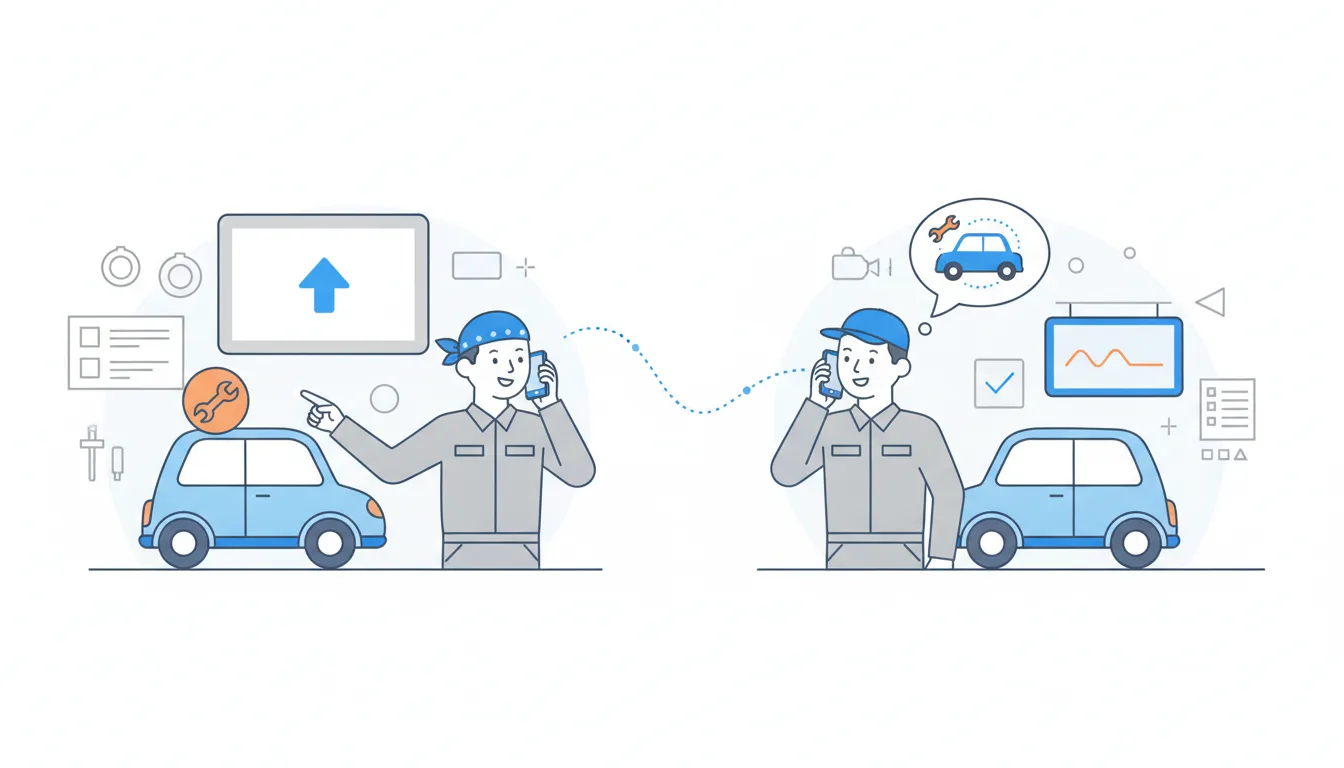
So the message to happy customers is not “invite everyone”. It is “know someone in another town?” Aim referrals at people outside the customer's own competitive area, and at people who can actually buy: owners of independent shops, not car owners or dealerships.
- Do“Know an owner in another town who loses regulars? Here's your link.”
- Don't“Invite every shop you know!”
Includes the shop across the street, which no owner wants to help.
A free month is a real cost
A referral program rewards customers for bringing in new customers, often with a discount or a free month. A two-sided reward suits a small B2B product: the new customer gets a deal and someone they trust to ask questions; the recommender gets a thank-you they can feel.
“It's not cash” is the trap. A free month is revenue you would otherwise have collected, so it counts as a cost of the program exactly like ad money does. Price each side at what that customer actually pays.
At GarageDesk most recommenders are early shops still on 600 UAH a month; new shops pay 750. One successful referral therefore costs:
600 (recommender's free month) + 750 (new shop's free month) = 1,350 UAH
That is the reward per referral. It is not yet the cost per customer the program won: some referred shops would have come anyway, and they are paid for too. Keep the two numbers apart: first the cost of one referral, then the total cost divided by the shops the program really added.
- DoOne referral = 600 + 750 = 1,350 UAH of revenue given away.
- Don't“Free months cost us nothing: no money leaves the account.”
Revenue you give up is a cost.
- Don'tOne referral = 2 × 750 = 1,500 UAH.
Most recommenders are early shops that pay 600, not 750.
Reward paying customers, not sign-ups
The trigger of a referral reward decides what the program buys. Reward a sign-up and you pay for accounts: some will be half-hearted, some created just to collect the prize, and none of them has proved it will pay. Reward a paying customer and every reward stands for real revenue.
That is why GarageDesk grants both free months only after the new shop pays. A shop that pays its first month has imported its clients, sent reminders and decided the product is worth money; the free month then arrives as a thank-you, not as bait.
The form of the reward matters too. A free month for both sides gives the new shop its own reason to use the link and keeps the reward inside the product: it costs revenue, not cash out of the account, and it only goes to people who use GarageDesk. Cash to the recommender alone makes the referral feel like a sale, which in a small niche where everyone knows each other can damage the trust that made word of mouth work.
- DoBoth shops get one free month after the new shop pays its first invoice.
- Don't500 UAH in cash to the recommender as soon as a new account is registered.
Pays for accounts, not customers, and gives the new shop nothing.
Count only the customers the program added
A referral link records who used it, not who was won by it. Some shops already read GarageDesk's Telegram channel and were about to sign up; the link simply came first. The program pays for them anyway.
To find out who those are, ask one question on every welcome call: “How did you first hear about us?” It isn't perfect, but it is far better than guessing. Then:
cost per extra customer = referrals × reward per referral / (referrals − customers who would have come anyway)
February to May: 20 shops came through referral links at 1,350 UAH each, and 5 would have come anyway.
- Total cost: 20 × 1,350 = 27,000 UAH.
- Shops really added: 20 − 5 = 15.
- Cost per added shop: 27,000 / 15 = 1,800 UAH.
The honest number is always higher than the reward per referral, because the same money is spread over fewer real wins. Even so, 1,800 UAH is far below the 5,000 UAH per shop from ads, so the program is the better channel.
- Do27,000 / (20 − 5) = 1,800 UAH per added shop.
- Don't27,000 / 20 = 1,350 UAH per added shop.
Counts the five who would have come anyway as wins of the program.
The answer moves with “would have come anyway”
The cost per added customer depends heavily on one uncertain number: how many referred customers would have come anyway. The total cost doesn't change, because every referral is paid for; only the divisor does.
Formula: Every referral is paid for, but only the customers who wouldn't have come without the program are really won by it. · shown above
GarageDesk's spring: 20 referrals at 1,350 UAH each, total 27,000 UAH:
- 5 would have come anyway → 27,000 / 15 = 1,800 UAH per added shop;
- 10 would have come anyway → 27,000 / 10 = 2,700 UAH per added shop.
Doubling the “anyway” group raised the honest price by half. Even at 2,700 the program still beats the ads at 5,000 per shop, so the decision holds, and that is the real question: does the conclusion survive a worse estimate?
Two habits keep this honest. Record the answer to “How did you first hear about us?” for every new customer in one column, so you can recount at any time instead of relying on memory. And when the answers are vague (“I think a friend mentioned it”), work out the cost for a pessimistic and an optimistic split before you decide to keep or expand the program.
- Do10 of 20 would have come anyway: 27,000 / (20 − 10) = 2,700 UAH.
- Don't10 of 20 would have come anyway: 10 × 1,350 / 10 = 1,350 UAH.
Forgets that the other ten referrals were paid for too.
Serve the community before you sell to it
A channel or a group for your niche earns trust the slow way: by being useful when nothing is for sale. Oscar's Telegram channel for shop owners has about 900 subscribers, and he posts almost nothing about GarageDesk. That is why it works.
What builds trust:
- practical help: seasonal checklists, how to price a winter service;
- members' own voices: an owner telling how he keeps his regulars;
- honest answers, even when GarageDesk isn't the answer to the question.
What destroys it:
- a sales pitch or a discount code in every post, which turns a community into an ad feed;
- deleting criticism. People notice, and a hidden complaint costs more trust than an answered one. Reply in the open, fix what is fair, and say what you won't change and why.
The return is indirect. People stay for the help and remember who brought it, so when one of them needs a reminder tool, or a friend asks, GarageDesk is the name that comes to mind. Sell rarely, and only where it clearly helps.
- DoA post: “Winter checklist: five things to check before the first frost.”
- Don'tEvery post ends with “−20% on GarageDesk with code WINTER”.
An ad feed, not a place owners come back to.
- Don'tQuietly deleting a comment that says reminders arrived late.
Hidden criticism costs more trust than answered criticism.
A community, not an audience
An audience listens to you. A community is people who talk to each other, with you helping them do it. The difference decides how much value the group creates without you.
Size, views and clicks measure an audience: how many people see what you post and how many come to your site. They say nothing about whether members know each other. Signs of a community are different:
- owners answer each other's questions before you do;
- members share their own numbers, checklists and stories;
- people meet and keep in touch outside your posts.
Nina's April meetup at the distributor's warehouse showed it: about forty owners came, nobody pitched anything, and owners met each other, not just the founders.
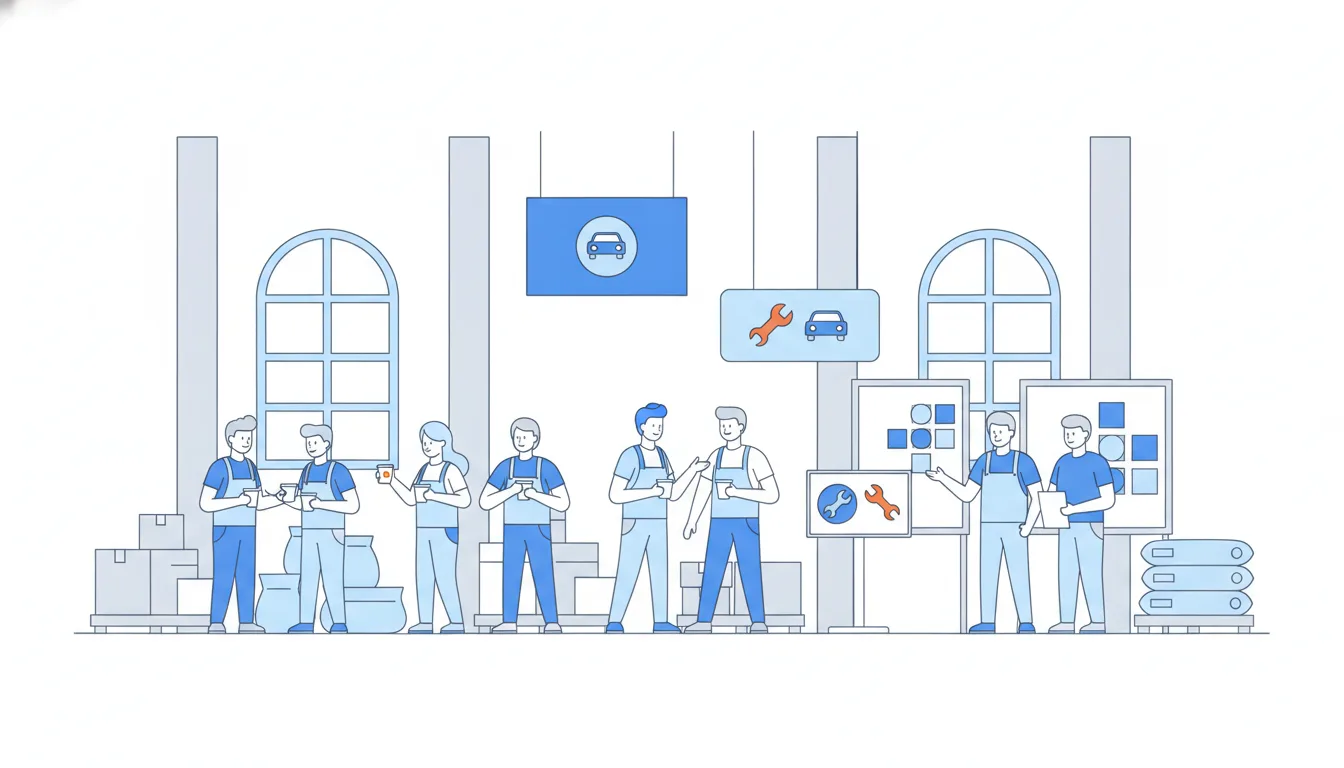
To grow a community, make room for members: ask questions instead of only announcing, give an owner the stage, introduce people who face the same problem, and host meetings where the founders stand at the edge. A community keeps working when you are busy, and it is very hard for a bigger competitor to copy.
- DoAn owner from Khmelnytskyi answers another owner's question in the comments before Oscar sees it.
- Don't“We hit 900 subscribers, so the community is working.”
Counts listeners, not people talking to each other.
Ready to practise?
Answer the lesson's exercises and earn 250 points the first time you finish it.
Start the exercises