

- Trainer
- Product managers
- Marketers
- Founders
Customer Development: Talking to Customers
Find out what customers really need before you build. Learn to run interviews that give you facts instead of compliments, spot false validation and leave every conversation with a clear next step.
Free15 lessons~10 h 11 min of learning

Module 1: Why customers lie
Why "do you like my idea?" is useless, three rules for questions that get honest answers, and how to turn bad questions into good ones.
- 1.1Why “do you like my idea?” is uselessWhy asking customers if they like your idea gets polite yeses, how false positives make a team confidently wrong, and how to tell opinions from facts.~43 min
- 1.2Three rules for questions that get honest answersHow to conduct customer interviews that get honest answers: talk about their life, ask about specific past events, listen more than you talk, and remember who owns the problem and who owns the solution.~40 min
- 1.3Bad questions vs good questionsA workshop on your own list of customer interview questions: replacing opinion, hypothetical, price and leading questions with ones about current behaviour, spend and past attempts.~39 min
Module examComplete 3 more lessons to unlockModule 2: Bad data
Compliments, fluff and feature requests: how to recognise them in a conversation and dig for the real problem underneath.
- 2.1Compliments and how to deflect themWhy praise is the most dangerous answer in a customer conversation, how social desirability bias produces it, how to spot it in your notes and how to steer back to facts without being rude.~40 min
- 2.2Fluff: vague answers and the say-do gapHow to spot vague answers (“I always”, “I would”, “I might”), why the say-do gap makes them useless, how to anchor them to one real past event, and how to tell complainers from customers.~40 min
- 2.3Feature requests: digging for the real problemHow to handle feature requests: why they're clues, not specs; which questions uncover the customer need behind them; and why strong emotions and your own pitching matter.~40 min
Module examComplete 3 more lessons to unlockModule 3: Asking what matters
The scary questions you avoid, your three big questions before every conversation, and keeping it a casual chat rather than a meeting.
- 3.1Scary questions you avoidWhen your calls are honest but trivial: how to ask the scary questions that could kill the idea, welcome a lukewarm “meh”, start broad, and tell a painkiller from a vitamin and product risk from market risk.~40 min
- 3.23 big questions and a discussion guideHow to prepare for a customer interview: pick your three big questions, keep one list per type of person, research instead of asking, update the list and turn it into a one-page discussion guide.~40 min
- 3.3Keeping it casual: conversations, not meetingsWhen your calendar fills up with hour-long “interviews” that make people perform: how to switch to informal customer interviews, spot formality, match the length to the goal, say little about the idea and learn in five-minute chats.~40 min
Module examComplete 3 more lessons to unlockModule 4: Commitment and advancement
Time, reputation and money as signs of real interest, pushing for a concrete next step, and what to do with "sounds great, keep me posted".
- 4.1Commitment currencies and early adoptersWhy a compliment proves nothing once you show your idea, what counts as a real commitment, how to read the three currencies customers pay with (time, reputation and money) and how they reveal your early adopters.~40 min
- 4.2Next steps after a discovery callWhy no discovery call “went well”, how to tell a real next step from a polite stall, how to rescue a conversation after a compliment, why you decide what to ask for before you go, and a sample follow-up email after the meeting.~42 min
- 4.3Zombie leads and “keep me posted”How to recognise leads that never say yes or no, why they are dangerous, how to ask for a clear answer politely, how to write a follow-up email after no response, and why, early on, learning matters more than revenue.~42 min
Module examComplete 3 more lessons to unlockModule 5: The process
Finding people to talk to, choosing exactly which customers to start with, and turning notes from many conversations into team decisions.
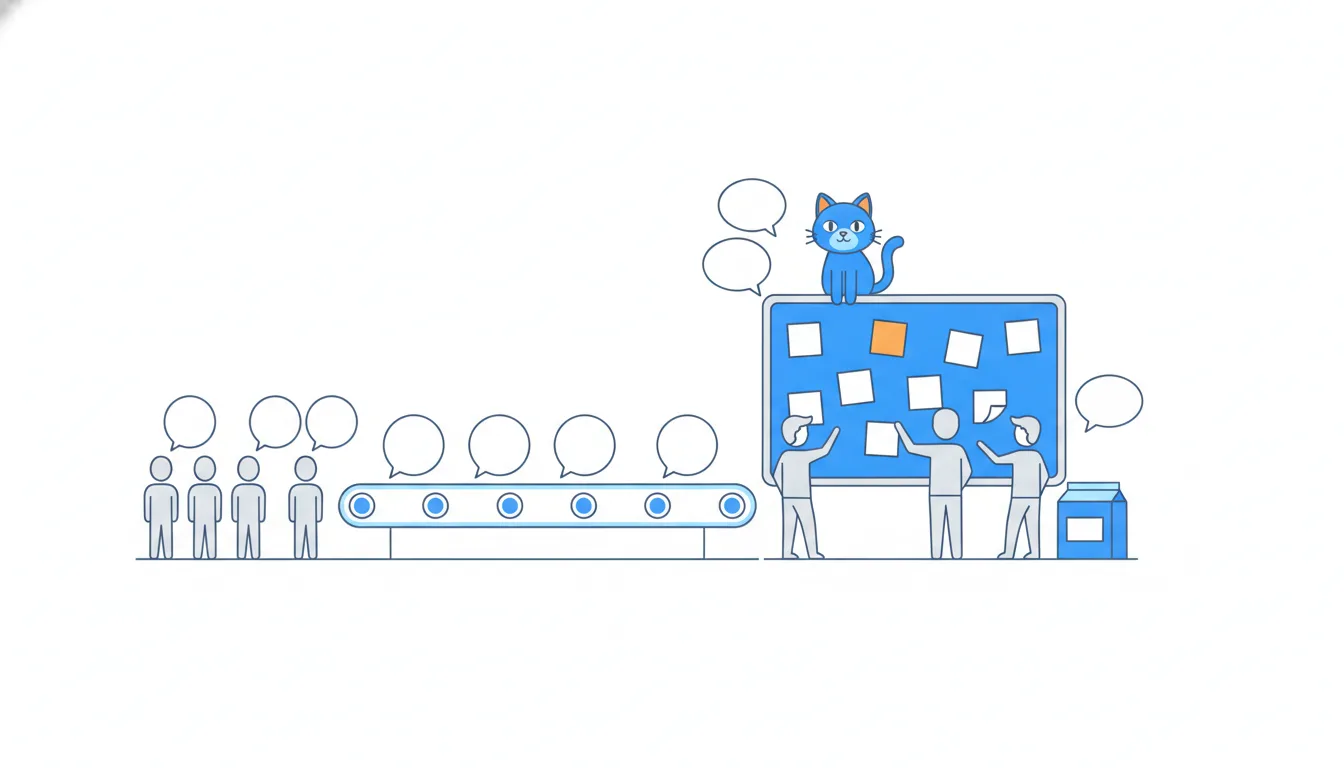
- 5.1Finding people for customer interviewsHow to find people for customer interviews: why cold outreach is only a starting push, how warm introductions and communities keep conversations coming, how to ask for a meeting in five parts, and how many interviews are enough.~42 min
- 5.2Customer slicing: how to define your target customerHow to define your target customer: tell when your segment is too broad, slice it into groups you can actually find, pick the first one, and notice the people in the purchase you forgot to talk to.~41 min
- 5.3Notes, affinity mapping and working as a teamWhy customer learning must not live in one head, how to prep and review as a team, take interview notes with quotes and symbols, turn them into patterns with affinity mapping, spot a ritual that teaches nothing, and a recap of the whole course.~42 min
Module examComplete 3 more lessons to unlock