

Theory
Compliments and how to deflect them
Why praise is the most dangerous answer in a customer conversation, how social desirability bias produces it, how to spot it in your notes and how to steer back to facts without being rude.
~11 min read · 12 exercises · 250 points
Before you start
Five calls, five fans
A week has passed on CatChow's product team, and Sofia has done her first five real interviews, all by the rules from module 1. She came back delighted: everyone loved the subscription. And that's exactly the worrying part.
This module is about reading what customers tell you. In this first lesson you'll learn why praise is the most dangerous answer you can get, how to spot it in the notes and how to steer the conversation back to facts without being rude.
Compliments hiding in your notes
A week into real interviews about CatChow's food subscription, Sofia came back delighted: five calls, all by the rules, “everyone loved it”. That sentence is the warning. Upbeat summaries are classic symptoms of a notebook full of compliments.
After a round of calls, read your notes like a sceptic, looking only for things that actually happened. Watch for three warning signs:
- Mood words: “went really well”, “everyone loved it”, “lots of positive feedback”.
- Praise you passed on: “she said it's the smartest thing we've ever done”.
- Conclusions without facts: “so we're on track”.
Then test every call with three questions. What exactly did they like? What would it save them? What have they already tried? If you can't answer, you collected a compliment, not data.
The lines worth keeping describe what people did: two customers ran out of food last month, one took a taxi to the shop; Richard buys a 10 kg bag at a wholesale market every six weeks. Facts like these can inform a decision. The mood can't.
- Don'tTeam chat: “All five calls went really well. Everyone loves the idea!”
Mood words and no facts.
- DoTeam chat: “Two people ran out of food last month; one took a taxi to the shop.”
Real events, one with money spent.
Sincere praise is still an opinion
Sofia pushed back: some of her customers really meant it. Olivia wasn't just being polite.
Maybe so, but for decisions it doesn't matter. Some compliments are polite, some are completely sincere, and both are opinions about the future. Opinions about the future are guesses, however warm. A heartfelt “I'd love this” tells you how Olivia feels today, not what she'll pay for next month.
Think about it this way: CatChow's own team knows the subscription inside out and still argued for weeks about whether it would work. A customer who heard about it thirty seconds ago is unlikely to know better.
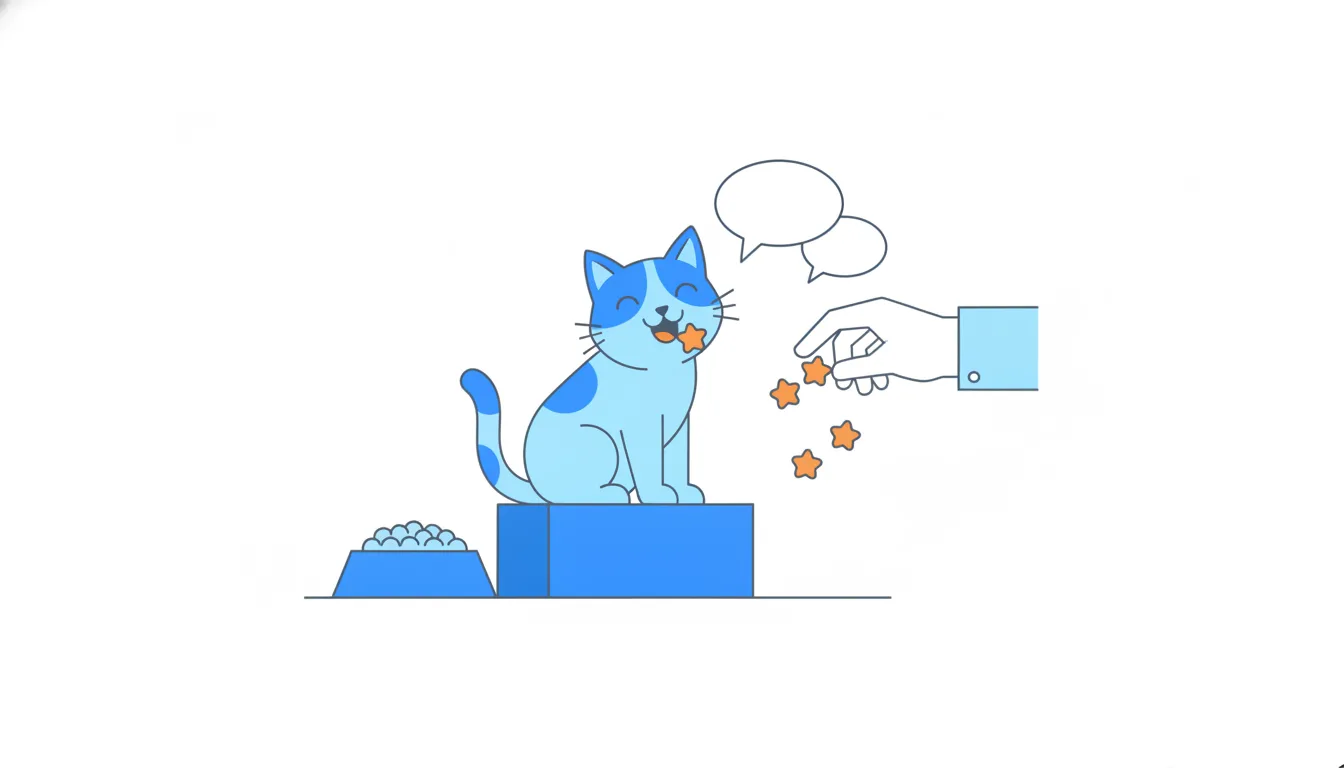
So don't try to judge how sincere someone sounds; you'd only be adding a guess about their honesty to their guess about the future. Treat compliments like treats for a cat: everyone enjoys them, nobody lives on them. Accept them politely, then go looking for the real food: what the person did in the past and, later in the course, what they're willing to commit to.
- Don'tNotes: “Olivia: sincere fan, she really meant it.”
Sincerity doesn't turn an opinion into evidence.
- DoNotes: “Olivia: switched to the shop by the metro in spring because the old one ran out of her brand.”
Why praise is worse than harmless
What filled Sofia's notebook has a name: social desirability bias. It's people's habit of giving the answer that makes them look good or keeps the conversation pleasant, instead of the accurate one. Its close relative, courtesy bias, makes people extra kind to someone who looks invested. In customer interviews both arrive as praise: “I love it” costs nothing and makes everyone feel nice.
So are compliments just harmless noise? Worse. The real danger isn't the praise itself but what it does to the person collecting it. After a few warm calls it feels as if the question is settled. Five fans, so why keep asking? You close the notebook before a single fact is in it, and that's exactly how a false positive is born.
Picture a marketer who cancels seven of ten planned calls after three enthusiastic ones: “We've heard enough, they love it.” The risk isn't that three calls are too few. Ten calls of the same kind would only add more praise. The risk is that the team stopped asking before learning anything. Enjoy compliments, then keep asking.
- Don't“Three calls, three fans. Let's cancel the rest, we've heard enough.”
Praise felt like progress, so the asking stopped.
- Do“Three warm calls, but no facts yet. Let's keep the other seven and ask about the last purchase.”
The moment after a compliment
Sofia's call with Olivia started well: she asked how Olivia bought food last time and heard about the shop by the metro. Then she got excited and mentioned the subscription. Olivia replied: “Oh, what a lovely idea! You're all so clever at CatChow. I'm sure everyone in my building would sign up.” Sofia said “Thank you so much!”, wrote “huge fan” in her notes, and they said goodbye.
There were two slips. Mentioning the idea invited the praise. The bigger slip came next: accepting the compliment and ending the call. The moment right after praise is one of the most important in a conversation, because the compliment has just pulled the call away from facts.
Other tempting replies make it worse:
- turning praise into a promise: “So you'd definitely subscribe?”;
- asking for more approval: “Do you really think so? Be honest!”;
- adding more pitch: “And it's 10% cheaper than the shop!”
The best reply is a short thanks followed by a question that returns to a real event in her life, ideally the story that was already under way, such as her last trip to the shop by the metro.
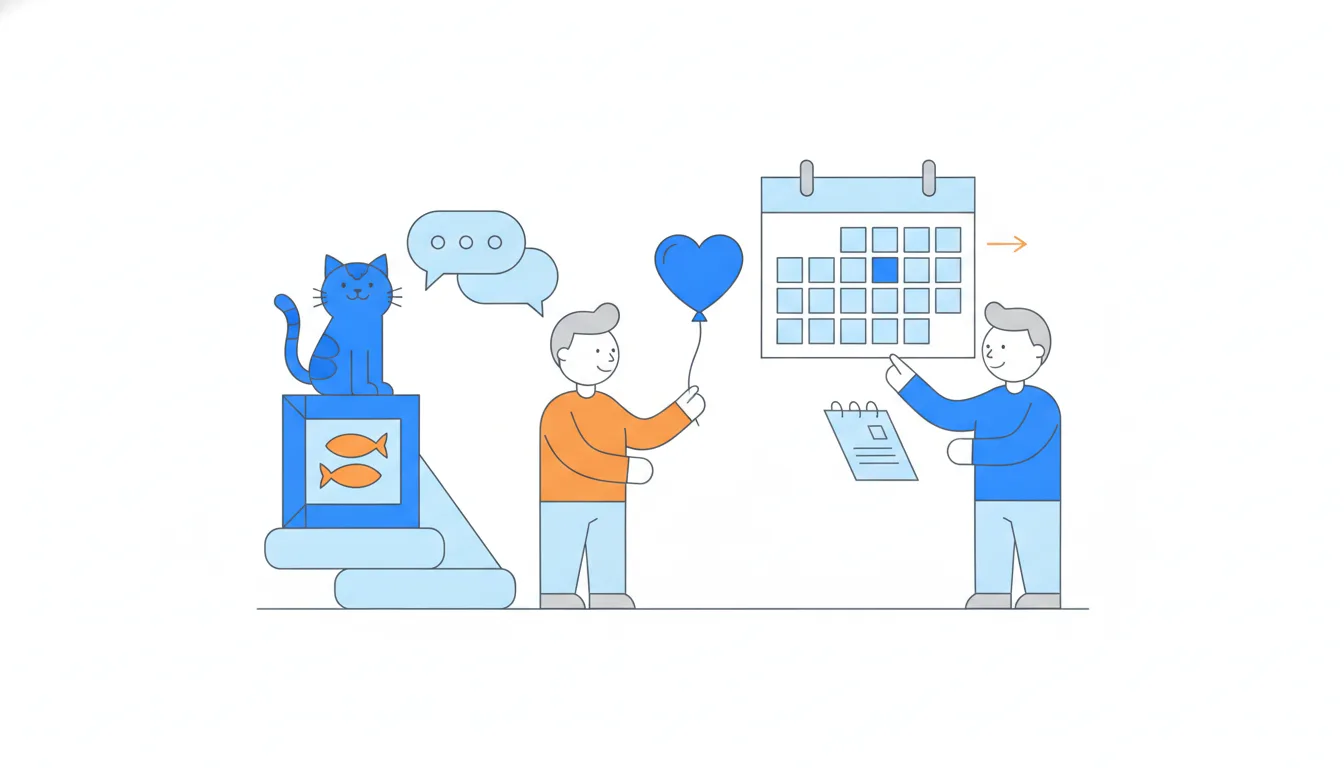
- Don't“Thank you! So you'd definitely subscribe?”
Turns praise into a free promise.
- Do“Thanks, that's kind! Back to the shop by the metro: how did your last trip there go?”
Short thanks, straight back to her story.
Deflecting a compliment
Isn't it rude to ignore praise? Sofia worried about that: Olivia was being nice to her. But you don't ignore the person, only the praise as data. That's deflecting compliments, and it takes a few seconds, not a speech:
- Acknowledge it briefly and warmly: “Thanks, that's kind.”
- Don't record it. “Huge fan” in your notes is a trap for later.
- Steer back to their life with a question that can only be answered with a real story: “How do you handle this today?”, “When did that last happen?”, “What have you tried so far?”
- Listen to the whole story, and write down the facts in it once the call is over.
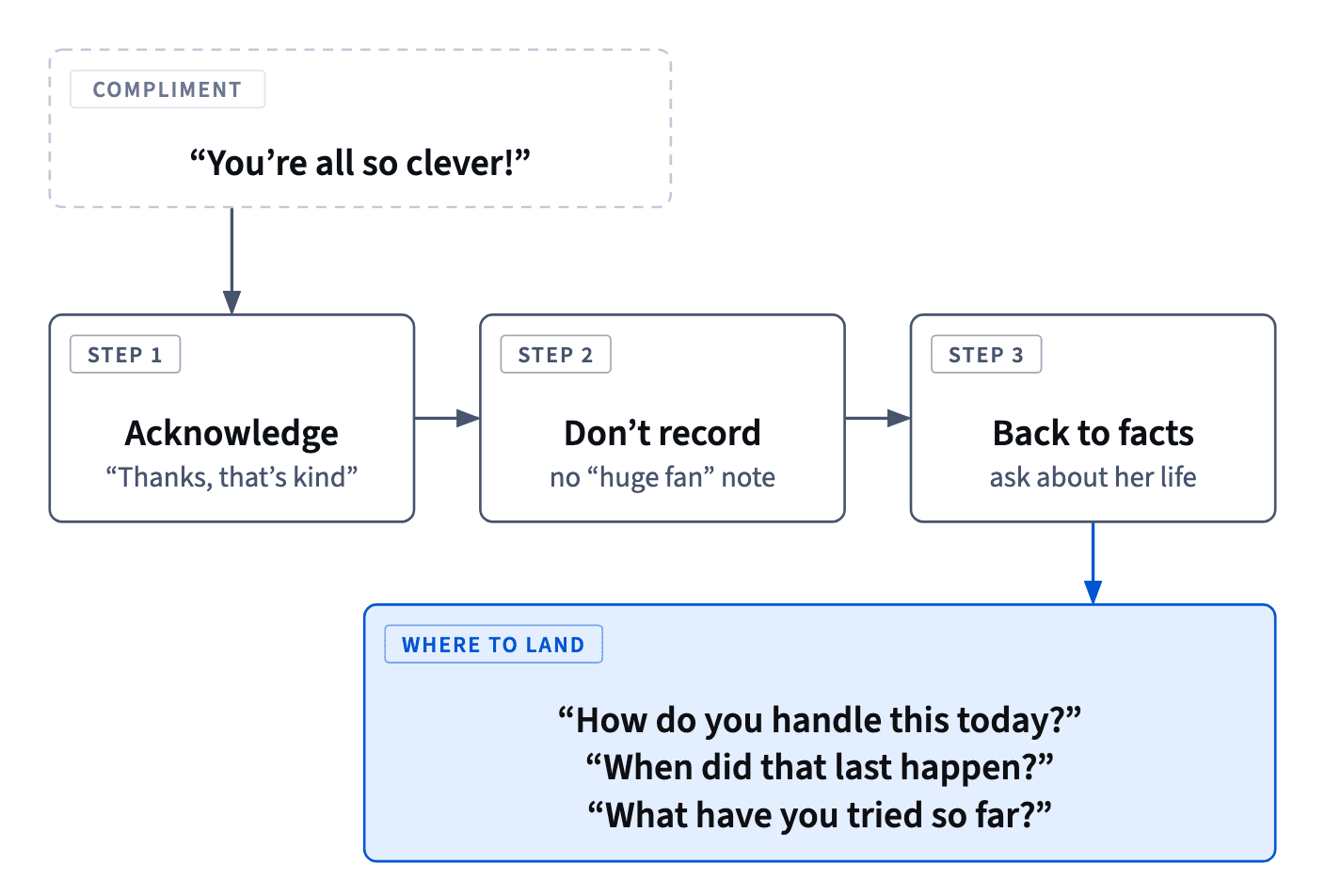
Done quickly, nobody feels ignored: the customer gets a warm thanks and a question that shows genuine interest in their life.
And what if the story shows they have no problem at all? Then the call worked. You wanted the truth, not a pleasant ending. “We buy food by the metro, it's never an issue” beats ten lovely ideas, because it stops you building something nobody needs.
- Do“Thanks, that's kind. When did you last stock up on food?”
Acknowledge, don't record, steer back.
- Don'tNotes: “Richard: loves it, will tell all his friends!”
A recorded compliment becomes fake evidence later.
Information or approval?
Sofia confessed that part of her wanted the praise. Before one call she even wrote down: “So, do you think this could work for you?” That's fishing for compliments: asking for approval instead of information. You've already decided, and you want someone to say “go”.
To catch yourself, read each question on your list before a call and ask: am I looking for information or approval?
Questions that seek approval are about your idea and have only one pleasant answer. Imagine Dana, a PM at an accounting software company, preparing calls with accountants:
- “Do you think automatic reminders would save you time?”
- “We've built a new reminders module. What do you think of it?”
- “Wouldn't it be great if reminders went out by themselves?”
Each one invites a kind “yes”. Questions that seek information are about the person's life and point to a specific past event: “The last time a client paid late, what did you do to chase them?”
A simple rule of thumb: a question about your idea is fishing; a question about their life is learning.
- Don't“We've built a new reminders module. What do you think of it?”
Asks them to judge your work.
- Do“The last time a client paid late, what did you do to chase them?”
About their life and a real past event.
Fishing without a question
Sofia deleted every “Do you like it?” from her list and asked whether she was now safe from fishing. Not quite. Fishing is about what you're after, not the exact words.
The obvious form is a question with only one pleasant answer: “Do you like it?”, “Will it work for you?”, “Handy, right?” But you can fish without asking anything:
- describing your idea and then pausing hopefully;
- showing a demo and waiting for a reaction;
- nodding eagerly whenever they say something nice about it.
People are good at reading these signals. They notice what you're hoping for and fill the silence with the kind word you're waiting for. The result is the same as asking “Do you like it?” outright: a compliment you invited yourself.
So the test isn't your wording but your intention. Before you pause, show something or lean in, ask yourself: am I hoping to hear “go”? If yes, you're fishing. If you're genuinely curious about their life, you're learning, and your next move should be a question about what they did, not a hopeful silence.
- Don'tDescribing the subscription, then smiling and waiting in silence
Fishing without a single question.
- DoDescribing nothing, and asking: “How did your last order go?”
A neutral reason for the call
Megan, CatChow's head of sales, raised a fair point about the over-sharing trap, where showing how much the answer means to you makes people protect you instead of telling you what happened: her team still has to say why they're calling, or people will think it's a sales call. True. Silence about your purpose feels suspicious. The answer is a short, neutral reason, not a confession.
A good reason describes what you want to understand, not what you've built or how much it means to you: “We're trying to understand how cat owners buy food.” It says nothing about a project, a deadline or anyone's job, and it doesn't mention the subscription, so there's nothing to compliment and nobody to protect.
Then move straight to a real past event: “Could you tell me about the last time you bought some?” The customer gets a clear, believable reason for the call and an easy question about their own life.
What to leave out of an opener:
- how long you've worked on the idea;
- what's at stake for you or the team;
- “please be brutally honest”;
- any description of your product.
Each of these puts your feelings on the table, and polite people will look after them instead of telling you what happened.
- Do“We're trying to understand how cat owners buy food.”
A clear reason with nothing to protect.
- Don't“We've spent six months on this, so please be brutally honest!”
Puts the team's feelings on the table.
Four things that happen in a call
Megan wrote an opener for her team's calls: “We've spent six months on this subscription and our jobs depend on it. So please be brutally honest with us!” Asking for honesty is well meant, but the first sentence cancels it. Once people hear how much you've invested, they start protecting you.
That's the over-sharing trap: the more hope and ego you show, the more kindly people bend the truth. “Be brutally honest” doesn't fix it; it only shows how much the answer means to you. The fix is to leave yourself out of it and ask about their life and their last purchase.
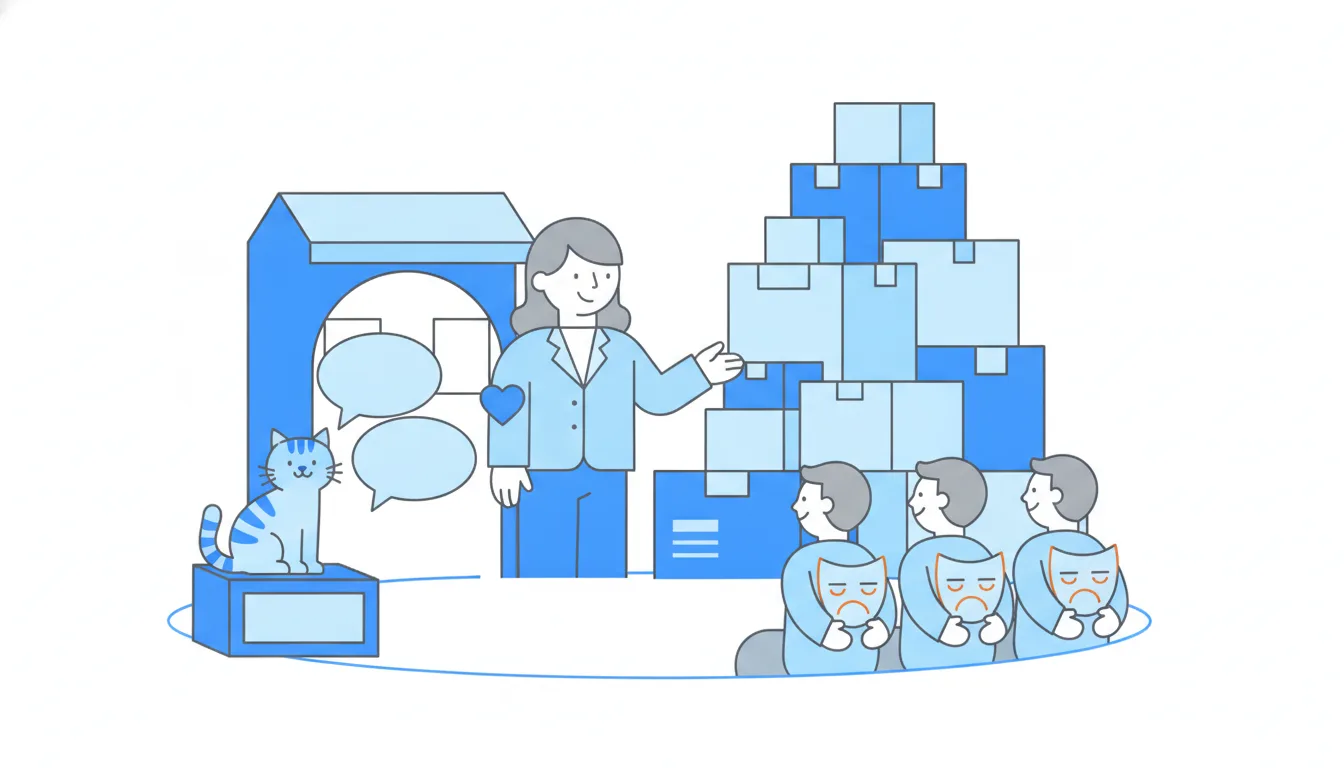
Four moments you'll meet in calls and drafts, and how to tell them apart:
- Fishing for compliments: you ask them to judge your idea (“Do you think it'll work for you?”).
- The over-sharing trap: you show how much the answer means to you (“It's my first big project, so be honest!”).
- A compliment to deflect: praise from them (“You've thought of everything!”). Thank them and move on.
- A question about facts: about a real past event (“How did you get food home last time?”). Every call should return here.
- Don't“It's my first big project here, so please be honest with me!”
Shows how much is at stake, so people protect you.
- Do“How did you get food home the last time you bought it?”
Leaves you and your feelings out of it.
Ready to practise?
Answer the lesson's exercises and earn 250 points the first time you finish it.
Start the exercises