

Theory
Bad questions vs good questions
A workshop on your own list of customer interview questions: replacing opinion, hypothetical, price and leading questions with ones about current behaviour, spend and past attempts.
~11 min read · 12 exercises · 250 points
Before you start
Ten calls next week
Sofia's interviews about CatChow's food subscription are nearly booked: ten calls next week, and the product team is waiting on what she learns. She has drafted a list of questions and brought it to you to tear apart before the first call.
In this workshop lesson you'll go through the list one question at a time, spot the kinds that invite polite or made-up answers, and rewrite each into a question about what the customer actually does and spends.
Opinion questions
Before her ten calls about CatChow's food subscription, Sofia brought her question list for review. Question one was “Do you think a food subscription is a good idea?”
That's an opinion question: it asks what someone thinks. Other versions: “What do you like about subscriptions?”, “Rate our idea from 1 to 10.” About your own idea, it's the worst kind. Only the market can say whether an idea is good, and a customer will answer kindly. A scale doesn't help either; it just puts a number on the opinion, and a polite 8 out of 10 proves as little as “sounds great”.
So what can a customer tell you that's worth hearing? What they actually know, which is their own life:
- how they handle the task today;
- what annoyed them the last time;
- what they've already tried;
- whether they're looking for something better.
None of these needs your idea, and every answer is a fact you can check against what other customers say.
- Don't“On a scale of 1 to 10, how good is our idea?”
A number on top of an opinion is still an opinion.
- Do“How did you get your last bag of food home? Did anything about it annoy you?”
Complainer or customer?
Question two on Sofia's list: “Would you buy a subscription if it saved you trips to the shop?” That's a hypothetical question, and almost everyone says yes to it, because agreeing to an imaginary product is free and people like to help. You'll collect plenty of yeses and no customers.
Ask how the problem shows up now instead: “How do you get food home today? When did that last go wrong?” And add one especially revealing question: “Have you looked for a better way?”
People who really suffer from a problem usually do something about it: they search online, compare options, try a tool, ask friends. If someone has grumbled for years but never even searched for a fix, they're a complainer, not a customer. The problem is an annoyance they've learned to live with.
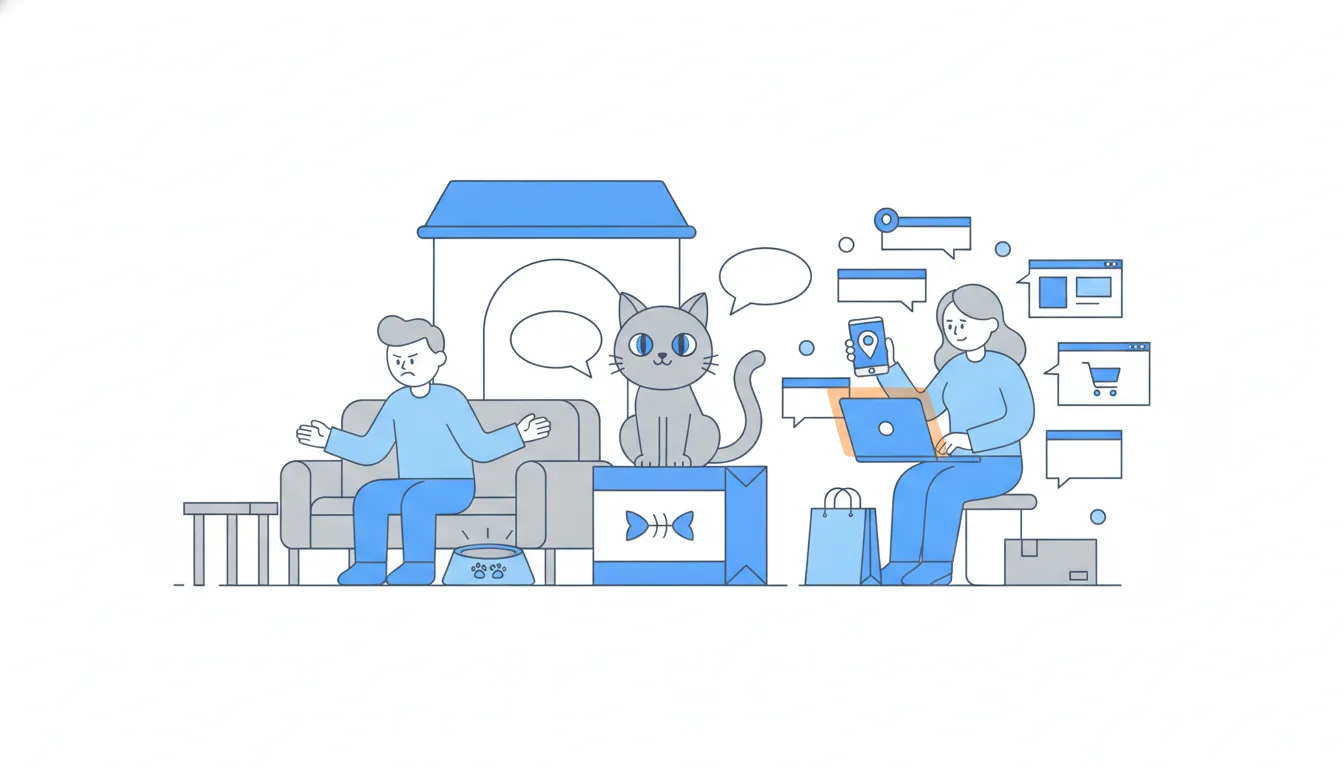
That matters for your product. Someone who never looked for a solution won't go looking for yours either, however loudly they complain. Loud complaining shows the person notices the problem, not that they'll act on it.
- Don't“Would you buy a subscription if it saved you trips to the shop?”
Yes to an imaginary product is free.
- Do“Have you looked for an easier way to get food home? What did you find?”
Separates customers from complainers.
Ask what they spend, not what they'd pay
Question three: “How much would you pay for the subscription per month?” Sofia liked this one because it felt scientific: you get an actual number. But the number is still a guess about the future, just better dressed. People have no idea what they'd pay for something they've never used. A suggested price (“Is 500 UAH fair?”) is even worse: it simply invites a polite yes.
Ask about real spending instead: “How much did you spend on cat food last month? Where did you buy it? Why that shop?”
Current spending gives the price conversation something solid to stand on. If Olivia spends 1,400 UAH a month at the pet shop, CatChow's 10% discount is compared with a real figure, not an imagined one. And “Why that shop?” shows what she values: price, distance, a favourite brand, a friendly shop assistant. Any of these could matter more to her than a discount.
The only price answer you can fully trust is money actually committed, such as a pre-order. That comes later in the course.
- Don't“Is 500 UAH a month a fair price?”
Invites a polite yes that commits to nothing.
- Do“What did you spend on cat food last month, and why that shop?”
A real figure plus what the customer values.
Past attempts and workarounds
Sofia's list was missing one of the most useful questions you can ask: “What else have you tried?” Other shops, delivery apps, buying in bulk, a phone reminder: what they tried, what it cost, why they stopped.
Here's what Olivia said when asked: she tried an online pet shop, but delivery took four days, so now she keeps a spare bag at her mum's. Last month she still ran out and paid 90 UAH for a taxi to fetch it. That answer contains all three kinds of evidence to listen for:
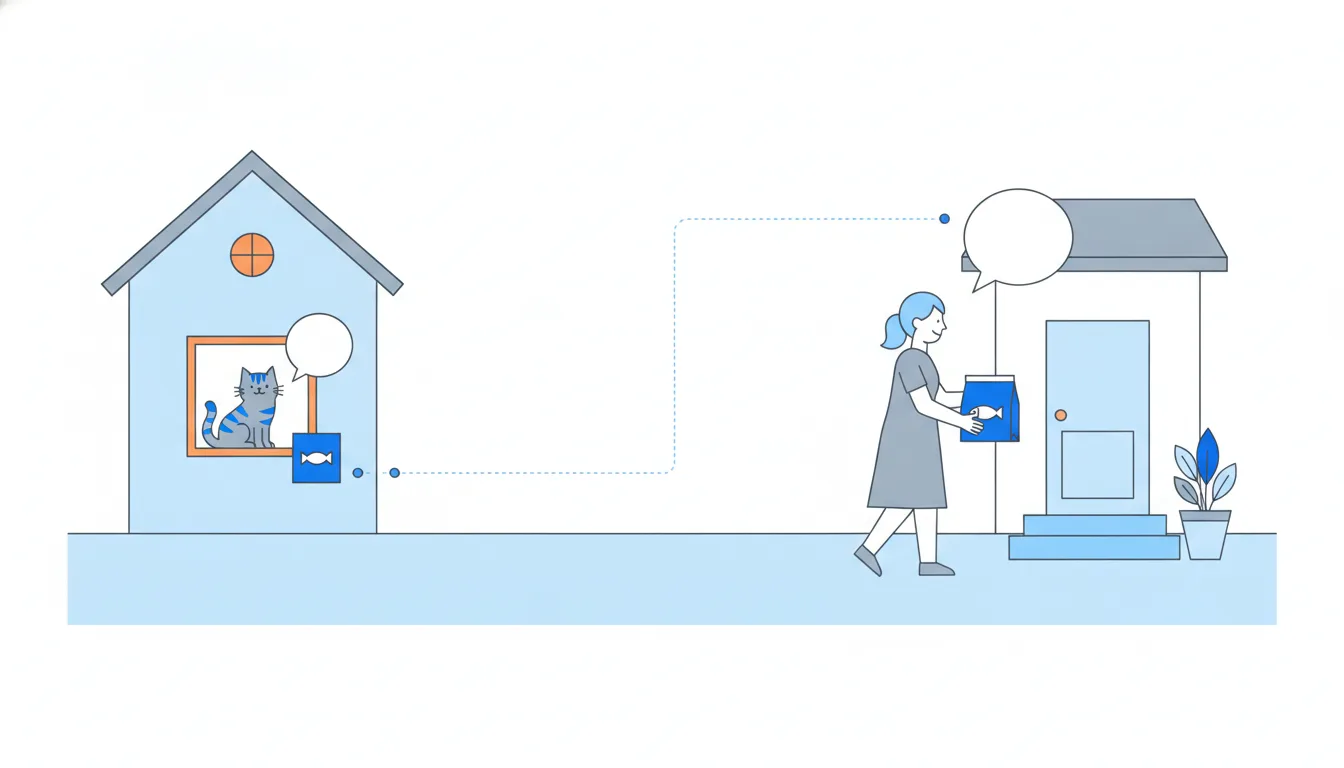
- Past attempts: the online pet shop, and why she gave up on it.
- A workaround: the spare bag at her mum's, her own makeshift fix. People only build workarounds for problems that really bother them.
- Money or time already spent: the 90 UAH taxi.
Each of these cost her something, which is what makes it trustworthy. It's worth more than a hundred “I'd subscribe”s. Emotion is worth noticing and asking about, but a tone of voice isn't evidence, and a comment about your future product is just an opinion.
- Do“What else have you tried? Why did you stop using it?”
- DoOlivia: “Now I keep a spare bag at my mum's.”
A workaround: proof the problem bothers her.
- Don'tOlivia: “A subscription would be so convenient!”
An opinion about a future product, not evidence.
Implications: how much does it hurt?
Not every problem is worth solving. When a customer hasn't tried any fix at all, measure the problem by asking about its implications: “What happens when this goes wrong?” and “What did it cost you last time?”
Then listen for consequences:
- A shrug (“I pop down to the corner shop, five minutes, no big deal”) means a mild annoyance with an easy fix already at hand. Nobody pays a monthly fee to save five minutes they don't mind spending.
- Feelings or promises (“It's really, really annoying!”, “I'd definitely want something that fixes it”) sit in between. They aren't evidence yet, but they're a good reason to ask about the last time.
- Real costs such as money, time, health or a missed deadline show a problem someone might pay to get rid of. “My cat refused the shop-brand food, got ill, and we spent 800 UAH at the vet” is that kind of answer.
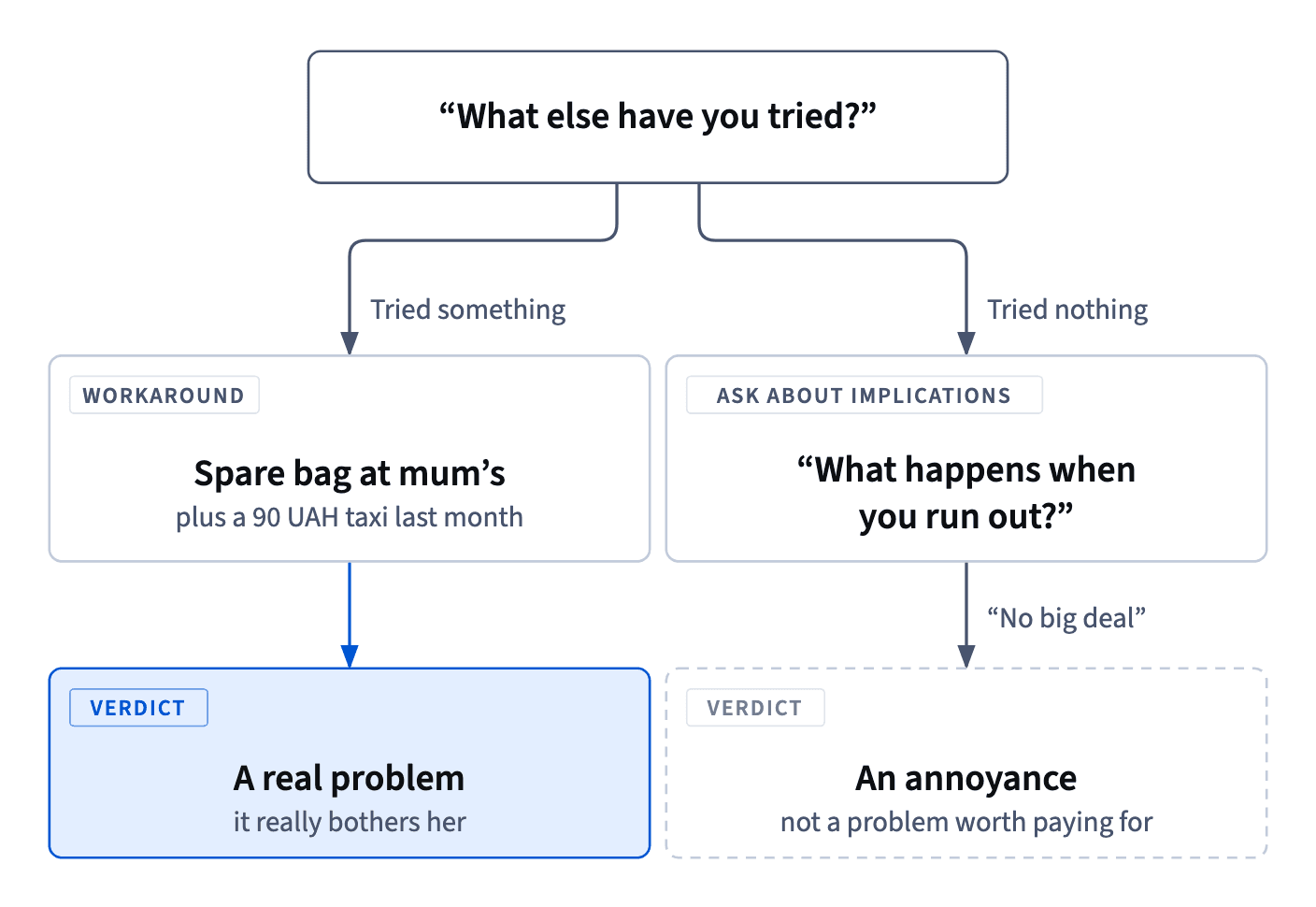
The bigger the consequences, the more a solution is worth to the customer. Strong emotion is a great place to start asking, never a place to stop.
- Do“What happens when you run out? What did it cost you last time?”
- Don'tWriting down “really annoying!” as proof of a painful problem
A feeling is a cue to ask about the last time.
Leading questions get the answer you planted
A leading question contains its own answer. “Don't you hate it when…?”, “Wouldn't it be easier if…?”, “Surely you'd want…?” Each one tells the customer what you expect, and polite people give you what you expect.
The trap is that the answer feels like evidence. Olivia says “Oh yes, I hate that!”, and you hear confirmation that the problem is painful. But you planted that answer yourself. You'd get the same “yes” from someone who runs out once a year and pops downstairs in five minutes.
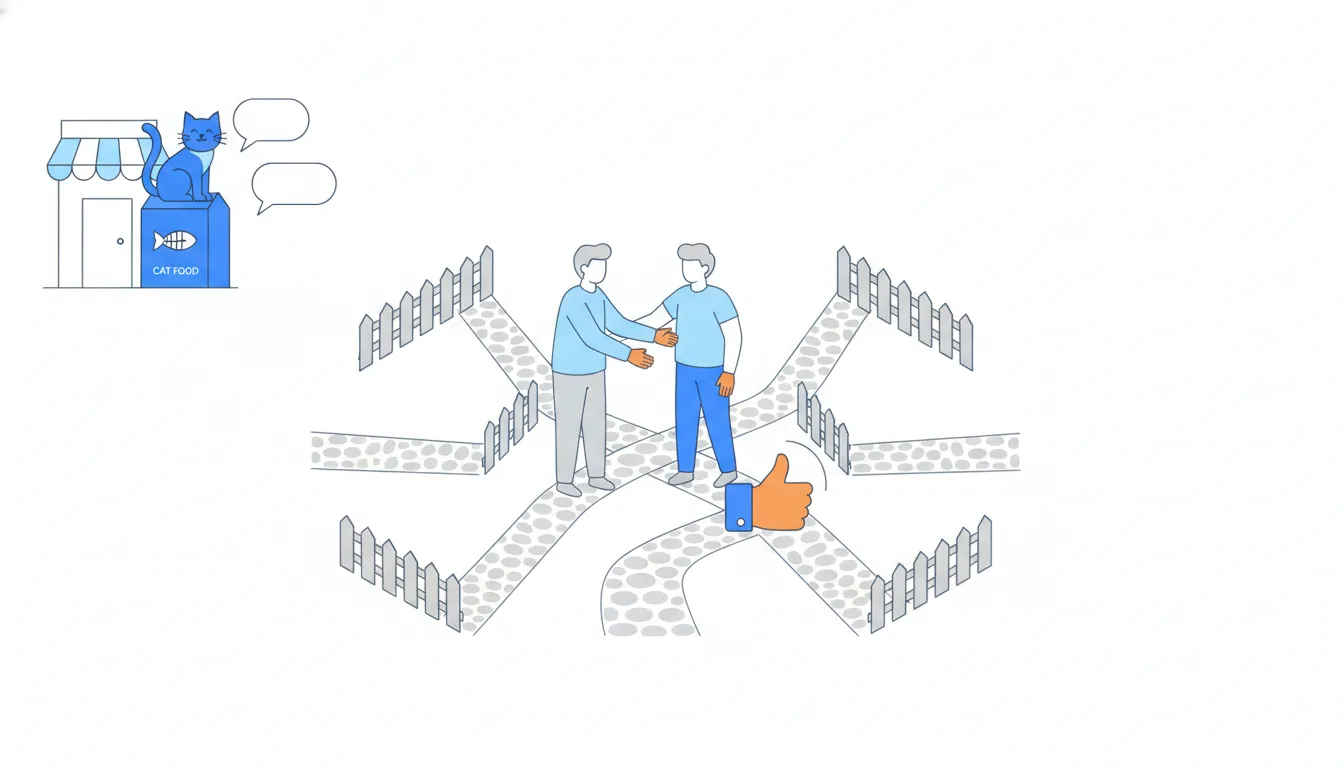
The fix is simple: ask about an event, not a feeling, and leave the judgement to the customer.
- “When did you last run out?”
- “What did you do?”
- “How did that go?”
Now the answer can surprise you. Maybe it was a Sunday and a taxi across town, maybe it was nothing worth remembering. Both are useful, and only a neutral question can tell them apart. If you catch yourself starting a question with “Don't you…” or “Wouldn't you…”, rephrase it.
- Don't“Wouldn't it be easier if food just arrived on its own?”
The answer is planted in the question.
- Do“When did you last run out? What did you do?”
Four bad questions and their fixes
Question four on Sofia's list: “Don't you hate it when you run out of food at the worst possible moment?” Sofia protested that everyone hates that. Exactly: that's why the answer is worthless. It's a leading question: it tells the customer what to say. She agrees, you feel validated, and you learn nothing about how often it happens or what it costs.
Most bad customer questions fall into four types, and each has a fix that asks about the past:
- Opinion: “Is this a good idea?” → “How do you handle this now?”
- Hypothetical: “Would you buy it if…?” → “When did this last happen? Have you looked for a fix?”
- Price guess: “How much would you pay?” → “What did you spend on this last month?”
- Leading: “Don't you hate it when…?” → “When did this last happen?”
What they share: the answer is shaped by the question, not by the customer's real experience. A leading question is especially sneaky, because the agreement feels like confirmation. Ask neutrally and let the customer decide whether it was a disaster or a shrug.
- Don't“Don't you hate it when you run out of food at the worst moment?”
Tells her what to answer.
- Do“When did you last run out of food? What happened?”
Neutral: she decides how bad it was.
How to end a call
Sofia used to end her calls with a simple thank-you. Before the thanks, add two questions:
- “Who else should I talk to about this?” It brings you the next conversations, often with people who share the same problem.
- “Is there anything I should have asked but didn't?” By the end, the customer understands what you're trying to learn and may point at what you missed.
The reaction to the first question is data in itself. People who care about a problem are usually glad to connect you with others who have it: an introduction costs them a little reputation, so they only make one when the topic matters.
So what if someone praised your idea warmly but won't name anyone? Don't comfort yourself with “they're protecting their friends”: it's possible, but it's a guess that conveniently protects your idea. Read it as a warning sign and give the earlier compliments less weight. Maybe the topic doesn't matter much to them, or maybe the call felt formal or like a sales pitch. When a cheap signal and a costly one disagree, trust the costly one.
- Do“Before I let you go: who else should I talk to about this?”
- Don't“Thanks so much, that's all!”
Ends the call without its two most useful questions.
Let the customer fill your gaps
Sofia doubted the second closing question: “How would she know what I'm after?” Fair worry, but think about the call from the customer's side.
You prepare questions based on what you already think matters. That's exactly why your list has blind spots: the most important issue may be one you've never heard of, so you can't ask about it.
By the end of a conversation, the customer has heard twenty minutes of your questions. They understand what you're exploring, and they know their own situation far better than your list does. So ask: “Is there anything I should have asked but didn't?”
Often the answer starts with “Well, you didn't ask about…”, followed by the most useful thing you hear all day: the vet who recommends a special diet, the neighbour who feeds the cat during holidays, the brand that keeps going out of stock. It takes ten seconds, costs nothing and regularly turns up the problem you came to find. If the answer is “No, I think you covered it”, that's fine too: you lose nothing.
- Do“Is there anything I should have asked but didn't?”
Ten seconds that often bring the best answer of the call.
- Don'tSkipping the question because “she can't know what I'm after”
After twenty minutes of questions, she knows.
Ready to practise?
Answer the lesson's exercises and earn 250 points the first time you finish it.
Start the exercises