

Theory
Customer slicing: how to define your target customer
How to define your target customer: tell when your segment is too broad, slice it into groups you can actually find, pick the first one, and notice the people in the purchase you forgot to talk to.
~11 min read · 12 exercises · 250 points
Before you start
Nine conversations, nine stories
Nine of Sofia's conversations in, you and CatChow's product team are reading through the stories together: a student with one cat, a family with four, a cat on a vet diet, a breeder after bulk discounts. Every feature idea is somebody's favourite, and the team can't decide anything.
In this lesson you'll see when a target group is too broad, slice it into groups you can actually find and talk to, pick the first one, and notice who else takes part in the purchase.
Signs of a segment that's too broad
After nine conversations Sofia reread her notes. A student with one cat wants the cheapest food. A family with four cats buys 10 kg bags. One woman's cat is on a diet prescribed by a vet. A breeder wants bulk discounts. When the product team read the stories together, they decided nothing: every feature idea had a defender, and whenever they tried to drop one, someone said “But the breeders would love it!”
That's what a customer segment that's too broad looks like. A segment is a group of customers you treat as one, and when it's too wide you're really talking to several groups at once. The signs:
- every conversation reveals a different main problem;
- willingness to pay jumps from almost nothing to a lot, with no pattern;
- every feature has a defender from some group;
- nothing can be proved wrong, because something always works for someone.
Sofia wasn't having nine conversations with one kind of customer. She was having one conversation each with nine kinds. A focused segment looks the opposite: answers repeat, often in similar words, and you can say where you'll find the next five people.
- Don't“We can't drop bulk discounts, the breeders would love them!”
When every feature has a defender, the segment is too broad.
- Do“The last four owners described the same weekend panic, almost word for word.”
Repeating answers are a sign of a focused group.
Customer slicing
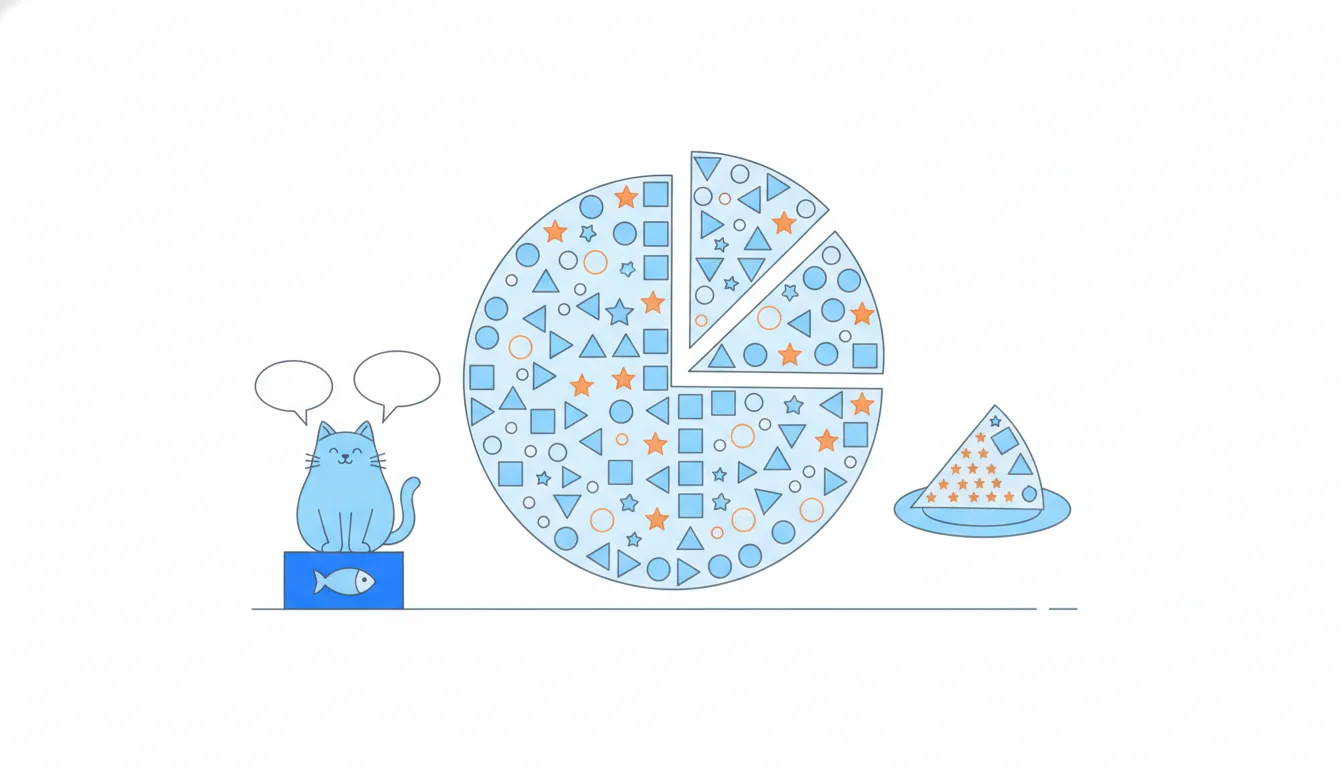
Picking one of nine stories at random doesn't fix a broad segment. Customer slicing does: you split a broad group again and again with a few questions, until you know exactly who and where.
- Who in this group needs it most?
- Why do they need it?
- Do they already pay for a solution or use a workaround?
- Does everyone in this subgroup share the same reason?
- Where can I find them?
Sofia tried it on “cat owners”. Who needs regular food delivery most? The woman whose cat is on a prescribed kidney diet can't skip a single day. The food is sold in few places, it's expensive, and she sets phone reminders to reorder. That's a slice with a real motive: a missed day hurts, she already pays a premium, and she has a workaround.
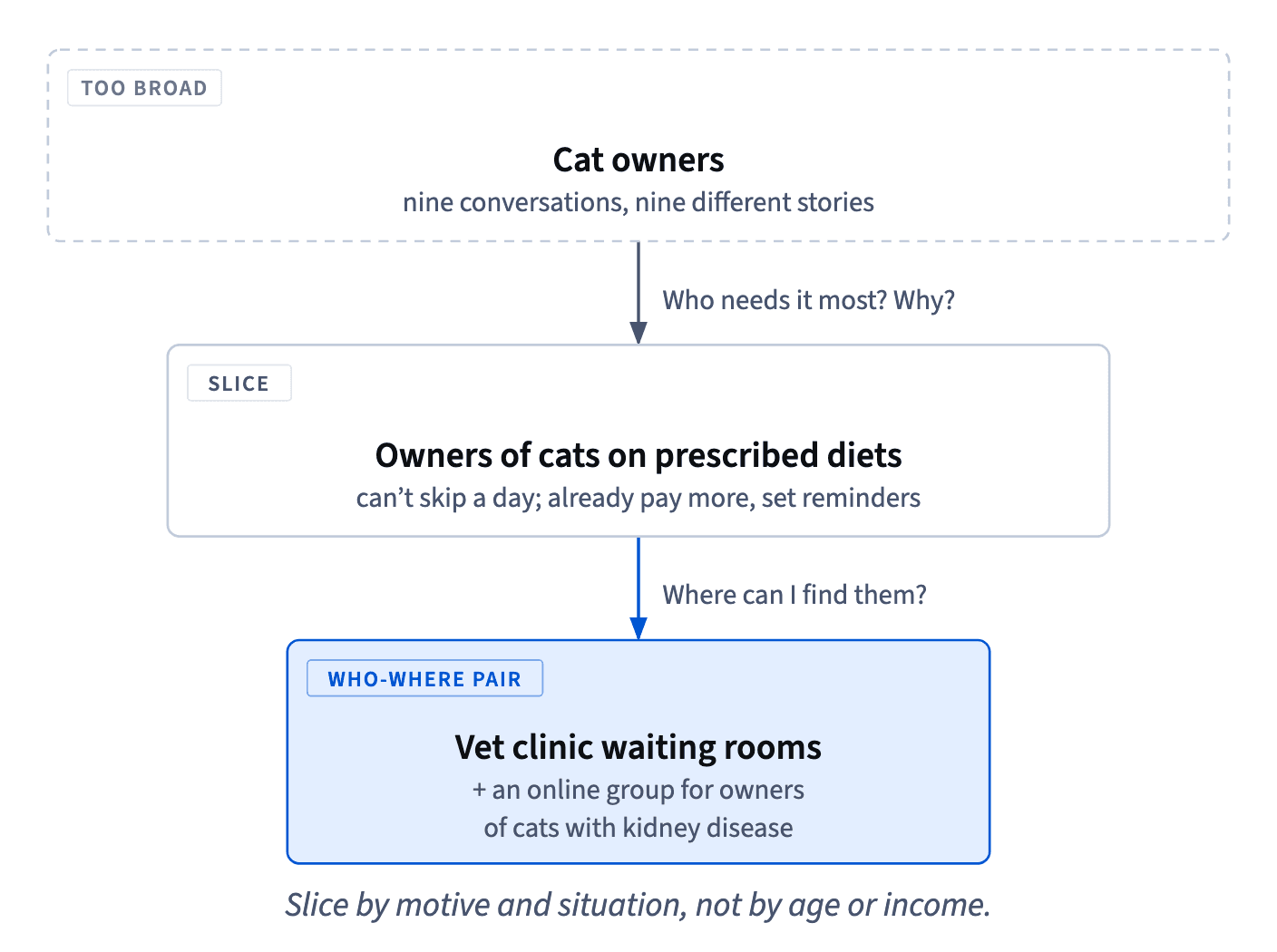
Then the same questions go round again inside that slice, narrowing step by step until the description includes a place where such owners can be found. Each cut keeps only the people with the strongest reason to care. Slice by motive and situation, not by age or income: those describe people, motives explain why they'd change what they do.
- Don't“Let's just pick the breeders, they sounded keen.”
A random pick, not a slice by motive.
- Do“Who in this group can't afford to skip a single delivery, and why?”
A slicing question that finds the strongest motive.
Who-where pairs, not demographics
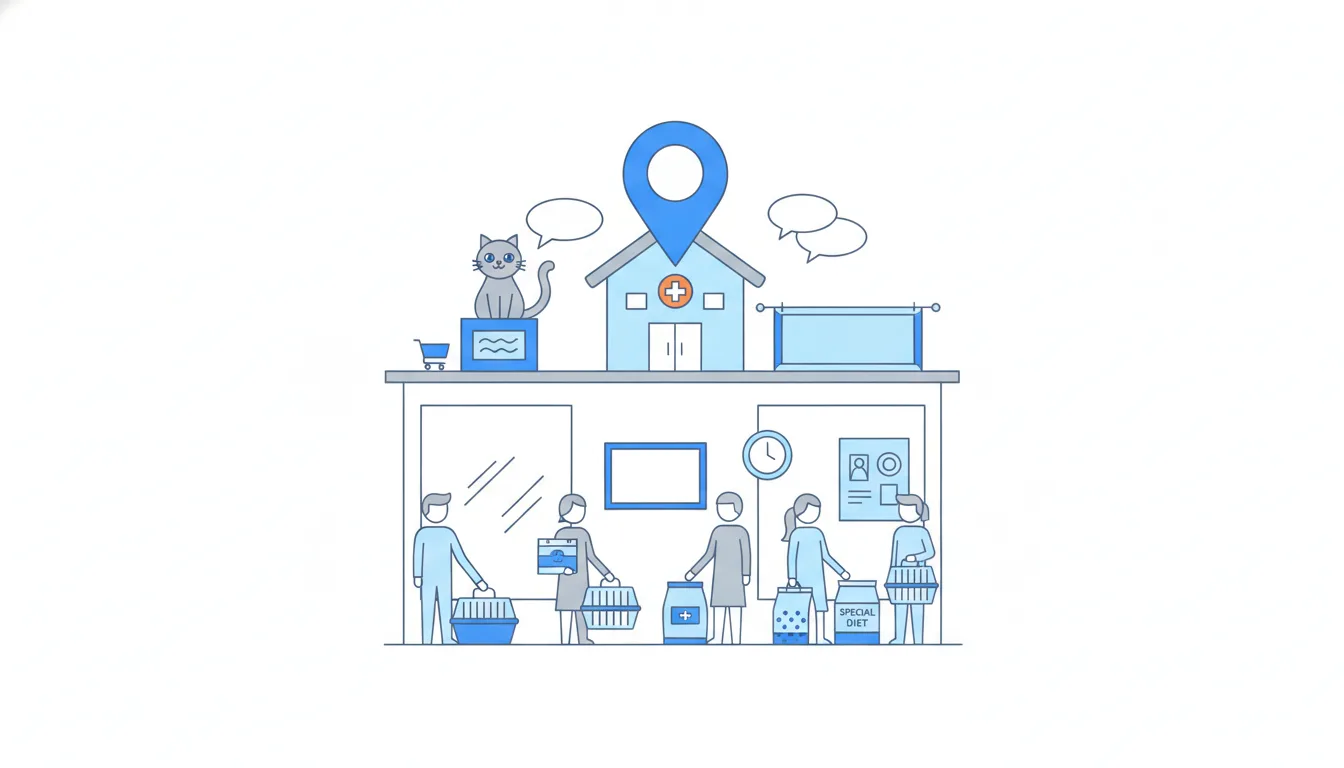
A well-defined target customer is a who-where pair: a specific group plus a place where you can reliably find them. Sofia's slicing gave her one: owners of cats on prescribed diets, found in the waiting rooms of vet clinics and in an online group for owners of cats with kidney disease. With that pair she could be talking to someone tomorrow morning.
Compare “women aged 25–45 who love cats”. It might do for an ad brief, but it's useless for finding a single person to talk to. Where exactly would you go?
Two checks for any segment you write down:
- Is it sliced by motive? Demographics like age, gender or income describe people; motives and situations explain why they'd change what they do. A cat on a kidney diet is a reason to care. Being 34 isn't.
- Can you name the where? A chat, a waiting room, a club, a shelter's adoption day. If you can't, keep slicing.
A good pair also tells you what to do next: go to that place this week and start a conversation. If a segment leaves you wondering where to begin, it isn't finished yet.
- Don't“Women aged 25–45 who love cats”
Fine for an ad brief, but where would you meet one?
- Do“Owners of cats on prescribed diets, in vet waiting rooms and an online group for owners of cats with kidney disease”
A motive and a place: you could start tomorrow.
Choosing a first segment
Slicing usually leaves several promising who-where pairs. Sofia had three: owners of diet cats at vet clinics, foster volunteers at the shelter, and students in dorm chats. To pick the first one, check three things:
- Easy to reach: can you be talking to them this week, without a bought list or a long wait for approval?
- Profitable: is the group big enough, or does it spend enough and often enough, to matter for the business?
- Rewarding: is this a problem you care about, and are these people you'll enjoy talking to for months?
Write a line of evidence next to each criterion, not just a tick. A fact you can point to beats a feeling.
The biggest group isn't automatically the best. Students are many, but they buy the cheapest bag and rarely stay long, so size on its own can mislead.
Don't overthink it either. Spend about twenty minutes comparing, pick one pair and go talk. Starting narrow doesn't close the other doors forever: once you've properly won one group, you can widen to the next.
- Don't“Students are the biggest group, so let's start there.”
Size alone ignores how little they spend and how fast they leave.
- Do“Twenty minutes, three pairs compared, one picked. Conversations start on Monday.”
A quick, reversible choice beats weeks of deliberation.
A second customer in the same purchase
Looking for owners of diet cats, Sofia went to the vet clinic on her street. The owners in the waiting room were busy, but the administrator, Tom, had a quiet moment. Half the clients, he said, ask what to feed after the appointment; the doctor writes the diet on a piece of paper, and a week later they call in a panic because the pet shop ran out. The clinic keeps a small shelf of diet food, but ordering it is his headache: the supplier insists on a large minimum order, and the clinic owner decides what they stock.
Tom isn't a cat owner, yet he's part of how the food gets bought. The vet recommends, the clinic stocks and sells, the owner pays and feeds.
To tell whether someone is a separate customer, listen for their own problem, not the stories of others they observe. Panicked owners are the owners' pain, seen from the desk. Minimum orders and an empty shelf are the clinic's pain. A problem of its own means a second customer with its own needs, not just a convenient place to meet cat owners.
- Do“Every week I juggle the supplier's minimum order against an almost empty shelf.”
The speaker's own problem: a sign of a separate customer.
- Don't“The clinic is just where we'll find the owners.”
Misses that the clinic has a problem of its own.
Who's who in a purchase
Once clinics have a problem of their own, CatChow is in a multi-sided market: cat owners on one side, clinics on the other. And inside a clinic there isn't one customer but several people, because in a business purchase the one who orders is rarely the one who pays:
- the decision maker controls the budget and gives the final yes;
- an influencer shapes the choice by recommending one option over another;
- the user handles the purchase every day: places orders, deals with the supplier;
- every stakeholder, anyone whose work the purchase touches, can quietly block it.
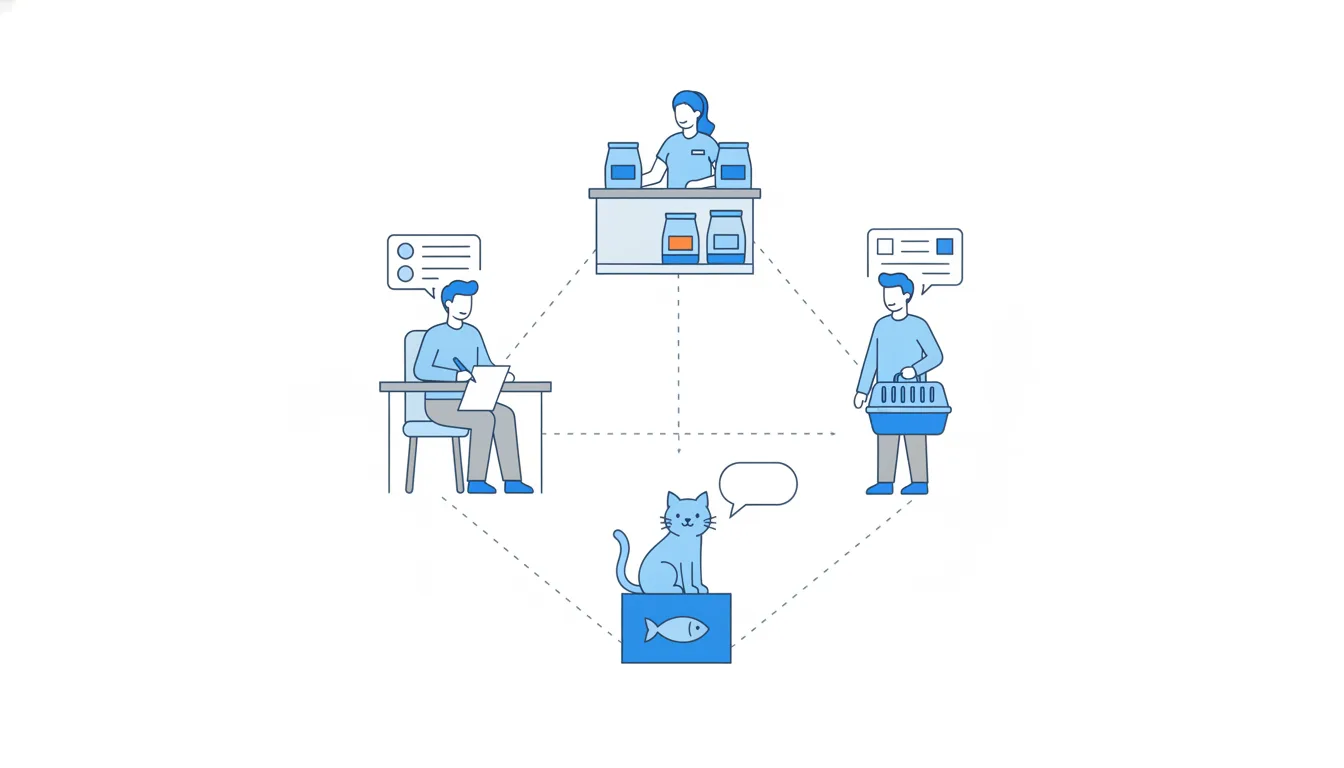
Map who does what before you talk to anyone else in the organisation. A quick sketch is enough: names, roles, and who mentioned whom.
And don't talk only to the most senior person. The clinic owner makes a nice line in a report (“we spoke to the owner!”), but the administrator is the one who fights with the supplier every week and knows exactly where it hurts. You need both views, and the vet's too, because a recommendation from the doctor can outweigh any price.
- Don't“We met the clinic owner, so we've covered the clinic.”
One role out of several; the people who live with it were skipped.
- Do“Who was involved the last time you changed what's on the diet-food shelf?”
Maps the roles from a real past decision.
Stakeholders can block quietly
Winning the decision maker isn't the same as winning the deal. The clinic owner's yes opens the door, but the vet and Tom live with the decision every day. If it makes their work harder, it quietly fades.
That's how stakeholders block: rarely with a no, usually with friction. A vet who keeps recommending another brand out of habit. An administrator who “forgets” to reorder because the new supplier's order form is a pain. Nobody announces anything; the product simply stops being used or reordered, and three months later the signed deal is worth nothing.
So treat the decision maker's approval as a start, not a finish:
- talk to each person the purchase touches, not just the most senior one;
- ask about their part in real past events: who was involved in the last order, what made it easy or hard, what they did when something went wrong;
- listen for the extra work your offer would create for them, not only the benefits for the clinic.
A deal is safe only when the people who carry it out every day have a reason to keep it going.
- Don't“The owner signed, so we're done with this clinic.”
The people who reorder every week haven't had a say yet.
- Do“Tom, what happened the last time a new supplier's ordering turned out to be awkward?”
Finds the quiet blocker before it blocks.
Purchasing criteria
When Sofia goes back to Tom, the rules for honest answers stay the same; only the subject changes, from a cat owner's life to the clinic's. How did the last order go? Who was involved? Who decides, and where does the money come from? And no mention of a clinic subscription.
Listen especially for purchasing criteria: what makes the clinic choose one supplier over another. Price, minimum order, delivery speed, payment terms, trust in the brand. They're worth more than any list of wished-for features, because they decide whether you're chosen at all.
You find them in decisions the clinic has already made, not in ones it imagines. What it once gave up to get something shows what it really values. A question about an ideal supplier collects a wish list, and wishes cost nothing. A question about the last real switch uncovers a trade-off: perhaps the clinic accepted a higher price to get delivery within a day, which tells you speed matters more than a discount.
It's the same rule you used with cat owners: the past tells the truth, the future is guesswork.
- Don't“Would a cheaper supplier interest you?”
Everyone says yes to cheaper; it reveals no trade-off.
- Do“What made you drop your previous supplier of diet food?”
A real past decision exposes what the clinic values.
Separate conversations for each side
A multi-sided market has two or more kinds of customers in one deal. For CatChow that's cat owners on one side and vet clinics on the other, and each side has its own problems, purchasing criteria and words.
It's tempting to save time by asking a well-informed person on one side about the other. Megan suggested exactly that: Tom sees hundreds of cat owners, so why not ask him what owners want and skip talking to them?
Because what Tom knows is second-hand. He hears what owners say at the reception desk, filtered through his own worries: stock, orders, the supplier. He can't tell you what owners do at home when food runs out, what they've tried, or why they'd change. And when he guesses, his guesses lean towards the clinic's problems.
So each side needs its own conversations: owners about their lives, clinic staff about theirs, with two separate lists of questions. Casual chats keep that cheaper than it sounds: a few minutes in a waiting room or a district chat cost very little, and they spare you building for a customer you only heard about.
- Don't“Tom sees hundreds of owners, let's just ask him what they want.”
Second-hand, and filtered through the clinic's worries.
- Do“Three owners on Wednesday, two clinic staff on Thursday, a separate question list for each.”
Each side speaks for itself.
Ready to practise?
Answer the lesson's exercises and earn 250 points the first time you finish it.
Start the exercises