

- Trainer
- Everyone
Trading Basics: How It Works, How Not to Lose Everything
Learn how trading really works, in plain words and with small numbers. See what it costs, how markets and orders work, how to decide the loss before the trade, how a plan can lose often and still profit, how to read a simple chart, and how to keep a journal and your own habits from wrecking the account, all on a practice account with made-up prices. Educational, not advice: most people who trade lose money.
Free32 lessons~16 h 2 min of learning
Module 1: What is trading, and should I even try?
See what trading really is, what it costs and why most beginners lose, before you risk a cent.

- 1.1Trading vs investing: two different gamesHolding for years and trading for days are different games with different risks, and someone is always on the other side.~27 min
- 1.2Where the money goes: spread, fees and slippageEvery trade starts a little in the red. See the costs that eat small gains and why many tiny trades lose.~31 min
- 1.3Why most beginners loseLosing accounts are mostly explained by three ordinary habits, not bad luck: paying costs on too many trades, bets too big for the account and dropping the plan mid-trade. The numbers are in the journal.~27 min
- 1.4Case: three promises that sound too goodJudge three ads that promise easy money by what you can check, not by what they promise; find the hidden losses, the guarantee, the pressure and the request for access.~40 min
Module examComplete 4 more lessons to unlockModule 2: How does a market work under the hood?
Learn who the exchange, the broker and the market maker are, and how an order really becomes a trade.
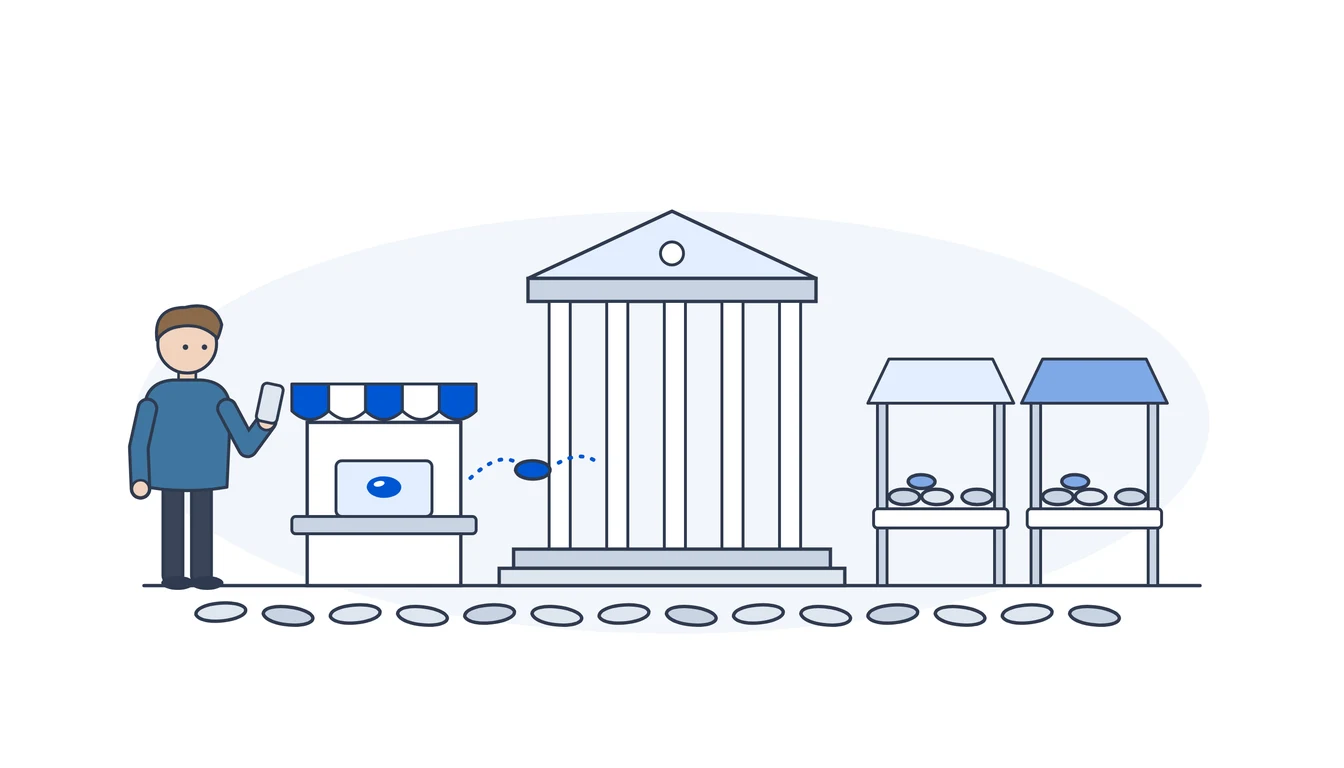
- 2.1Exchange, broker, instruments: a mapA plain map of where trades happen and what you can trade: shares, funds, currencies, futures and coins, plus what going short and leverage mean, with the warnings.~24 min
- 2.2Order types: market, limit, stopChoose how you enter and leave: right now at any price, only at your price, or when a level breaks. See what each order does in a fast drop, with real fill prices.~26 min
- 2.3Bid, ask, spread and liquidityRead the two prices on every screen, see why thin markets and odd hours cost more, and what a big market order does to a thin order book.~29 min
- 2.4Case: place the right orderThree situations on a practice account: pick the order type, the price and the size, and say why, using the quotes, the spread and what a gap can do to a stop.~41 min
Module examComplete 4 more lessons to unlockModule 3: How much can I lose on one trade?
Decide the loss before the trade, not after: risk as a small share of the account, a stop and a position size.
- 3.1Risk per trade: a small share of the accountFix how much of the account one trade may cost if it goes wrong, and see why a small share, such as 1%, keeps you alive through a long losing run.~25 min
- 3.2The stop: where it goes and whyPlace a stop where the trade idea is proved wrong, not where the loss feels comfortable, and know what a gap does to it: the real loss can be bigger than planned.~27 min
- 3.3Position size from risk and stopTurn the risk you allow and the distance to your stop, costs included, into a number of units to buy, then cap it by what the account can actually pay for.~26 min
- 3.4Case: size three tradesNora has three trade ideas and one 10,000-dollar practice account: work out the size, the risk and the real cost of each, the cap that binds and what a gap could do.~39 min
Module examComplete 4 more lessons to unlockModule 4: Can I lose often and still come out ahead?
Win rate alone says little: put win rate and payoff together and see which plans survive.
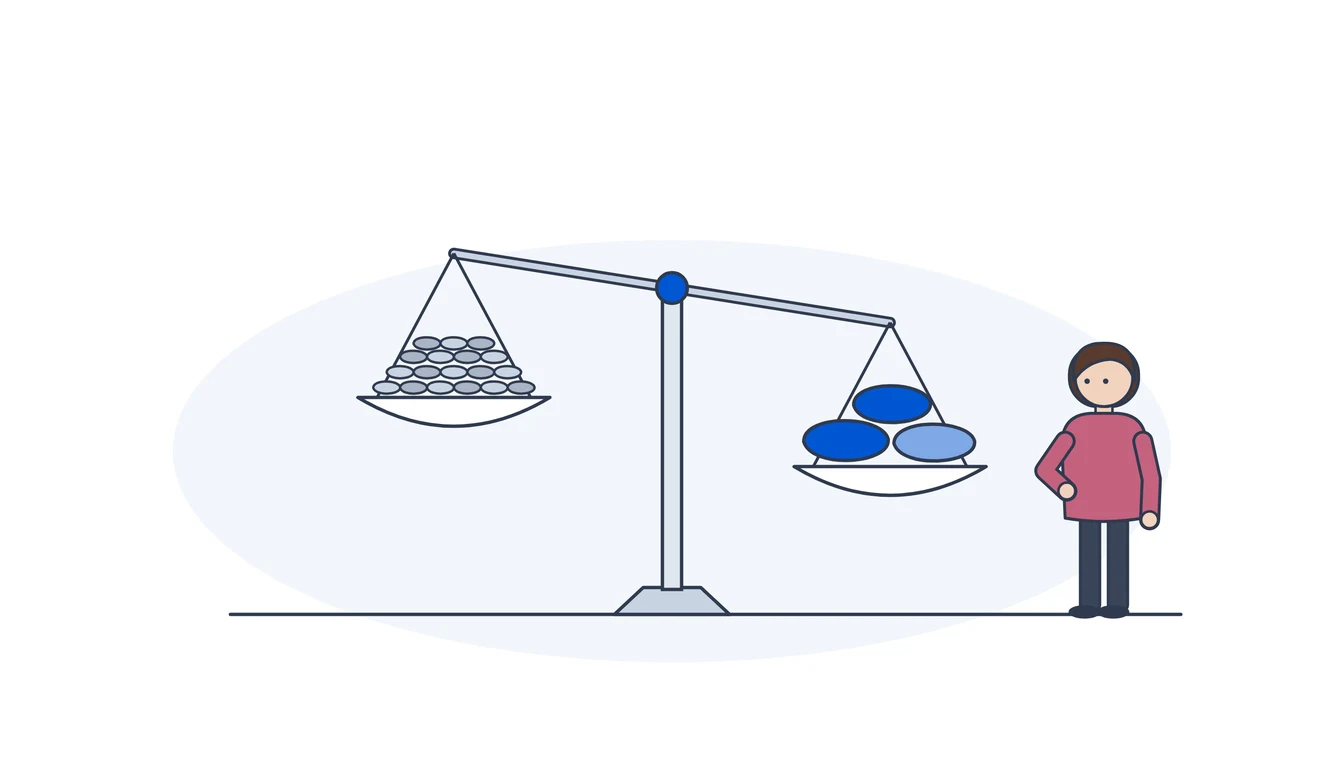
- 4.1Win rate and reward-to-riskA plan that wins three trades in ten can make money, and one that wins eight in ten can lose: see how the size of wins and losses decides, and find the break-even win rate.~27 min
- 4.2Expectancy: the average tradeCompute what an average trade earns after costs from a real trade list, and see why ten trades can tell the opposite story from forty.~28 min
- 4.3Drawdown: why losses hit harder than gainsA 50% loss needs a 100% gain to recover: see drawdown, the recovery maths and how the same trades at a bigger size can sink an account that should have grown.~27 min
- 4.4Case: compare two trade listsTwo journals, two styles: compare expectancy after costs, drawdown, sample size and discipline, then say which plan is worth continuing and what would change your mind.~39 min
Module examComplete 4 more lessons to unlockModule 5: What is a price chart telling me?
Read candles, trend, ranges and levels on a plain chart, and learn what a chart can never tell you.
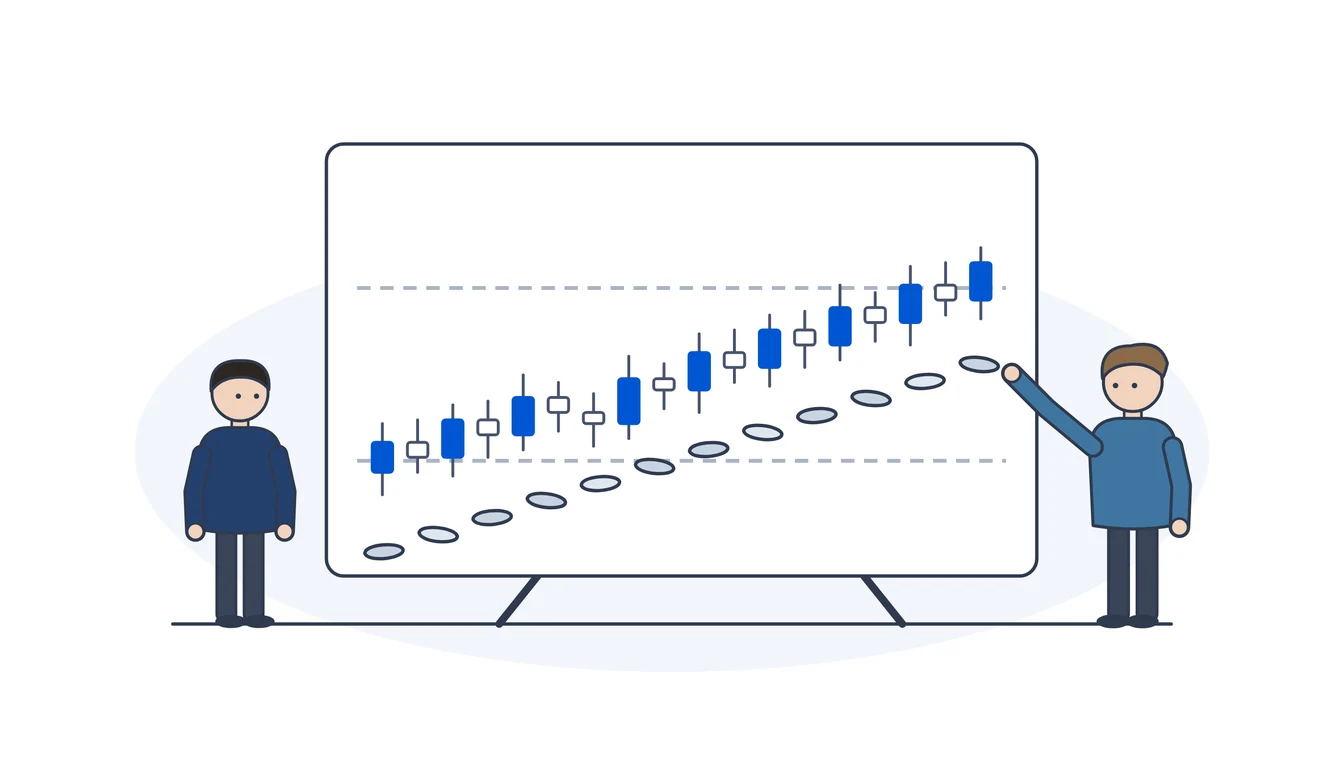
- 5.1Candles and timeframesRead one candle in a few seconds, and see how a calm week can hide one frightening day.~27 min
- 5.2Trend and rangeTell an uptrend, a downtrend and a sideways range apart by their highs and lows, and see why the same rule wins in one and loses in another.~26 min
- 5.3Support, resistance and breakoutsMark the prices where the market turned before, and see why a breakout can be real or a trap, and what a level can and cannot tell you.~26 min
- 5.4Case: mark up a chart and write the planMark the trend and the levels on a Pebble chart, then write when you would enter, where the stop goes and when you stay out, without forecasting.~40 min
Module examComplete 4 more lessons to unlockModule 6: Which tools are worth my time?
Try a few simple tools, see what each can and cannot say, and learn why more indicators rarely help.
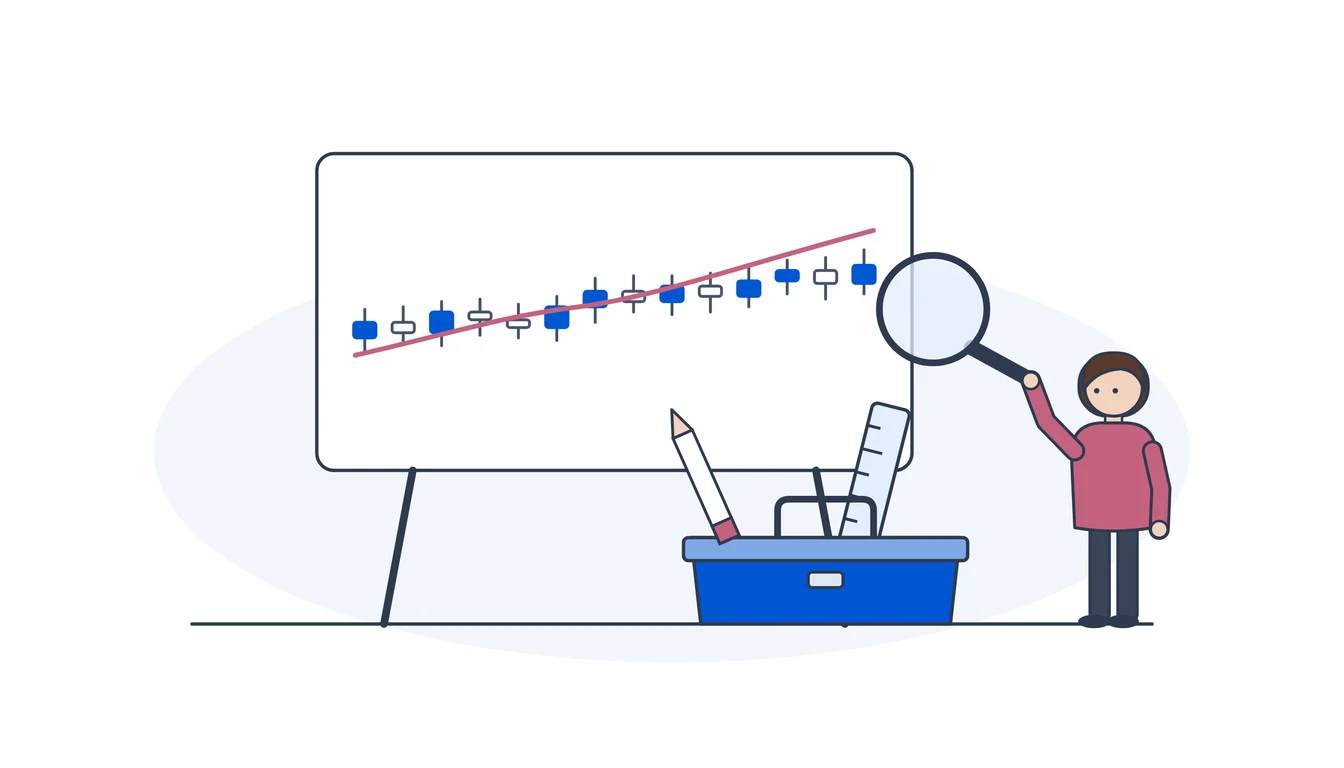
- 6.1Moving averagesSmooth the noise with an average of the last few closes, and see why every average arrives late in a trend and whips back and forth in a range.~29 min
- 6.2A momentum gauge and the overbought mythSee what a 0–100 momentum gauge actually measures, compute one by hand, and watch a "too high" reading stay high for weeks while the price keeps rising.~27 min
- 6.3Volume and volatilityUse the usual daily range to place a stop outside everyday noise and size the position from it, and see what volume can and cannot confirm.~26 min
- 6.4Case: choose at most three toolsStrip a crowded chart down to at most three tools, give each one a job, say what it cannot do, and defend the choice with the numbers.~39 min
Module examComplete 4 more lessons to unlockModule 7: How do I turn an idea into a plan I can test?
Write the plan on one page, test it honestly, practise small and keep a journal that tells the truth.

- 7.1A one-page trading planWrite five things on one page before you trade: what you trade, when you enter, where you exit, how big you go and when you do not trade at all.~26 min
- 7.2Backtest basics and trapsTest a rule on past prices and see the traps: one lucky period, hindsight, too many tweaks and missing failures.~29 min
- 7.3Practice account, starting small and the journalUse a practice account to build the routine, start small with real money only if you choose to, and log every trade in a journal that memory cannot edit.~27 min
- 7.4Case: audit a journal and find the leakRead a month of trades, find where the money leaks and write the one rule that would have fixed most of it.~40 min
Module examComplete 4 more lessons to unlockModule 8: What if I am the weak link?
Meet the habits that wreck accounts, build rules that protect you from yourself and decide whether to start.

- 8.1Fear, greed, hope and revenge tradingName the four feelings that move a hand to the button and see how loss aversion turns a 60% win rate into a loss.~27 min
- 8.2A losing streak is normalSee how long a losing run can last in a sound plan, and why one trade or ten trades prove nothing either way.~29 min
- 8.3Rules that protect you from yourselfSet a pre-trade checklist, a daily loss limit and breaks after losses, and make them hard to break on a bad day.~26 min
- 8.4Case: decide whether and how to startWrite your own memo: money you can afford to lose, your plan, your limits and the day you would stop, or your reasons not to start at all.~35 min
Module examComplete 4 more lessons to unlock