

- Trainer
- Product managers
- Marketers
Outcome-Based Product Roadmaps
Swap the feature list with dates for a roadmap people trust. Learn to tie every item to an outcome, prioritise in the open and win buy-in from leadership, sales and engineering without promising deadlines you can't keep.
Free15 lessons~10 h 42 min of learning
Module 1: Why roadmaps need a rethink
What a roadmap is for and how it differs from a release plan, why outcomes beat outputs, and the five essential components of a roadmap.
- 1.1What a roadmap is (and isn't)Why a feature list with dates fails as a roadmap, what a product roadmap is actually for, and how it differs from a release plan, a backlog and a Gantt chart.~39 min
- 1.2Outcomes over outputsWhy outcomes over outputs: the difference between what a team ships and what changes because of it, how a feature factory works, how to climb from a feature request to a measurable outcome, and the traps that make an outcome useless.~40 min
- 1.3Anatomy of a product roadmap: five components and an exampleThe five parts every useful roadmap needs (product vision, business objectives, themes, timeframes and a disclaimer), what each one does, and a product roadmap example: Sofia's first one-page roadmap for CatChow, plus a fill-in template.~41 min
Module examComplete 3 more lessons to unlockModule 2: The why behind the roadmap
Gathering inputs from the market, customers and stakeholders, writing a product vision and value proposition, and setting business objectives with key results.
- 2.1Gathering inputs: life cycle, market, customers, stakeholdersWhat to find out before drawing a roadmap: the product's life cycle stage, the market and customers behind every request, and what each stakeholder gives and needs, merged into one short list.~37 min
- 2.2Product vision and value propositionWhat a product vision is and how a mission, a product vision and a product strategy differ, how to fill in a value proposition template, how Sofia compresses it into a one-line vision for CatChow, and three product vision examples.~41 min
- 2.3Business objectives and key resultsHow to turn business objectives into OKRs with key results that measure outcomes, the common ways OKRs go wrong, and version 2 of CatChow's roadmap with its full “why” layer.~43 min
Module examComplete 3 more lessons to unlockModule 3: From needs to themes
Expressing customer needs as themes, choosing timeframes and a disclaimer instead of dates, and adding features, stage of development and confidence.
- 3.1Customer needs as themes: an opportunity solution treeHow to build roadmap themes from customer needs: a user journey map and the critical path, system needs, an opportunity solution tree, job stories vs user stories, and what to do with requests that serve no objective.~45 min
- 3.2Timeframes and the roadmap disclaimerHow to choose roadmap timeframes, what Now, Next and Later promise, how to answer “roughly when?” without inventing dates, and how to write a product roadmap disclaimer for each audience.~41 min
- 3.3Going deeper: features, stages and confidence levelsWhen features belong on an outcome-based roadmap and how that differs from a feature roadmap, how to show stage of development and confidence levels without false precision, which extras each reader needs, and version 3 of CatChow's roadmap.~42 min
Module examComplete 3 more lessons to unlockModule 4: Prioritizing with evidence
Why gut feeling fails, how scoring frameworks such as value vs effort and RICE work, and how to make trade-offs and say no.
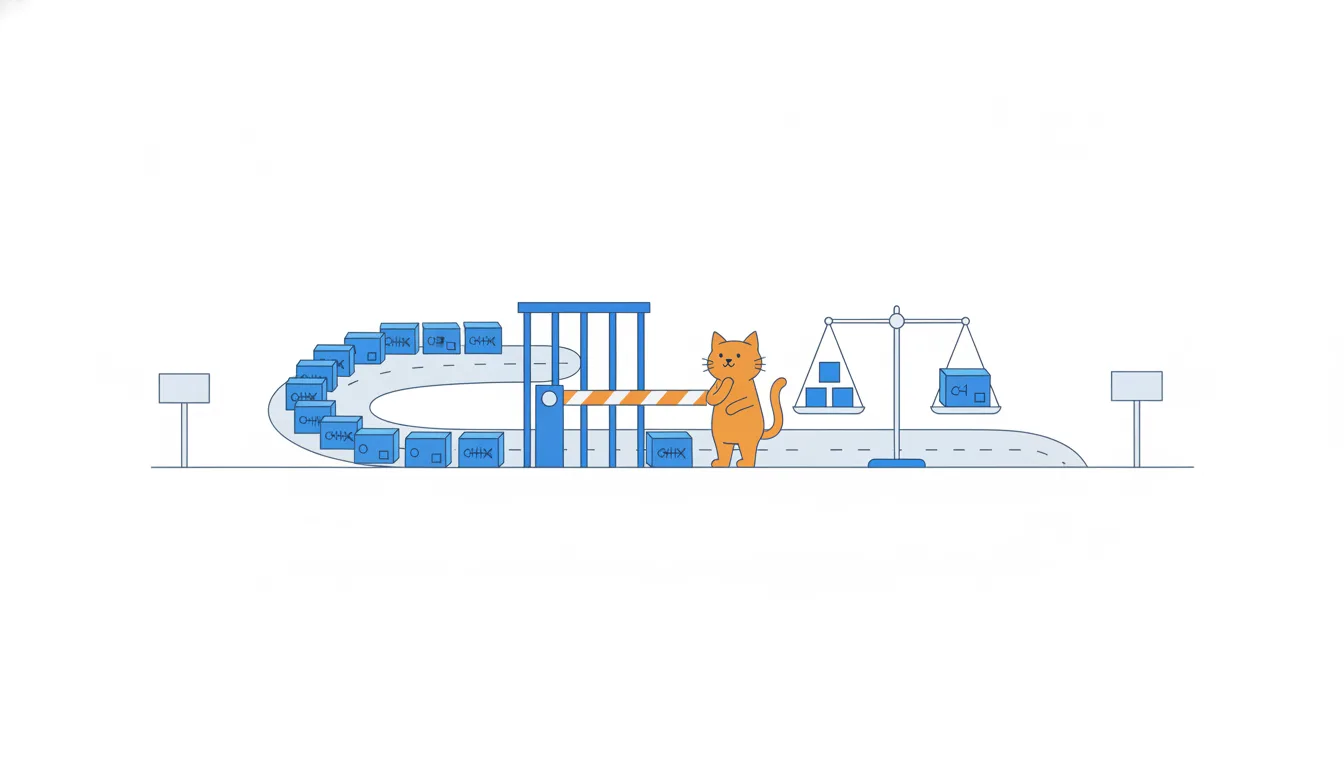
- 4.1Feature prioritization: why gut feeling failsFeature prioritization without gut feeling: why ranking by the loudest voice, the HiPPO or the biggest client fails, what a feature costs after launch, and how to prioritize with explicit criteria, the critical path, the Kano model and three lenses: desirability, feasibility, viability.~44 min
- 4.2Scoring frameworks: impact effort matrix, RICE and moreHow an impact effort matrix sorts quick wins, big bets, fill-ins and money pits, how a value vs effort scorecard and RICE turn criteria into scores, how to keep confidence honest and read a ranking, where cost of delay, WSJF and MoSCoW fit, and why a score only starts the conversation.~46 min
- 4.3Trade-offs, the iron triangle and saying noWhich lever of the iron triangle in project management to pull when work runs late, why adding people slows a project (Brooks's law), how to say no to stakeholders, from a founder to a colleague and a client, without losing them, and version 4 of CatChow's roadmap.~49 min
Module examComplete 3 more lessons to unlockModule 5: A living roadmap
Winning alignment and buy-in, presenting the roadmap to different audiences, and keeping it fresh as things change.
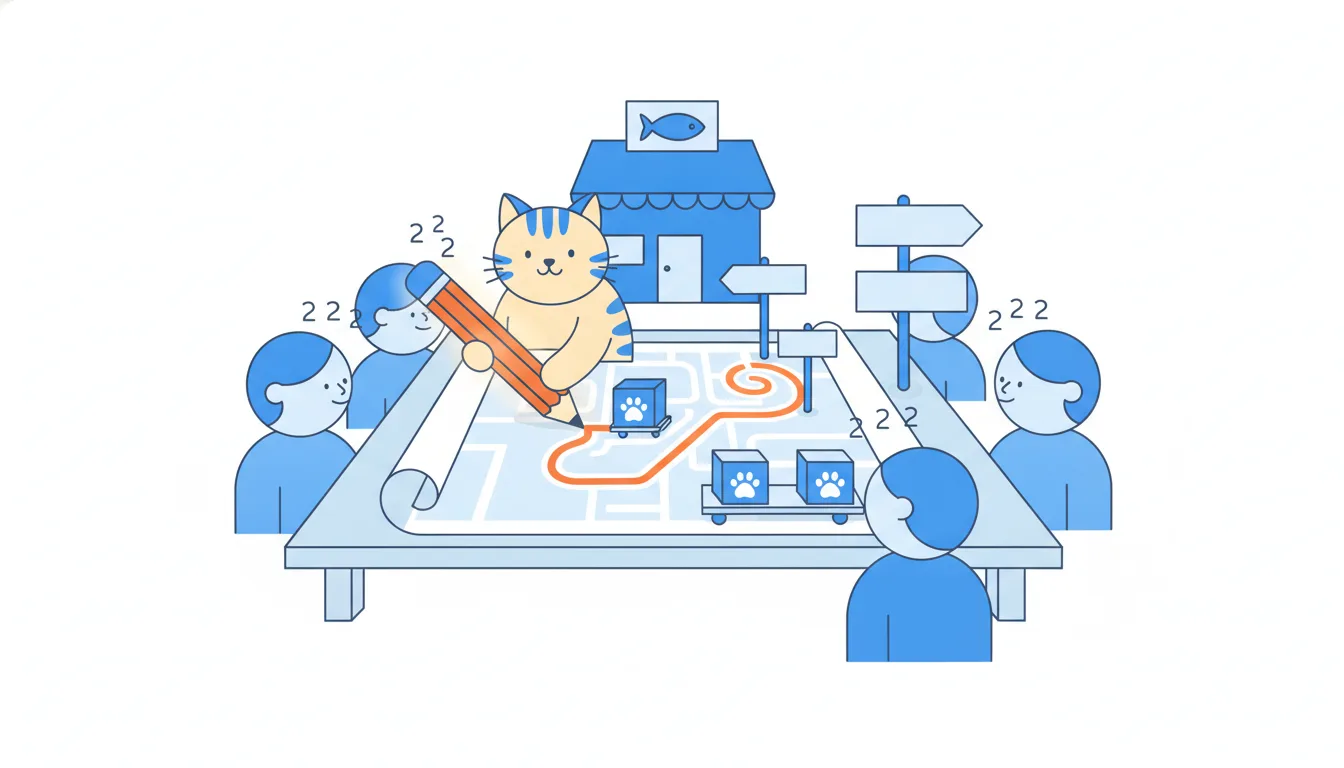
- 5.1Alignment and buy-in with stakeholdersWhy a roadmap needs alignment rather than consensus, how one-to-one conversations and a co-creation workshop win stakeholders' buy-in, and why a settled decision stays closed until new evidence arrives.~43 min
- 5.2Product roadmap presentation: one roadmap, four audiencesHow to prepare a product roadmap presentation: why share the roadmap at all, how one roadmap becomes a view for the board, sales, engineering and customers, internal vs external roadmaps, the Osborne effect of a public roadmap, and how to present without overpromising.~42 min
- 5.3Keeping it fresh and rolling it out in the organizationHow often to review a roadmap, how to size and explain a change, how to answer special requests and strategic forks, and how to roll out outcome-based roadmaps, ending with CatChow's full roadmap.~49 min
Module examComplete 3 more lessons to unlock