

- Trainer
- Managers
- Founders
- Everyone
Project Management Without the Bureaucracy: Run One Project from Brief to Closure
Run work with a deadline without drowning in process. Write a one-page brief, break scope down and cut it before dates, find the critical path, estimate in ranges with one shared buffer, map stakeholders, keep a short risk register, handle changes and delays, and close the project with a blameless retrospective, all on one realistic project: the launch of a new subject at an online tutoring school.
Free32 lessons~14 h 5 min of learning
Module 1: What a project is, and the one-page brief
Project, operations or product work; goal versus outputs; the one-page brief; a brief for the physics launch.

- 1.1Project, operations or product work?What makes work a project, how it differs from operations and product work, and when a project frame only adds ceremony.~22 min
- 1.2Goal or outputs: what success meansWhy finished outputs aren't success, and how to write two-part success criteria: delivery and result.~22 min
- 1.3The one-page briefGoal, success, scope in and out, limits, testable assumptions, names and a change rule: one page a sponsor can sign.~24 min
- 1.4Case: the brief for the physics launchTurn Leo's list of outputs into the one-page brief he will sign: a goal that names the change, two-part success criteria, an out list and assumptions you can test.~34 min
Module examComplete 4 more lessons to unlockModule 2: Scope: what is in and what is out
Breaking work down from deliverables, acceptance criteria, and cutting scope before dates.

- 2.1Break the work down from deliverablesDeliverables first, tasks second: a tree that covers all the work of the physics launch and nothing twice, flattened into a list with owners and effort ranges.~22 min
- 2.2Acceptance criteria: what "done" means"Good lessons" is a wish nobody can accept. Write checks a named person can run, agree them before the work starts, and say what happens when one fails.~23 min
- 2.3Must, should, could: cut scope, not the dateWhen the list is longer than the time, sort every deliverable with one test, agree in advance what is dropped first, and keep the fixed date.~22 min
- 2.4Case: the deliverable list that doesn't fitTwenty-five deliverables with effort ranges, 150 person-days of capacity. Add up effort by priority, challenge two false musts, and write Leo the scope decision with a drop order.~36 min
Module examComplete 4 more lessons to unlockModule 3: Time: dependencies and the critical path
Dependencies, milestones, critical path and float, and why effort is not duration.
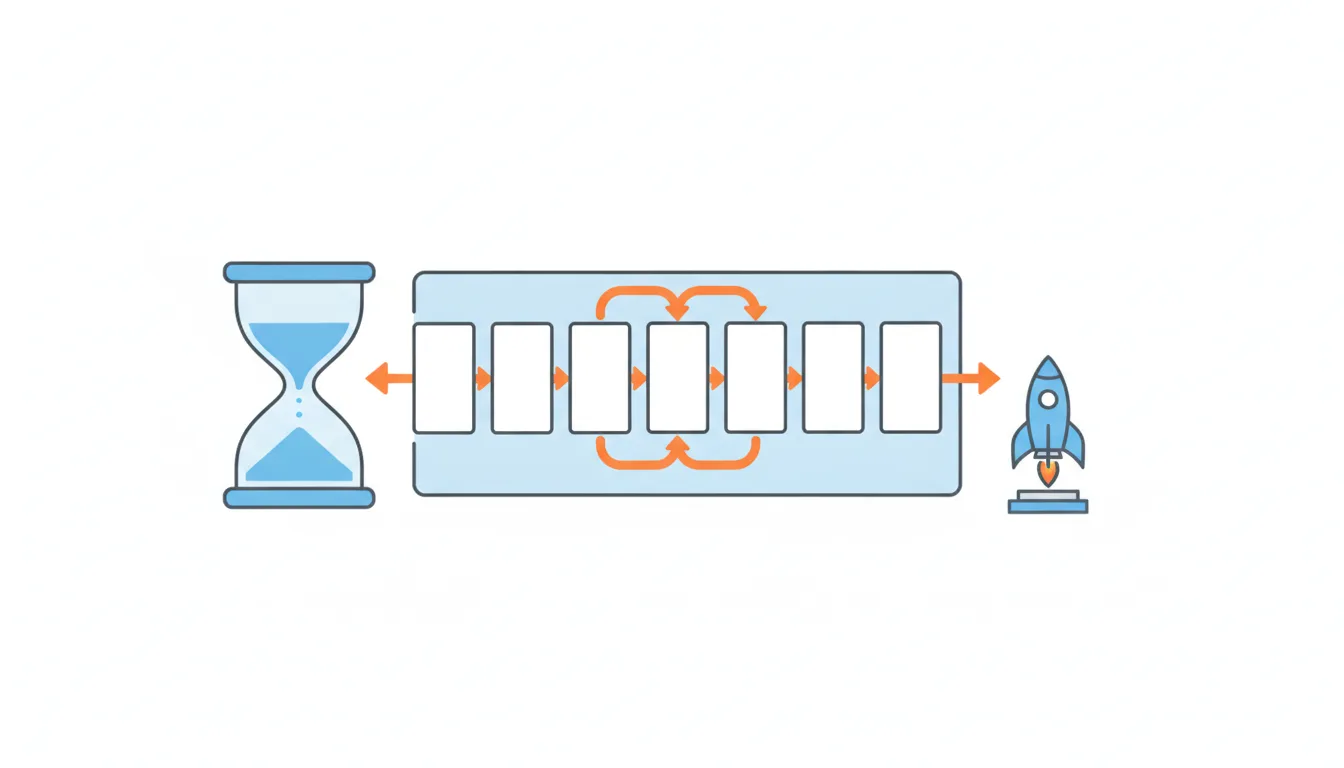
- 3.1Dependencies and milestones as decision pointsFind what waits for what, including the dependency nobody wrote down, and turn milestones into questions with a decision ready for each answer.~22 min
- 3.2The critical path and floatA forward pass and a backward pass by hand on eight tasks of the physics launch: the earliest finish, the chain with no room, and how much the other tasks can slip.~26 min
- 3.3Effort is not duration: when adding people helpsWhy ten days of review don't become two with five reviewers: the parts that can't be split, the cost of coordinating, and the waiting no extra person removes.~24 min
- 3.4Case: the schedule to 1 FebruarySeventeen tasks, one fixed date. Find the critical path and the float, see that the plan lands a week late, compare cutting, parallel work and an extra reviewer, and write Leo the schedule decision.~38 min
Module examComplete 4 more lessons to unlockModule 4: Estimates and the budget
Estimating in ranges, past projects as a reference, one shared buffer, and a budget over time with a reserve.

- 4.1Estimating in rangesThree-point estimates that keep the spread: the expected value and standard deviation of each task, how to add several tasks, and how to say a date with its confidence.~25 min
- 4.2Past projects as a reference, and one shared bufferWhy padding every task makes the date absurd and still finishes late, how earlier launches correct your optimism, and how one buffer under the lead replaces hidden margins.~24 min
- 4.3A budget over time with a reserveSpread the 600,000 UAH ceiling over the months, keep a contingency reserve for named risks and a management reserve for surprises, and run one earned value check correctly.~25 min
- 4.4Case: estimates versus actualsUse three earlier Klasna launches and the three-point estimates of the chain to tell Leo whether physics can open on 1 February, and how sure you are.~36 min
Module examComplete 4 more lessons to unlockModule 5: People and stakeholders
Roles, a stakeholder map, influence without authority and a weekly written status.
- 5.1Roles: sponsor, lead, expert, one owner per taskWho decides, who does and who is consulted in a small team where one person holds several roles, and a light responsibility table with exactly one owner per task.~23 min
- 5.2The stakeholder map and influence without authorityPlace everyone the launch depends on by how much they can affect it and how much it matters to them, find the stakeholder nobody mapped, and win help from people you cannot direct.~23 min
- 5.3The weekly written status and async habitsA five-line status that says where the project really is, honest colours with a forecast and a reason, decisions in writing, and habits for a remote team that works through outages and alerts.~23 min
- 5.4Case: the sponsor changes priorities every weekLeo wants a mobile preview one week and group classes the next. Find what is behind it, show each change's cost in days and money, and ask him to decide in writing.~29 min
Module examComplete 4 more lessons to unlockModule 6: Risk and quality
Cause, event and consequence; a short register; responses, the pre-mortem and quality built in.
- 6.1Risk, issue, assumption or dependency?Tell a risk from a problem that is already happening, an unchecked assumption and work you are waiting for, and write each risk as cause, event and consequence.~23 min
- 6.2A short risk register people actually useScore each risk on written scales (probability, and impact in days or money), give it an owner, a trigger and a next action, and keep the list short enough to review every week.~22 min
- 6.3Risk responses, the pre-mortem and built-in qualityChoose a response for each risk (avoid, transfer, reduce, accept or escalate), use opportunities, find hidden risks with a pre-mortem, and check quality while the work is done, not at the end.~24 min
- 6.4Case: the launch risk registerTake the team's raw forty-line list, sort out the issues, assumptions and dependencies, score the real risks in days or money, add the missing ones, and send Leo the top five with owners, responses and triggers.~36 min
Module examComplete 4 more lessons to unlockModule 7: Running the work: changes and re-planning
Change control without a committee, hybrid planning with a fixed date, and re-planning from today.
- 7.1Changes without a committee, and a decision logRoute every change through one door, write a short impact note in days and money, let a named person decide, and record each decision in a few lines.~24 min
- 7.2A fixed date with weekly iterationsKeep the exam date and a few milestones fixed, let scope flex, and run the last weeks in short iterations with a board, limits on work in progress and a weekly demo of working pieces.~22 min
- 7.3Re-plan from todayReforecast the remaining work from where the project stands, keep the range, let sunk effort stay out of the choice, and tell the sponsor what changed and what you need.~25 min
- 7.4Case: the contractor slips two weeksThree weeks before opening, the checkout contractor needs two more weeks. Re-plan from today, compare cutting scope, adding a developer and moving the opening, and write the decision note to Leo.~37 min
Module examComplete 4 more lessons to unlockModule 8: Closing and learning
Build, buy or hire, acceptance and handover, the benefits check and a blameless retrospective.

- 8.1Build, buy or hire: contracts by how clear the scope isDecide per piece of work, pick a fixed price or time and materials by how clear the scope is, write a short request for proposals and pay for accepted work.~24 min
- 8.2Acceptance and handover to operationsRun the acceptance checks against the real thing, write known problems down with owners, hand each part to an everyday owner and keep a runbook for outages and alerts.~25 min
- 8.3The benefits check and a blameless retrospectiveCheck the result weeks after launch against the success criteria, run a retrospective on facts and decisions, turn lessons into owned actions and close with a one-page report.~23 min
- 8.4Case: the first month against the success criteriaPhysics opened on time, but bookings are half the target: separate delivery from result, find where the funnel leaked and write the closing report with three actions.~37 min
Module examComplete 4 more lessons to unlock